
What is Rose Quartz? The Ultimate Guide to Rose Quartz Stone
In the colorful world of gemstones, some gemstones are prized for extreme rarity, while others are cherished for their gentle yet powerful energy and for symbolizing love and healing—offering lasting comfort to the human spirit. Rose quartz is a standout among the latter.
Rose quartz emits a soft pink glow that is warm without being intense, gentle yet not without strength. It consistently plays the role of a tender guardian and is widely regarded as the “stone of unconditional love”. In the jewelry world, rose quartz is known as a stone of love, healing, and harmony, and it’s one of the dreamy pink gems favored by modern affordable-luxury jewelry brands.
In this comprehensive guide to rose quartz, we’ll help you gain a systematic understanding of this pink gemstone that carries humanity’s yearning for beautiful emotions. From physical properties to spiritual meanings, from historical origins to modern jewelry use, you’ll get a thorough, practical, and insightful view of rose quartz stone.
What is Rose Quartz?
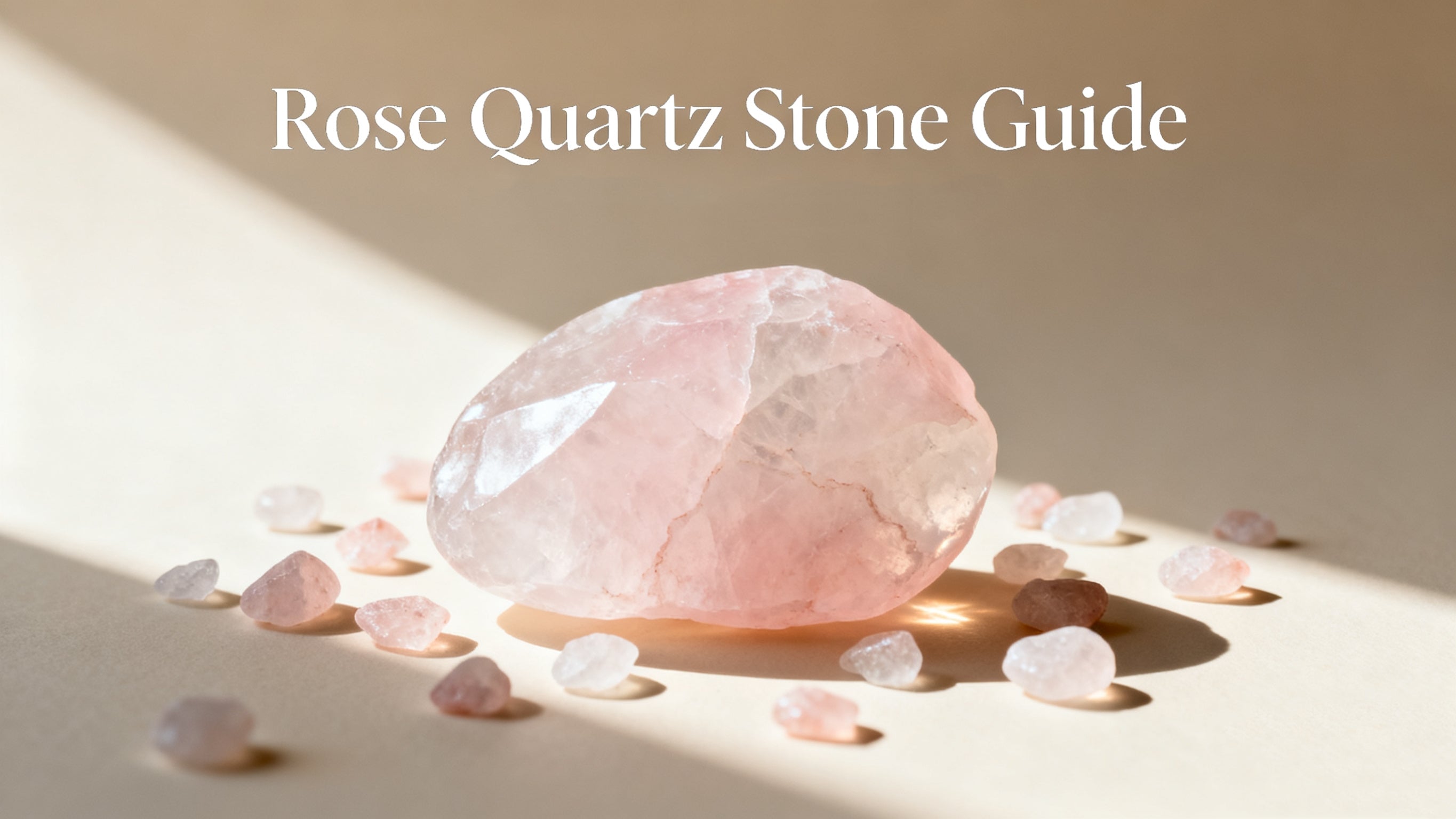
In mineralogy, rose quartz, also called pink quartz, is a pink variety of the quartz mineral. Like amethyst, citrine, and smoky quartz, it belongs to the silicon dioxide (SiO₂) family. The name “rose quartz” comes directly from its rose-like pink appearance. Its color ranges from pink to light pink, offering a soft hue that is among nature’s most soothing and healing colors.
Although pure quartz is colorless (clear quartz), trace elements or structural defects give quartz varieties their colors. For rose quartz crystal, its delicate pink tone comes from trace amounts of titanium, iron, or manganese, as well as microscopic fibrous internal structures.
Unlike many other gemstones, rose quartz rarely appears as natural pointed crystals; it most often occurs in large masses. For this reason, it’s frequently cut into rounds, ovals, cabochons, beads, or carved shapes—forms that best showcase its hazy, soft pink texture.
Physical Properties of Rose Quartz
- Hardness: Rose quartz rates a 7 on the Mohs hardness scale, making it a relatively durable gemstone suitable for everyday jewelry.
- Crystal structure: Rose quartz belongs to the trigonal crystal system and typically appears in massive or granular forms. Unlike transparent crystal, it rarely forms well-defined crystal shapes and more often occurs as chunks or aggregates.
- Transparency: Most rose quartz ranges from translucent to opaque due to fine needle-like inclusions within. Completely transparent rose quartz crystal is extremely rare and therefore more valuable.
- Luster: When polished, rose quartz shows a vitreous (glass-like) luster. A smooth surface can reflect soft light, enhancing its elegant charm.
- Fracture: When broken, rose quartz typically displays a conchoidal (shell-like) fracture, a typical trait of the quartz family.
- Specific gravity: Rose quartz stone has a specific gravity of about 2.65 g/cm3, giving it a moderate heft—neither too heavy nor too light.
How is Rose Quartz Formed?
The formation of rose quartz crystal is a long, complex geological process closely linked to the cooling of magma deep in the crust and to hydrothermal activity. Most rose quartz originates from granite pegmatites and hydrothermal veins, common environments for quartz formation.
Pegmatite Stage
Pegmatites form during the final stages of magma cooling. When silica-rich molten rock cools slowly deep underground, most major minerals (like feldspar and mica) crystallize first. The remaining residual melt becomes enriched in volatile substances (like water, boron, and fluorine) and trace elements (such as lithium, titanium, and manganese).
This volatile-rich residual melt is then injected into surrounding rock fractures, forming pegmatite veins. Because of the volatiles, the melt’s fluidity and diffusivity are high, which allows crystals ample time to grow in an orderly fashion.
Rose quartz typically crystallizes in large massive forms during the late stages of pegmatite cooling. That’s why most rose quartz on the market appears as large, semi-translucent masses rather than distinct, visible crystals. If the magma contains suitable amounts of titanium, iron, or manganese during this process, the characteristic pink hues of rose quartz can develop.
Hydrothermal Vein Stage
In some cases, silica-rich, high-temperature hydrothermal fluids (groundwater heated by geothermal processes) flow along cracks and faults in the crust. When the temperature and pressure of these fluids drop, or the chemical environment changes, dissolved minerals precipitate out and form quartz veins.
A very small number of rare, transparent rose quartz crystals are thought to form under specific hydrothermal conditions, where crystals grow in open space along vein walls. These conditions are more demanding, making such crystal forms far rarer than massive rose quartz.
What Color is Rose Quartz?
Although "pink" is the most basic description of rose quartz, this gemstone actually displays a stunning range of color variations. Rose quartz’s hues span widely, from nearly colorless, very pale pink to deep, rich rose-red.
Pale pink: The most common rose quartz shows a soft, pale pink, like the first morning light touching delicate rose petals—warm without being intense, gentle yet not lacking strength. Pale pink rose quartz is the most frequently used in jewelry design.
Sakura pink: Sakura pink is more saturated than pale pink, with a clearer tone while remaining tender; it’s a very popular shade in the jewelry market. Its pink resembles blooming cherry petals and carries a slight warm undertone, giving the stone a more mature and elegant feel. Sakura-toned stones are often used in romantic-themed jewelry—heart pendants, love-themed rings, bridal pieces—and are a top choice for those who favor gentle romantic styles.
Pinkish-lavender: Pinkish-lavender rose quartz is very rare; its pink contains a hint of purple, creating a cooler, more ethereal color mood. It’s not as sweet as traditional pinks, but conveys maturity, mystery, and dreaminess. This color usually appears in higher-clarity rose quartz and can show subtle shifts from pink to pale purple or even lavender under light. Because of its rarity, designers often use it for original, limited-edition, or high-end pink crystal jewelry.
Milky pink: Milky pink rose quartz shows a soft, misty pink with lower transparency, as if veiled by a gentle cloud. Its pink is gentle and rounded, radiating a natural, unpretentious, comforting vibe—one of the favorite shades in crystal healing circles. Its visual temperament sits between romantic and cool, ideal for people who want personality in their jewelry without overly sugary tones.
Rose-red: Rose-red is the deepest, most intense shade of rose quartz, sometimes called “deep peach-pink”. This tone often commands the highest value—famous Madagascar rose quartz is known for this color. Peach-pink rose quartz leans warm with subtle orange-peach undertones, like the soft glow of a summer evening. Compared with pale pink and sakura pink, peach-pink rose quartz looks livelier, warmer, and more vibrant.
Factors that Affect Rose Quartz Color
Quartz itself is colorless (i.e., clear quartz), but trace elements or structural defects give different quartz varieties their colors. For rose quartz, the source of its pink has been a long-standing topic of debate among scientists, and it varies with crystal form:
Massive rose quartz (most common): This massive, typically translucent rose quartz does not get its color from simple impurity ion substitution. Modern research suggests the color mainly comes from extremely fine, oriented fibers of aluminum phosphate and silicate (possibly dumortierite or phosphate minerals) within the crystal. These minute fibers scatter light and impart the stone’s soft and distinctive pink. This explains why rose quartz is usually opaque or translucent rather than fully transparent like clear quartz.
Crystalline rose quartz (rare): In very rare cases, rose quartz forms transparent crystals (unlike the common massive type). The color in these crystals may be related to trace elements in the lattice such as titanium (Ti) or manganese (Mn), but these are much less common on the market than massive rose quartz.
Color Saturation of Rose Quartz
A rose quartz’s color is the source of its identity as the “stone of love” and a key factor in assessing its value and aesthetic appeal. Color saturation (how deep or light the color is) is the primary criterion for evaluating rose quartz quality. Generally, higher saturation indicates more and better-oriented phosphate/silicate fibers inside.
High-quality standard: Top-grade rose quartz should have an intense, evenly distributed color while maintaining some translucency. Rose quartz with a milky luster, deep color, and no obvious impurities or fractures is what collectors and jewelry designers seek.
"Jelly" effect: Some high-quality rose quartz from Madagascar, because of its high transparency and rich color, can display a “jelly” or “ice-like” visual effect under light, which gives it very high market value.
What is the Rose Quartz Meaning?
Rose Quartz Symbolic Meanings
Rose quartz is one of the gemstones richest in symbolic meaning in the gem world. It is known as the Stone of Unconditional Love with its central themes are love and harmony.
Unconditional love: The most well-known symbolism of rose quartz is unconditional love. It represents pure, gentle, and accepting love—not limited to romantic love, but also including self-love, family love, and friendship. Many people regard rose quartz as the "stone of love," believing it can attract love and deepen emotional bonds. For this reason, it is often used for engagement rings, wedding anniversary gifts, or Valentine’s Day presents as a way to express affection.
Peace and tranquility: The stone’s soft color naturally connects it to calmness and serenity. It symbolizes inner peace, emotional stability, and the release of stress. In the chaos of modern life, rose quartz is seen as a messenger of tranquility.
Compassion and kindness: Rose quartz encourages the cultivation of compassion and understanding toward others. It symbolizes the virtue of treating people gently and putting yourself in someone else's shoes.
Self-acceptance: On a personal development level, rose quartz symbolizes self-acceptance and self-appreciation. It reminds people to be kind to themselves, recognize their own worth, and foster healthy self-esteem.
Emotional healing: This stone symbolizes the power to heal from emotional wounds, representing the ability to release past pain and to forgive others and oneself.
Feminine energy: Because of its soft pink color and association with love, rose quartz is often seen as a symbol of feminine energy, representing nurturing, creativity, and intuition.
Rose Quartz Spiritual Meaning
In spiritual and metaphysical attributes, rose quartz is believed to hold profound spiritual meaning and energetic qualities. It is a highly influential heart chakra crystal.
Opening the heart chakra: In the chakra system, rose quartz is closely associated with the heart chakra (Anahata). The heart chakra, located in the center of the chest, governs love, compassion, and emotional balance. It is believed that rose quartz can open, cleanse, and activate the heart chakra, promoting the free flow of emotions.
Vibrational frequency: From an energetic perspective, rose quartz is thought to carry a gentle yet enduring vibrational frequency. This frequency resonates with energies of love and harmony and is said to raise the vibrational level around the user, clearing negative emotions lodged in the heart chakra and creating a more positive energetic field.
Meditation and mindfulness: Many spiritual practitioners use rose quartz as a meditation aid. Placing rose quartz on the heart chakra or holding it during meditation is said to help quiet the mind, deepen the meditation experience, and foster connection with the inner self.
Emotional intelligence: Rose quartz is seen as a tool for cultivating emotional intelligence. It encourages people to recognize and express their own feelings while also understanding the emotional needs of others. This spiritual meaning emphasizes the importance of emotional awareness in personal growth.
Divine love: On a higher spiritual level, rose quartz is believed to connect to the universe’s energy of love. It reminds people that love is a fundamental force of the universe and the essence of all existence.
Manifesting intentions of love: In the practice of manifestation, rose quartz is used to help realize love-related intentions—whether attracting a romantic partner, improving an existing relationship, or cultivating self-love.
What are the Benefits of Rose Quartz?
(Disclaimer: The following content is based on metaphysical and crystal-healing traditions and is not a substitute for professional medical advice, diagnosis, or treatment.)
Rose quartz has become one of the most popular gemstones not just because of its beautiful pink hue, but because of the deep and powerful healing energy it is believed to offer on the body-mind-spirit level.
Emotional and Psychological Healing Properities
1. Healing Emotional Wounds and Releasing Feelings
Rose quartz is often called the emergency stone for emotional wounds, believed to help emotional healing—especially for those who have experienced heartbreak, betrayal, or loss. It does not force pain away; rather, it supports the wearer in gently releasing and processing negative emotions stored in the heart center.
For those who have suffered major emotional losses—such as breakups, the death of a loved one, or the end of friendships—rose quartz provides a safe emotional buffer to help let go of unresolved sadness and pain. Its high-frequency vibration is said to help dissolve clinging negative energies like resentment, jealousy, and anger toward others, encouraging the wearer to choose forgiveness and thereby gain true freedom. Many people report that after using rose quartz, they find it easier to forgive themselves and others and to let go of past grievances.
2. Awakening Unconditional Love and Self-Love
The core effect of rose quartz is teaching and cultivating unconditional love, starting with oneself. Many emotional issues stem from self-criticism and low self-esteem. The gentle energy of rose quartz eases self-doubt and feelings of unworthiness, reminding you of your inherent value and beauty. It helps you see and accept all parts of yourself, including your imperfections.
When the heart center opens and fills with self-love, you naturally radiate a frequency that attracts healthy relationships and nurtures romantic love. It doesn't simply "attract romance"; it helps you become more capable of loving and being open to receiving love.
3. Promoting Relationship Harmony and Compassion
In relationships, rose quartz is viewed as a tool for deepening intimacy. It encourages open communication and honest emotional expression. Whether in romantic relationships, family ties, or friendships, placing rose quartz in shared spaces (such as the living room or office) can help create a warm, welcoming atmosphere that makes people feel more approachable and trusting.
This is because rose quartz is believed to expand your compassion and empathy, enabling you to put yourself in others’ shoes and to be more graceful and inclusive in social interactions.
Physical Healing Properities
1. Regulating the Cardiovascular System
Because rose quartz is associated with the heart center, it has traditionally been thought to benefit the cardiovascular system. Rose quartz is believed to help strengthen and balance the heart muscle, soothe irregular heartbeats, and support regulation of circulation and blood pressure, partly by indirectly easing cardiac strain caused by stress and emotional tension.
2. Skin Care and Beauty
With its hardness and cool-to-the-touch feel, rose quartz has become a favored beauty tool. A cool stone applied to the skin can constrict blood vessels, helping to reduce puffiness and tighten the skin. Rose quartz rollers and Gua Sha tools are widely used for facial massage. The rolling action can gently promote facial lymphatic drainage, helping remove waste and toxins beneath the skin, leaving the complexion looking more rosy and healthy. For sensitive or inflamed skin, the cool sensation of rose quartz can provide immediate soothing and calming effects.
3. Enhancing Fertility and Balancing Hormones
In some crystal healing practices, rose quartz is used to support female reproductive health. It is said to enhance fertility and help expectant mothers stay calm and connected during pregnancy. It is also thought to help balance hormones related to emotional fluctuations, such as those experienced during menstrual cycles or menopause.
4. Improving Sleep
Some users report that placing rose quartz under their pillow or on their bedside table helps improve sleep quality. The gentle energy of rose quartz can calm an overactive mind, reduce nightmares or night terrors, and bring about deeper, more peaceful sleep.
How to Maximize Rose Quartz's Healing Effects?
To get the most from rose quartz, you can try the following methods:
Meditation: Lie down and place a medium-sized piece of rose quartz on the center of your chest at the heart center, or hold it in your hand during seated meditation, visualizing pink light filling your body.
Wearing: Wear a rose quartz pendant as close to the heart as possible so its energy can directly reach the heart center.
Environmental placement: Use large rose quartz clusters or decorative pieces to cleanse and soften the energy of an entire room. It is also said that placing a pair of rose quartz spheres or heart-shaped pieces in the southwest corner of the bedroom (representing balance or partners) can activate one's love luck, attract a suitable partner, and strengthen existing relationships.
Bathing: Place a cleansed raw piece of rose quartz in the bathtub (ensure the stone’s surface is smooth and has no sharp edges) and enjoy a crystal bath filled with love and tranquility.
The History of Rose Quartz
The charm of rose quartz is not unique to modern times; its historical trail goes back to the dawn of human civilization, and it has played important roles in many cultures.
1. Ancient Civilizations
The use of rose quartz dates back at least 7,000 years. As early as the Bronze Age, people used it for decoration and ceremonies. In Mesopotamia (around 7000 BCE), archaeologists found the earliest rose quartz ornaments in the Euphrates River valley (modern-day Iraq), proving it was valued as a gemstone in ancient times.
In ancient Egypt, the Egyptians believed rose quartz had powerful anti-aging properties. According to legend, Cleopatra would use ground rose quartz in facial treatments and masks to preserve her famed beauty and youth. Archaeologists have also found rose quartz masks and jewelry in pharaohs’ tombs, indicating its important status in that society.
The ancient Romans and Greeks also treasured rose quartz. They made seals and amulets from it and believed it could bring love and beauty. In Roman mythology, rose quartz was said to be a gift brought to Earth by the goddess of love—Aphrodite (Venus in Roman myth)—to spread love, heal wounds, and bring peace.
Greek myth gives rose quartz a story full of sacrifice and eternal love. According to legend, the god of war Ares, driven by jealousy, transformed into a boar and attacked Aphrodite’s lover Adonis. When the blood of Adonis and the goddess mingled and fell onto white quartz, the stone was stained a gentle pink, symbolizing their eternal, undying love and sacrifice.
2. The Middle Ages and the Renaissance
In medieval Europe, rose quartz was used as a healing amulet. People believed it could treat heart ailments, soothe emotions, and even lift curses. Alchemists regarded it as an important material, believing it contained powers of transformation and purification.
During the Renaissance, rose quartz regained popularity among European royalty and the nobility and was widely used in artworks and decorative objects. Wealthy merchants and nobles commissioned craftsmen to carve exquisite rose quartz statues, vases, and jewelry boxes.
3. Modern Rediscovery
In the mid-20th century, with the rise of the New Age movement and the growing interest in mind-body-spirit healing, rose quartz became a core gem in crystal therapy and spiritual practices. Today, rose quartz not only holds a place in the jewelry industry but also plays an important role in holistic health, meditation, and personal development.
Where Is Rose Quartz Found?
Rose quartz is a relatively common mineral and is found in many parts of the world, but high-quality deposits with rich color suitable for gem cutting are more concentrated.
Brazil: Brazil is one of the world’s most important sources of rose quartz. Minas Gerais has huge pegmatite veins that produce large quantities of high-quality rose quartz, with colors ranging from pale pink to deep rose. Brazilian rose quartz is often evenly colored and found in large pieces, making it a major commercial source.
Madagascar: Madagascar is recognized for producing top-quality rose quartz. Rose quartz from Madagascar often has a deeper, more uniform rose-red color, sometimes with a creamy or greasy luster. Many rose quartz specimens with a signature “jelly” or “ice-like” transparency are also found there, so Madagascar’s rose quartz commands a high premium in the market.
South Africa: South Africa’s rose quartz deposits are also significant. South African rose quartz tends to have a distinctive deep pink tone and a solid texture, making it suitable for carving and jewelry.
United States: Several U.S. states produce rose quartz. South Dakota, Maine, and California all have known deposits. Rose quartz from South Dakota has even been designated the state mineral.
India: States such as Rajasthan and Karnataka produce substantial amounts of rose quartz. Indian rose quartz is commonly used for carving and making large decorative items.
Other producing countries include Namibia, Mozambique, Germany, Switzerland, and Japan. Rose quartz from each locality can have slightly different characteristics, such as color depth, transparency, and types of inclusions.
How Much is Rose Quartz Worth?
Although rose quartz is not as rare as diamonds or sapphires, its artistic value, healing properties, and the relative scarcity of high-quality material give it significant market value. Evaluating the quality of rose quartz mainly follows the following dimensions:
1. Color
Color is one of the most important factors determining the value of rose quartz. The most prized specimens are those with rich, even rose-red or deep peach-pink tones rather than pale or murky light pink. Rose quartz that is too light or too dark is relatively less valuable. In addition, color uniformity is important. Pieces with evenly distributed color are more valuable than those with color bands or spots.
2. Clarity and Transparency
While most rose quartz ranges from translucent to opaque, gem-quality rose quartz is usually semi-translucent rather than completely opaque and often has a milky appearance. The ideal rose quartz should allow good light transmission and display a pleasing "creamy" or "ice-like" luster. Higher-transparency rose quartz can be faceted into gems, which increases their value.
Although the pink color of rose quartz is caused by internal fibrous inclusions, these inclusions should not be so dense as to make the crystal look cloudy or “muddy”. Crystals with large fractures or obvious black spots or impurities should be avoided.
3. Special Optical Effects
Asterism (star effect) is a decisive value-adding feature for rose quartz. Pieces that display a clear, centered, and bright six-rayed star (Star Rose Quartz) can be worth several times more than ordinary rose quartz. Achieving this requires top-quality material and excellent cutting techniques.
4. Cut and Polish
Whether used as jewelry or decorative items, the quality of the cut and polish of rose quartz affects its value. High-quality rose quartz is often cut into cabochons, beads, or carved into hearts and teardrops, with perfectly symmetrical proportions that maximize color and luster. In addition, the gem’s surface must be polished to a mirror-like finish to enhance its glassy shine.
5. Size
Size is also a factor in assessing the value of rose quartz. Although rose quartz is relatively common, large, high-quality masses remain valuable. Large blocks of rose quartz used for carving or making sizeable decorative pieces can be quite expensive.
How to Tell If a Rose Quartz is Real?
There are various imitations of rose quartz on the market, including dyed glass, plastic, or synthetic materials. To identify authenticity, you can observe and test the gem using the following methods:
1. Observe Transparency
Real rose quartz is typically translucent to milky. It contains tiny silicate fibers that create a unique hazy, cloudy, or greasy sheen (GIA refers to these as “microscopic mineral inclusions”). Fully transparent rose quartz crystals are rare. Fake rose quartz, on the other hand, is often overly transparent or shows an unnaturally even color caused by heavy dyeing, lacking the fibrous or wispy inclusions typical of natural minerals.
2. Check Color Uniformity
True rose quartz often shows uneven color. You may see areas of varying depth or a fibrous distribution inside the crystal—signs of natural growth. Imitations usually display an overly uniform, smooth color, or under magnification may reveal dye settling.
3. Examine Inclusions
Genuine rose quartz typically contains small inclusions and internal textures and may show naturally formed “vein-like” fractures or fine white fibrous inclusions. Glass imitations may contain bubbles or traces of dye.
4. Look at Luster
Real rose quartz has a vitreous (glass-like) luster. High-quality rose quartz can exhibit a mellow “jelly-like” or “oily” appearance. Glass fakes tend to have a harsher shine; resin or plastic imitations may appear overly glossy or lack depth.
5. Temperature Test
Natural rose quartz is a mineral with relatively slow heat conduction. If you press the stone to your face or wrist, you’ll notice it stays cool for a while. Even after holding it, its temperature rises slowly. Plastic or resin imitations warm to body temperature quickly and feel warm or greasy. Glass may feel cool briefly but will warm faster than natural rose quartz.
6. Hardness and Specific Gravity Tests
Natural rose quartz has a Mohs hardness of 7 and a specific gravity of about 2.65 g/cm3. Professional instruments can measure these values precisely; a significant discrepancy suggests the piece may be an imitation.
If you have a steel knife or a common metal key with hardness around 5–6, you can lightly scratch an inconspicuous area for a simple test. Real rose quartz will not scratch easily; if it scratches readily, the sample is likely a softer material such as resin, plastic, or calcite.
Rose Quartz Gemstone in Jewelry
With its range of hues, relatively affordable price, good durability, and availability in large quantities, rose quartz is widely used in various jewelry designs. From rings to earrings, necklaces to bracelets, and from classic cuts to creative shapes, there are few types of jewelry for which rose quartz is not suitable.
1. Jewelry Style
Minimalist Style: Light pink rose quartz is especially suitable for minimalist designs, such as small round solitaire pendants, delicate studs, and simple promise rings. This style highlights the gem’s natural softness without heavy metal adornment—easy to wear and elegant—making it a favorite for daily commuters and students.
Vintage Romance Style: Sakura-pink and peach-pink rose quartz convey strong romantic vibes in vintage designs, often paired with ornate vintage settings, oval stones, halo settings, and floral or leaf motifs. Vintage-style rose quartz rings are ideal as engagement or anniversary rings to emphasize feminine charm.
Healing & Spiritual Style: Milky or hazy rose quartz is often used in teardrop shapes, cubes, raw cuts, or heart carvings. These pieces emphasize the “energy stone” concept and are seen as “love crystals” or “heart chakra healing stones”, suitable for meditation or as personal energy talismans.
Modern & Geometric Style: Higher-transparency or lilac-pink rose quartz is often used in geometric cuts (hexagon, kite, square), fine-line metal structures, or suspended settings within a pendant. This style is modern, refined, and minimalist, suited to urban women and creative design brands.
2. Gemstone Cutting
Unlike many other gemstones, rose quartz rarely appears as naturally formed terminated crystals and is usually found in larger masses. As a result, it is often cut into round, oval, cabochon, bead, or carved shapes—forms that best showcase its soft, misty pink character.
Different cutting styles amplify different qualities of rose quartz:
Round Brilliant Cut: This is the most common cut for rose quartz gems and best displays the stone’s even pink color and luster. Round rose quartzs suitable for rings, studs, and pendants.
Oval: Oval rose quartz appears larger visually and is well suited for vintage or romantic-style rings.
Heart Cut: As rose quartz symbolizes love, the heart shaped rose quartz is full of meaning and a perennial favorite for Valentine’s Day jewelry.
Rose Cut: A classic cut with many facets on the top and a flat bottom, the rose cut pairs perfectly with the name “rose quartz” and has a strong vintage feel.
Cabochon: Often used for milky or hazy rose quartz, cabochons make the stone appear rounder and more soothing—ideal for healing-style jewelry.
Creative Cuts: This includes kite cuts, hexagons, trillions, and freeform shapes—more modern cuts that have become popular with contemporary jewelry brands to create unique or limited-edition rose quartz designs.
LUO Jewelry offers a variety of rose quartz gemstone shapes for designing engagement rings, wedding bands, necklaces, and earrings. From classic round and oval cuts that highlight a soft luster to refined pear, cushion, or emerald cuts that convey delicate elegance, each rose quartz gem is carefully faceted to showcase its natural beauty to the fullest. Whether you prefer a smooth cabochon or a sparkling faceted cut, LUO Jewelry ensures every cut enhances the romantic charm of natural rose quartz jewelry.
3. Jewelry Categories
Rose Quartz Necklaces: Rose quartz is a popular choice for necklaces. A single rose quartz pendant—whether a simple tumble stone or a finely faceted gem—creates an elegant look. Carved rose quartz pendants, such as flowers, angels, or symbolic motifs, are also widely favored. Layered and stacked styles are in vogue as well; wearing multiple rose quartz necklaces together can produce a rich visual effect.
Rose Quartz Rings: Rose quartz rings can be minimalist pieces for everyday wear or elaborate cocktail rings for special occasions. Minimalist designs let the natural beauty of the rose quartz shine, while intricate vintage-inspired styles make the gem look sweeter and warmer—ideal for romantic aesthetics and bridal jewelry. The cabochon (domed) cut is the most common style for rose quartz rings, as it nicely showcases the stone’s color and sheen.
In recent years, rose quartz has become increasingly popular in high jewelry. Renowned jewelry designers have begun incorporating this material—traditionally seen as a “semi-precious” stone—into high-end designs, pairing it with precious metals and high-value gems.
Rose quartz is commonly set in silver, gold, or rose gold. LUO Jewelry can express the multifaceted beauty of rose quartz through different metals—for example, rose gold for romantic love themes, white gold for a modern minimalist goddess look, and silver for everyday light jewelry—giving you more diverse stylistic choices.
Rose Quartz Earrings: From small studs to dramatic dangle earrings, rose quartz works beautifully in every form. The gentle color of rose quartz earrings makes it a perfect choice for daily wear while still being lovely enough for special occasions.
How to Clean Rose Quartz Jewelry?
With regular wear and use, rose quartz can collect dust, skin oils, and makeup residue. Periodic physical cleaning helps keep it shiny.
The safest way to clean rose quartz jewelry is with a gentle hand-washing method. First, prepare a bowl of mild soapy water (we recommend a neutral, fragrance-free hand soap or a mild dish detergent). Soak the rose quartz (or pieces without complex settings) for 10 to 20 minutes. Use a soft-bristled brush (like an old toothbrush) or a soft cloth to gently scrub the stone’s surface to remove dirt and oils. Rinse thoroughly with clean water to ensure all soap residue is removed. Finally, dry completely with a soft microfiber cloth.
Never use bleach, ammonia, vinegar, or any strong acidic or alkaline chemical cleaners, as they can corrode the stone’s surface and damage its luster. Also avoid ultrasonic cleaners and steam cleaners. Although quartz is relatively hard, rose quartz often contains tiny fibrous inclusions and natural fissures; strong sonic vibrations or high-temperature steam can cause internal cracks to widen or even make the stone break.
How to Care for Rose Quartz Jewelry?
Protect from light: Rose quartz is light-sensitive. Prolonged exposure to strong sunlight (especially direct sun and UV) can accelerate fading, causing the pink color to weaken or even turn milky. When not wearing it, store rose quartz in a cool, dark place—such as a lined jewelry box or a cloth pouch.
Avoid impacts and scratches: Although it rates 7 on the Mohs scale, you should still avoid strong impacts with hard objects to prevent chipping. When storing, keep rose quartz separate from harder gemstones (like diamonds or sapphires) or harder crystals to prevent mutual scratching.
Keep away from chemicals: Finish makeup, perfume, or hairspray before putting on rose quartz jewelry to avoid direct contact with these substances.
Avoid extreme temperatures: Don't expose rose quartz to sudden temperature changes or very high heat, as this may cause new internal cracks.
How to Cleanse Rose Quartz Crystals?
Crystals absorb energy from their surroundings and can accumulate negative or cluttered energy fields; they need regular "discharging" and "recharging”.
1. Moonlight Bath (Most Recommended)
Place the rose quartz outdoors or on a windowsill to receive the gentle moonlight overnight during a full moon (strongest energy) or new moon (to release old energy). This is the safest and gentlest cleansing method.
2. Sea Salt / Fresh Water Soak
Briefly soak in natural sea salt water (note: avoid long soaks, especially for jewelry with metal settings).
3. Smoke Cleansing
Pass the crystal through the smoke of burning sage, palo santo, or cedar for a few minutes to clear negative energy.
4. Crystal Clusters / Geodes
Place the rose quartz on a large amethyst geode or a cluster of clear quartz so those higher-energy crystals can charge and cleanse it.
5. Combining with Other Crystals
In crystal therapy and energy work, rose quartz is often used with other crystals to amplify or balance particular energies.
Rose quartz combined with clear quartz is thought to amplify the energy of love. Clear quartz is regarded as the “master healing stone” and is said to enhance the effects of other crystals.
Paired with amethyst, it is believed to connect the energies of the heart and crown chakras, promoting spiritual love and higher-awareness awakening. This combination is recommended for deep meditation and spiritual growth.
Rose quartz with green aventurine is said to especially benefit the heart chakra—rose quartz addresses emotional aspects while green aventurine brings prosperity and new beginnings.
Paired with dark stones like black tourmaline or black spinel stone, it’s believed to open the heart while providing protection against negative energy.
Conclusion
Whether you're drawn to its soft pink color, appreciate its symbolism, or believe in its spiritual and healing properties, rose quartz offers a way to connect with natural beauty and the energy of love. Understanding its properties, origins, and cultural context can deepen your experience and appreciation, whether you use rose quartz as jewelry, decoration, or a spiritual tool.
Our rose quartz jewelry is designed to celebrate the romantic spirit embodied by this gentle pink stone. If you’re looking for a highly personalized rose quartz ring, LUO Jewelry’s rose quartz rings add a touch of soft elegance and loving energy to your collection.
If you have any more questions about rose quartz, feel free to consult our gem experts at any time!