

What is Pearl? The Ultimate Guide to Pearl
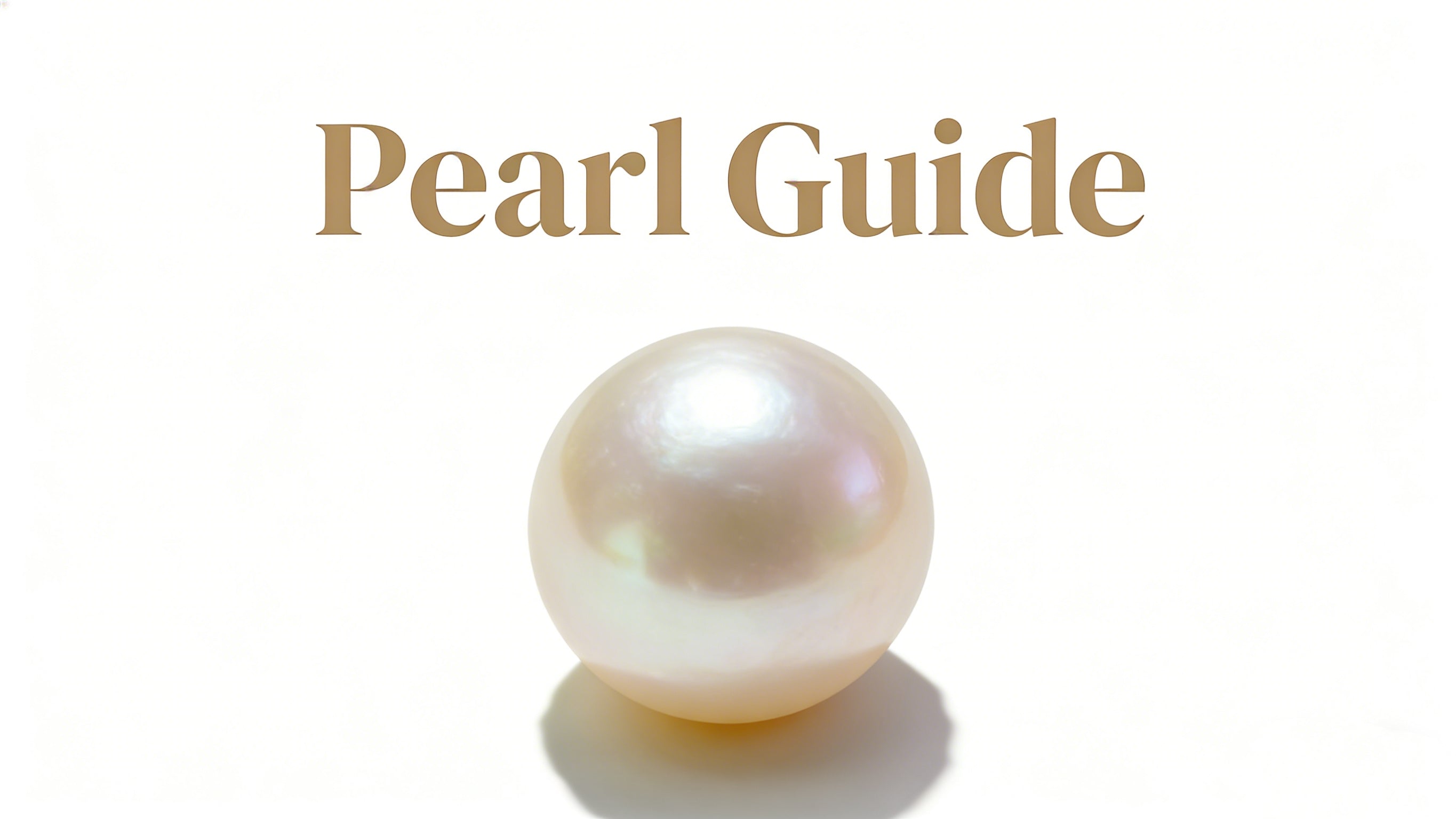
Pearls are the only organic gemstones produced by living organisms in nature. Unlike gemstones that need cutting and polishing to reveal their brilliance, pearls are a perfect gift from nature that emit a gentle, lustrous glow without any human carving. For thousands of years, pearls have been regarded as symbols of purity, elegance, and wealth, holding a unique and precious place among all gemstones.
This comprehensive guide will take you through every aspect of pearls—from how they form to their physical properties, from their historical and cultural significance to their modern practical value. Whether you are a pearl enthusiast, a jewelry collector, or looking to buy your first pearl piece, this guide will provide you with thorough, practical knowledge to help you better understand and appreciate this treasure from the sea.
What is a Pearl?
A pearl is an organic gemstone produced inside a living mollusk (primarily oysters and mussels). It does not require billions of years of high heat and pressure in the earth like diamonds, nor does it need complex cutting like colored gemstones. Pearls are the only gems formed naturally by a biological organism, which gives them a distinctive classification in gemology.
Pearls are mainly composed of calcium carbonate (CaCO3), typically in the crystalline forms of calcite or aragonite, making up about 82–86% of a pearl's composition. The remaining components include organic material (primarily conchiolin, about 10–14%) and moisture (about 2–4%). This unique organic–inorganic composite structure is what gives pearls their characteristic luster and resilience.
Pearl Physical Properties
Hardness: Pearls have a Mohs hardness of 2.5–4.5, which is relatively soft. This means pearls are more easily scratched or damaged than most gemstones and require extra careful care. A pearl's surface can be scratched by metal, sand grains, or even other jewelry.
Specific Gravity: Pearls typically have a specific gravity between 2.60 and 2.85, a property that helps distinguish natural pearls from imitations.
Luster: The most notable feature of pearls is their unique "pearlescence," produced by the reflection and diffraction of light by thousands of thin aragonite crystal layers within the pearl. High-quality pearls have a deep, mirror-like luster capable of reflecting clear images of surrounding objects.
Orient: When light diffracts and interferes through the thin aragonite plate layers, the pearl's surface can display rainbow-like color flashes known as "orient."
Shape: Pearls come in many shapes, including round, near-round, oval, button, drop, and baroque (irregular shapes). Perfectly round pearls are the rarest and most valuable.
Size: Pearl sizes range from 2 millimeters to over 20 millimeters. Freshwater pearls are generally smaller, while South Sea pearls can exceed 20 millimeters. Size is a major factor affecting a pearl's value.
How are Pearls Formed?
The formation of pearls is one of nature's most remarkable phenomena, reflecting a living organism's exquisite response mechanism to external irritation.
Formation of Natural Pearls
When a foreign object (such as a grain of sand, parasite, or other tiny material) accidentally enters the space between an oyster's or other pearl-producing mollusk's mantle and shell, this irritant causes discomfort. To protect itself, the mollusk secretes a substance called nacre to coat the irritant.
Nacre consists of alternating thin layers of aragonite crystals and organic material (conchiolin). The mollusk continuously secretes nacre layer upon layer, enclosing the irritant; this process can last months or even years. Over time these layers accumulate and eventually form the pearl we see.
The formation of natural pearls depends entirely on chance, making them extremely rare. It's estimated that in the wild only about one in ten thousand oysters produces a pearl suitable for jewelry, which explains why natural pearls were historically so valuable.
Formation of Cultured Pearls
Most pearls on the modern jewelry market are cultured pearls. In the early 20th century, Kokichi Mikimoto of Japan successfully developed cultured pearl techniques, transforming the pearl industry.
The formation of cultured pearls is similar to that of natural pearls, but it is initiated by humans. Pearl farmers carefully implant a nucleus (usually a shell bead) and a small piece of mantle tissue into the oyster's mantle. This nucleus acts as an irritant and prompts the oyster to secrete nacre to coat it.
The cultivation process usually takes 2–7 years, depending on the type of pearl:
- Akoya Pearls: 18–24 months
- Freshwater Pearls: 2–6 years
- Tahitian Pearls: 18–24 months
- South Sea Pearls: 2–4 years
Cultured pearls are nearly identical to natural pearls in chemical composition, physical structure, and appearance; the only difference is how their formation is initiated.
What is Mother of Pearl?
Mother of Pearl, scientifically known as nacre, refers to the inner layer of the shells of certain mollusks such as oysters, mussels, and abalone. When you open a pearl oyster, you'll discover that iridescent, smooth, and exceptionally beautiful layer lining the inside of the shell—that is Mother of Pearl. It possesses a unique “iridescent effect”, displaying flashes of pink, green, blue, and white as the viewing angle changes.
The substance secreted by Mother of Pearl is nacre. When this substance coats the shell walls in layers, it forms the shell lining (Mother of Pearl). When it coats a foreign irritant that enters the shell interior (such as a grain of sand or an artificially implanted nucleus), it forms a pearl. Thus, its chemical composition is nearly identical to that of a pearl, primarily consisting of calcium carbonate (aragonite crystals) and nacre proteins (organic colloids).
Ancient people observed that this lustrous substance produced and nurtured pearls, hence naming it “Mother of Pearl”.
Types of Pearls
In the world of pearls, the type not only determines their appearance but also directly defines their rarity and market value. Pearls are generally divided into two camps: freshwater and saltwater. They differ greatly in growing environment, the host mollusk used for culturing, and the texture they ultimately display.
1. Freshwater Pearls
Freshwater pearls mainly come from bivalves such as the triangle sail shell, and their primary cultivation area is concentrated in China, especially Zhuji, Zhejiang.
Unlike saltwater pearls, which typically yield one pearl per shell, a single freshwater mussel can produce dozens of pearls at once. Early freshwater pearls were often cultured without a nucleus, meaning the entire pearl is made of nacre from inside out—very durable and not prone to flaking.
They are the most varied in shape: besides common near-round shapes, there are teardrops, button shapes, rice-grain shapes, and highly artistic baroque (irregular) forms. In color, freshwater pearls naturally come in pastel shades like pink, peach, and lavender.
In recent years, China has developed nucleated freshwater pearls (often called "Edison pearls") with diameters reaching over 12 mm. Their luster and roundness can rival expensive saltwater pearls, challenging the stereotype that freshwater pearls are inferior to saltwater pearls.
2. Akoya Saltwater Pearls
When people picture the "classic pearl necklace", they often think of Akoya. Akoya pearls come from the Pinctada fucata (Akoya oyster), with major producing regions in Japan and the South China Sea. These oysters are extremely sensitive to their environment, and each usually produces only one pearl, so pearls of comparable quality command much higher prices than ordinary freshwater pearls.
Akoya is famed for its sharp, mirror-like luster. In good light, a high-quality Akoya can reflect a person's features like a mirror. Because they are usually small (5–9 mm) but possess intense sheen, they're nicknamed "small powerhouses". Akoya pearls are often classic white with charming pink overtones, making them a top choice for weddings, formal dinners, and other formal occasions.
3. Tahitian Black Pearls
Tahitian black pearls come from the large black-lipped oyster, primarily found in the pristine waters of French Polynesia. Many newcomers worry that black pearls are dyed, but Tahitian black pearls' dark colors occur naturally. The deep pigments secreted by the black-lipped oyster's mantle produce pearls with a naturally rich gray-black base.
Tahitian black pearls are the only pearls that can display "peacock green". On a dark body color, they often show overtones of peacock purple, sea blue, or metallic green. This irreplicable coloration makes each Tahitian black pearl feel like a unique work of art.
Tahitian pearls typically range from 8 mm to 14 mm in diameter. Because they grow slowly and require very high water quality, they have long been favorites of Hollywood stars and collectors with distinctive tastes.
4. South Sea Pearls
South Sea pearls come from large pearl oysters (gold-lipped or silver-lipped) and are found in northern Australia, Indonesia, and Philippine waters. They are widely regarded as the "King of Pearls".
- White South Sea Pearls: Produced by the silver-lipped oyster. These pearls are notable for their large size (usually starting at 10 mm and sometimes reaching 20 mm), and their luster is soft and deep like satin, commonly in silvery-white tones that convey elegance and presence.
- Golden South Sea Pearls: Produced by the gold-lipped oyster. These pearls can display a color reminiscent of 24K pure gold. Deep golden South Sea pearls are not only symbols of wealth but, due to their extremely demanding cultivation conditions, remain perennial favorites in the collectors' market.
South Sea pearls have very long growth periods (usually requiring 2–3 years or more) and very low success rates, so a single high-quality, perfectly round South Sea pearl can often command prices of tens of thousands of US dollars.
What Color is Pearl?
The color of a pearl is a complex three-dimensional space made up of body color, overtone, and orient. To truly understand a pearl's color, you must first break down its visual components:
- Body Color: This is the pearl's fundamental color, determined by natural pigments in the nacre. For example, when we refer to white pearls, golden pearls, or black pearls, we're describing their body color.
- Overtone: A subtle layer of color that sits over the body color. It's like applying a tinted highlight to skin—for instance, white pearls often display pink, silver, or green overtones.
- Orient: The most premium visual feature. When light interferes and diffracts among the many stacked aragonite crystals, the pearl's surface can flash rainbow- or neon-like iridescence. Not all pearls show prominent orient; it's a hallmark of high-quality nacre.
Pearls display an astonishing range of colors, from classic white to mysterious black, and each color has its own unique charm and value.
1. Classic White & Cream
White is the oldest and most favored pearl color, ranging from pure white to cream. Japanese Akoya and South Sea white pearls are representatives of this group.
- Akoya white pearls: Often have strong pink or silver overtones. In Japanese culture, slightly pink white pearls are considered particularly flattering to Asian skin tones.
- South Sea white pearls: These whites are usually richer and more substantial, showing a pure or silvery white reminiscent of cool, elegant silk.
- Cream pearls: A warm, slightly yellowish white that conveys a vintage, gentle elegance.
2. Luxurious Golden
Mainly produced by the gold-lipped Pinctada maxima (South Sea) oyster. Colors range from pale champagne to deep, 24K-gold-like hues. Golden pearls are often large and highly collectible. Vivid Gold is the pinnacle, symbolizing supreme power and wealth, and is very popular in Southeast Asian and Chinese markets.
3. Mysterious Black / Tahitian
Tahitian black pearls from French Polynesia are the most famous, with actual hues ranging from deep gray to black, often showing green, blue, purple, or peacock overtones. Black pearls exude a mysterious and elegant aura.
- Peacock pearls: The crown of black pearls. On a deep gray base, they flash green, purple, and metallic sheens like peacock feathers.
- Aubergine pearls: A deep purple-toned option, full of mystery.
- Silver-gray pearls: Presents a cool, metallic feel, ideal for modern minimalist jewelry designs.
4. Romantic Multicolor / Pastel
Freshwater pearls are the "magicians" of color.
- Pink pearls: Delicate pink pearls are very popular, especially common among freshwater pearls. Shades range from pale pink to rose, symbolizing feminine softness and romance.
- Purple pearls: Rarer, found in some freshwater pearls, with shades from light to deep purple.
- Chocolate pearls: Deep brown pearls mainly produced in Chinese freshwater farms, increasingly fashionable in recent years.
Factors Affecting Pearl Color
A pearl's color isn't accidental; it's determined by multiple factors.
Mollusk species: This is the key factor determining color family. Different oysters or mussels produce different nacre colors—for example, black-lipped oysters yield black pearls, and gold-lipped oysters yield golden pearls.
Water environment: The chemical makeup, temperature, and mineral content of the water affect nacre coloration.
Mollusk diet: The plankton and nutrients consumed by the mollusk influence nacre pigments.
Mantle tissue color: In cultured pearls, the color of the implanted mantle tissue can affect the final pearl color.
Nacre layering: The thicker and more uniformly arranged the nacre layers, the richer the light refraction and the more captivating the orient. This means color "depth" often correlates positively with pearl quality.
Cultivation time: The longer a pearl remains inside the mollusk, the thicker the nacre becomes and the deeper the color may be.
Note that some pearls may be dyed or irradiated to alter or enhance color. When purchasing high-value pearls, request certification of authenticity.
What is Pearl Meaning?
Pearl Symbolic Meanings
Pearls are more than gifts from the sea; they are among the most emotionally resonant symbols in human history. Unlike the unyielding hardness of diamonds or the passionate intensity of rubies, pearls, with their gentle and embracing nature, have composed an epic about beauty, virtue, and time across Eastern and Western civilizations.
1. Purity & Chastity
A pearl's natural, unworked, radiant white luster makes it synonymous with purity. Throughout the long Middle Ages and the Renaissance, pearls were often used to adorn the robes of the Virgin Mary. In modern weddings, a bride's wearing of a pearl necklace is not only to complement the gown but also to symbolize innate innocence and the sacred protection of love. Pearls are believed to purify the wearer's spiritual energy and shield against worldly restlessness.
2. Loyalty & Faith
In marriage and deep friendships, pearls represent "unwavering loyalty." This symbolism arises from a pearl's layered structure—thousands of nacreous layers closely bonded together, irreversible once formed. Thus, pearls are often seen as emblems of enduring love and steadfast faith. Gifting a pearl is essentially a promise of a stable relationship that, like a pearl, can withstand storms and not fade with time.
3. Transformation & Growth
The formation of a pearl itself is a powerful metaphor—turning pain and irritation into beauty and value. This process symbolizes personal growth and rebirth after adversity. It reminds the wearer that life's pricks—the challenges, setbacks, and wounds—are not merely suffering but opportunities to cultivate greater worth. Wearing a pearl is like carrying a reminder: you have the ability to transform life's irritants into smooth, radiant, and precious wisdom. This inwardly born resilience is one of the deepest lessons pearls offer humanity.
4. Wisdom & Patience
If diamonds are products of pressure, pearls are products of time. A high-quality pearl requires years of slow accumulation. Therefore, in traditional cultures pearls symbolize inner wisdom gained through accumulated experience. They remind the wearer that true value often requires patient waiting and long-term effort. This aesthetic of "great wisdom appearing simple, modest and reserved" is why pearls are held in such high esteem among Eastern literati.
5. The Moon's Tears
In ancient Greek mythology, pearls were believed to have formed from the sea-spray that fell from Aphrodite (Venus) at her birth; in ancient Indian legend, pearls were the moon's tears fallen into the sea and captured by oysters. This close association with the moon lends pearls a feminine, mysterious, and life-filled quality, symbolizing intuition, sensitivity, and emotional balance.
Pearl Birthstone Meanings
June Birthstone: As June's birthstone, pearls are closely linked to the onset of summer and the surge of life. Traditionally, people born in June are thought to possess a multifaceted character like a pearl—gentle and elegant outwardly, yet resilient and creatively rich inside. As a protective stone, pearl birthstone jewelry is believed to bring good luck and stabilize fluctuating emotions.
Zodiac Birthstone: Pearls are birthstones for Gemini and Cancer. The pearl's varied overtones (such as overtone colors) resonate with Gemini's dual nature and lively intelligence, helping Geminis find inner steadiness amid complex information. Ruled by the moon, Cancer regards the pearl as a "moonstone"; it can offer emotional security and the glow of maternal warmth to sensitive Cancers.
Wedding Anniversary Stone: Pearls occupy an irreplaceable place in marriage commemorations, witnessing the journey from friction to fulfillment.
- Third Anniversary (Leather/Pearl Anniversary): In the early years of marriage, the couple is laying a stable foundation. Gifting pearls symbolizes that the two have begun, like an oyster surrounding a grain of sand, to learn mutual tolerance through friction and jointly nurture a happy life.
- Thirtieth Anniversary: Thirty years is called the "pearl wedding". This milestone signifies that the relationship has become like a perfect South Sea pearl: after thirty years of layered wrapping, it has gained substantial depth and radiates a profound, captivating, indelible luster. It is the ultimate expression of longevity, completeness, and preciousness.
Pearl Spiritual Meanings
Beyond the material level, pearls also carry profound significance in spiritual and metaphysical domains.
1. Emotional Balance and Inner Calm
Pearls grow in water and are naturally tied to the water element. In energy healing, water represents emotions, intuition, and the subconscious. Therefore, pearls are considered excellent at regulating emotions.
If you are experiencing anxiety, impatience, or large mood swings, a pearl's "cool clarity" can calm the mind quickly—like moonlight smoothing a turbulent sea. Unlike the aggressive energy of fire-associated gemstones, a pearl's soothing is gradual and gentle, helping the wearer find an inner point of balance (Zen). This calm is not stagnant; it is a composed, focused serenity that comes from seeing things clearly.
2. Feminine Energy and Fertility
Since ancient times, pearls have shared the same mythic language as the moon. The moon's phases influence the tides, and pearls are born of the tides. Pearls are seen as the ultimate expression of feminine power, symbolizing motherhood, intuition, and receptivity. In many ancient cultures, pearls were talismans for protecting pregnancy and childbirth. They are believed to resonate with a woman's physiological cycles, ease stress, and enhance the wearer's compassion and warmth. Pearls are not just beauty; they are a nurturing force.
3. Authenticity and Inner Beauty
Unlike gems that require cutting and polishing, a pearl's beauty comes from its natural state. In the spiritual realm this symbolizes authenticity. Pearls encourage us to accept and appreciate our true selves. Each subtle hue and growth line on a pearl are marks of its life's journey. It reminds us: you don't need to contort yourself to fit external standards of beauty. True value comes from inner fullness and self-acceptance; that effortless, unadorned confidence is the beauty that endures over time.
4. Wholeness and Protection
A pearl's near-perfect spherical shape symbolizes wholeness and cosmic unity in semiotics. Many spiritual practitioners believe pearls create a faint but resilient protective field around the wearer. Like a shell protecting its inner tissue, a pearl can help shield the wearer from negative emotional "parasites" and interference, preventing energy leakage. In Eastern philosophy, pearls are often associated with the virtues of a noble person—gentleness, trustworthiness, and moral integrity.
What is Pearl Good for?
Beyond aesthetics and symbolism, pearls are also thought to offer various benefits in traditional medicine and modern wellness.
1. Emotional and Psychological Healing Properties
Emotional healing: Pearls are considered calming and can relieve anxiety, stress, and emotional instability. Many find wearing pearls helps maintain emotional balance, especially during times of high stress or upheaval.
Improved sleep: Because of their calming properties, pearls are believed to promote better sleep quality and help with insomnia. Traditional practices include placing pearls under the pillow or wearing pearl jewelry before bed.
2. Physical Healing Properties
Skin beauty: Pearl powder has been used for centuries in Asian beauty traditions. Modern studies indicate pearl powder contains amino acids, trace elements, and calcium, which may benefit the skin. Pearl powder is used in skincare products and is said to improve complexion, reduce wrinkles, and promote skin regeneration.
Digestive support: In traditional Chinese medicine, pearls are used to address indigestion, excess stomach acid, and other digestive issues. Pearl powder is believed to neutralize stomach acid and soothe the digestive tract.
Bone and dental health: Pearls are rich in calcium and, in some traditional medicine systems, are used as a natural calcium supplement that may support bone and dental health.
Heart health: Some studies suggest pearl powder may benefit the cardiovascular system, although more scientific research is needed to confirm this.
Anti-inflammatory and cooling effects: Pearls are thought to have a cooling quality; in traditional Ayurvedic medicine, pearls are used to relieve eye conditions or inflammation.
3. Chakra Connections
In energy work and chakra systems, pearls are associated with multiple chakras:
Crown Chakra: Pearls are believed to open and activate the crown chakra, promoting spiritual awakening and connection to higher consciousness.
Heart Chakra: Pearls' link with the heart chakra helps open the heart, fostering love, compassion, and emotional healing.
Solar Plexus Chakra: Pearls may help balance the solar plexus chakra, enhancing confidence and personal power.
The History of Pearls
The history of pearls is as long as human civilization; they have played important roles in different eras and cultures.
Ancient Times
Prehistoric and early civilizations: Archaeological evidence shows that humans have used pearls for at least 7,500 years. Ancient pearls found in the Arabian Gulf demonstrate the long history of pearl trade in the Persian Gulf.
Ancient Egypt: In the legend of Cleopatra, she is said to have dissolved a priceless pearl in vinegar and drank it to show Antony the wealth of Egypt. While the truth of this story is questionable, it illustrates the value and status of pearls in the ancient world.
Ancient Rome: During the Roman Empire, pearls were the ultimate symbol of wealth and status. The Roman elite's obsession with pearls reached such heights that Julius Caesar issued laws restricting who could wear pearls, limiting them to the ruling classes.
Ancient China: China's history with pearls dates back to around 2300 BCE. Pearls were regarded in Chinese culture as treasures of the dragon, symbolizing wisdom and power. Ancient Chinese texts record various uses for pearls, including medicinal and cosmetic applications.
Ancient India: The Hindu scripture the Rigveda (around 1500 BCE) mentions pearls, describing them as daughters of the ocean. In India, pearls were believed to be formed by the union of moonlight and the sea.
Medieval Period
In medieval Europe, pearls continued to symbolize wealth and power. European nobility and royalty extensively used pearls to adorn clothing and jewelry. England's Queen Elizabeth I was famous for her love of pearls; many of her portraits show lavish pearl jewelry and pearl-adorned clothing.
During this period, pearls were mainly imported to Europe from the Persian Gulf, the Red Sea, and the Indian Ocean. The pearl trade was an important commercial activity that drove exploration and the development of trade routes.
Discovery of the New World
After Columbus reached the Americas in 1492, abundant natural pearl resources were found along the Caribbean and South American coasts. Venezuela's Isla Margarita (its name comes from the Latin word for "pearl") became an important source of pearls. Large quantities of American pearls flowed into European markets and peaked in the 16th and 17th centuries.
However, overharvesting led to depletion of pearl resources; by the late 18th century, many pearl beds had been damaged.
The Cultured Pearl Revolution
In the early 20th century, Japanese inventor Kokichi Mikimoto successfully developed commercial cultured pearl techniques, considered the most important revolution in pearl history. In 1893 he produced the first hemispherical cultured pearl, and in 1905 he successfully cultivated a perfectly round cultured pearl.
The development of cultured pearl technology made pearls far more accessible than the extremely rare luxury they once were, while also protecting wild pearl oyster populations. Today, over 95% of pearls on the market are cultured.
Modern Era
The 20th and 21st centuries have seen continued advances and innovations in pearl-culturing technology. Different types of cultured pearls were developed, including:
- 1920s: Commercial culturing of Akoya pearls in Japan
- 1960s: Development of South Sea pearl farming in Australia and Southeast Asia
- 1970s: Successful culturing of Tahitian black pearls
- 1980s: Rise of China's freshwater pearl industry
Today, the pearl industry is a multibillion-dollar global business, and pearls continue to play significant roles in fashion, jewelry, and culture.
Where Pearls Are Found?
Pearl-producing regions are spread across the world, and pearls from different areas have distinct characteristics and values.
Japan: Japan is a primary source of high-quality Akoya pearls. Akoya pearls are known for their near-perfect roundness, excellent luster, and classic white color. Major farming areas are located along the coasts of southern Japan—Kyushu, Shikoku, and parts of Honshu. Japan's pearl industry has a history spanning more than a century, with world-leading techniques and quality control.
Australia: Australia is one of the world's largest producers of South Sea pearls. The warm coastal waters of northern Australia are ideal for cultivating white and gold South Sea pearls. Major farming regions include the Kimberley region of Western Australia and the Northern Territory. Australian South Sea pearls are noted for their large sizes (typically 10–20 mm) and silvery luster.
French Polynesia (Tahitian): French Polynesia is the renowned and unique source of Tahitian black pearls. These pearls come from the black-lipped oyster (Pinctada margaritifera), mainly farmed in the Tuamotu Archipelago and the Gambier Islands. Tahitian pearls are famous for their distinctive dark tones and overtones of peacock green, blue, and purple.
China: China is the world's largest producer of freshwater pearls, accounting for over 95% of global freshwater pearl production. Major farming areas are in the Yangtze River basin, Zhuji City in Zhejiang Province (known as "China's Pearl Capital"), Jiangsu Province, and Hunan Province. China's freshwater pearl output is huge and relatively affordable, offering many colors and shapes. In recent years, China has also begun cultivating seawater pearls, with steadily improving quality.
Indonesia: Indonesia is an important source of gold South Sea pearls. Its warm tropical waters are suited for the gold-lipped oyster (Pinctada maxima); major farming areas are near Sulawesi and the Maluku Islands. Indonesian golden pearls are prized for their deep gold tones and large sizes.
Philippines: The Philippines produces both gold and white South Sea pearls, with major farming around Palawan. The Philippines is also a historic source of natural golden pearls, though today it mainly produces cultured pearls.
Myanmar: Myanmar's Mergui Archipelago is an emerging source of South Sea pearls, producing high-quality white and gold pearls.
United States: The U.S. primarily produces freshwater pearls in the Mississippi River basin. Tennessee is a center for U.S. freshwater pearl farming. Additionally, California's coast produces abalone pearls.
Mexico: Mexico's Sea of Cortez is the source of the precious Cortez Pearls. These pearls come from the rainbow-lipped oyster (Pteria sterna) and display a unique iridescent rainbow sheen, making them very rare.
Other origins: Vietnam (an emerging site for Akoya-style pearls), Thailand (produces both freshwater and saltwater pearls), India (a cultured pearl producer), and the Persian Gulf region (historically famous for natural pearls, though production has greatly declined).
How Much is Pearl Worth?
To accurately assess the value of a pearl, you can't rely solely on intuition. To establish a universal language for the pearl trade, the Gemological Institute of America (GIA) set forth seven major grading standards. Like the "4Cs" for diamonds, this system is the definitive guide to evaluating pearl quality.
GIA's Seven Standards
1. Luster
Luster is the most important factor when evaluating a pearl's value. It refers to the intensity and clarity of light reflected from the pearl's surface and the depth that seems to emanate from within.
Top-quality pearls exhibit a "mirror-like" luster: you can clearly see your facial reflection on the surface, with sharp edges and no haziness. Low-quality pearls have dull, cloudy luster and can look like lime or plastic; such pearls are often called "dead" pearls.
Luster not only determines a pearl's visual appeal but also reflects the density of the nacre layers. The stronger the luster, the denser the nacre and the higher the value.
2. Surface Quality
As gems produced by living organisms, flawless pearls are extremely rare. GIA grades pearls by observing the number and prominence of surface blemishes. Types of blemishes include pits, bumps, scratches, cracks, or spots.
Not all blemishes are fatal. If a flaw is located at the drill hole or in an inconspicuous area and does not affect the overall structure, the pearl's value can be maintained. But if blemishes are widespread and penetrate deep into the nacre, the pearl's value will drop sharply. When shopping, try rotating the pearl under different lighting to find specimens with the fewest blemishes and highest surface cleanliness.
3. Shape
Although pearls come in many fascinating shapes, classic aesthetics place perfect roundness at the top of the value pyramid. Other shapes decrease in value in roughly this order: near-round, oval, button, drop, baroque, and circle.
- Perfect Round: A flawlessly spherical pearl, extremely rare and typically only a tiny fraction of a harvest.
- Symmetrical Shapes: Includes drop, oval, and button. A perfectly symmetrical drop-shaped pearl used as a pendant can also have high collector value.
- Baroque: Irregularly shaped pearls. While not round, their unique artistic character and unrepeatability have made high-quality baroque pearls increasingly popular with designer brands, and prices for quality pieces have been rising.
4. Color
Color assessment is delicate and consists of three components: body color (base color), overtone (surface-floating hues), and orient (iridescent, rainbow-like sheen).
Color preferences vary by culture and market. Rare colors typically command higher prices. For example, among Akoya pearls, pure white with a subtle pink overtone is most valuable; in Tahitian pearls (Black-lipped oysters), deep gray with peacock green overtones is highly sought after; and in South Sea pearls, rich deep gold (resembling 24K gold) is the crown jewel.
5. Nacre Thickness
This mainly applies to nucleated cultured saltwater pearls. Nacre refers to the calcium carbonate layers secreted around an implanted bead nucleus. Thicker nacre makes a pearl more durable and helps the luster last. If the nacre is too thin, the pearl may "peel" or even reveal the bead nucleus, rendering it without collectible value.
GIA judges nacre thickness using specialized instruments or by observing the depth of luster. Generally, nacre thickness of 0.5 mm or more is considered high quality. For Akoya pearls, an ideal nacre thickness is at least 0.4 mm.
6. Size
Pearl diameter is typically measured in millimeters (mm). All else equal, larger pearls are more valuable. For example, a 9 mm Akoya pearl may cost several times more than a 7 mm pearl. Larger pearls are rarer because they require longer cultivation time. Ten millimeters is considered a large size threshold for freshwater and Akoya pearls, while 15 mm and above are rare sizes for South Sea pearls. Large-diameter pearls are not only rare but also make a powerful visual statement.
7. Matching
This standard evaluates how uniform multiple pearls are in a necklace, pair of earrings, or other multi-pearl jewelry in terms of luster, color, shape, surface quality, and size. For a strand or matching pair of earrings, the consistency among the pearls (color, size, shape, and luster) greatly affects value. To assemble a strand of top-tier South Sea pearls with perfectly consistent color and luster, thousands or even tens of thousands of pearls may be sorted over several years. Therefore, a perfectly matched strand commands a premium far above the sum of individual pearls.
Price Ranges for Pearls
By origin and type, pearl values generally rank from highest to lowest as follows: natural pearls, South Sea pearls, Tahitian pearls, Akoya pearls, freshwater pearls. Pearl prices vary widely, from tens of dollars to millions.
Freshwater Pearls: Individual freshwater pearls can start at $5–$10; high-quality large freshwater pearls may reach $100–$300 or more. A freshwater pearl necklace typically ranges from $100–$2,000.
Akoya Pearls: Single high-quality Akoya pearls typically range from $100–$500. A classic 16–18 inch Akoya pearl necklace usually sells for $1,000–$10,000 or higher, depending on quality.
Tahitian Pearls: Single Tahitian pearls start around $200, with high-quality large specimens reaching $2,000–$5,000. A Tahitian pearl necklace generally ranges from $3,000–$30,000.
South Sea Pearls: These are the most expensive cultured pearl type. Single high-quality South Sea pearls start around $500, with large, near-perfect pearls commanding $10,000 or more. A South Sea pearl necklace typically ranges from $10,000–$100,000 or higher.
Natural pearls: Natural pearls are extremely rare and can cost tens of thousands to even millions of dollars. Famous natural pearls, such as "La Peregrina" (once owned by Elizabeth Taylor), sold for $11.8 million at auction in 2011.
How to Tell If Pearls are Real?
As technology advances, high-quality imitation pearls (such as bead-coated pearls, plastic beads, and glass beads) have become increasingly realistic. To avoid being deceived when buying, it's essential to master a set of scientific methods for identifying real versus fake pearls.
1. Tooth Test
Gently rub the pearl back and forth against the edge of your front teeth. A genuine pearl will have a distinct, slightly gritty feeling like fine sandpaper. That's because the surface of a real pearl is composed of countless tiny aragonite (or calcite) crystals overlapping, which is microscopically uneven. In contrast, imitation pearls made of plastic or glass feel very smooth and slightly sticky, with no noticeable friction. (Note: Keep the pearl clean for this test and apply only very light pressure to avoid scratching the pearl's surface.)
2. Temperature Response
Real pearls are organic gemstones with relatively slow thermal conductivity. When you first touch a real pearl, it feels pleasantly cool, then gradually warms to body temperature as you wear it. Plastic imitations often feel warm immediately, or quickly become warm to the touch.
3. Surface Inspection
Surface texture: Use a 10x loupe to examine the pearl's surface. Real pearls typically show growth lines, tiny pits, or ripple-like growth structures—these "imperfections" are signs of natural life. Imitation pearls (especially industrially produced bead-coated types) often look overly perfect and uniform; under magnification you may even see fine spray marks from machine coating or tiny bubbles.
Luster depth: Real pearls have luster that scatters from within the nacre layers, giving a sense of depth. Imitations usually have surface-level sheen that looks flat and lifeless, lacking the dynamic iridescence of a real pearl.
4. Drill-hole Check
Real pearls: The edges of the drill hole are usually very distinct and sharp; from the side you can clearly see the layered nacre build-up.
Imitation pearls: These are often made by coating a bead nucleus with "pearl paint." At the drill hole you may find peeling or flaking of the coating, or even see the glass or plastic core. If the hole shows obvious sinkage or accumulated coating, it's very likely a cheap imitation.
5. Weight Test
Real pearls are mainly composed of calcium carbonate and have relatively high density. A real pearl will feel weighty in your palm. Plastic imitations are typically light; solid glass beads may be heavy but their weight distribution often feels overly uniform and lacks the distinctive feel of a real pearl.
6. Bounce Test
If a pearl is dropped from about 60 centimeters onto a glass plate, a real pearl will bounce roughly 15–20 centimeters. Imitations usually have weaker bounce or show irregular trajectories.
7. X-ray Test
For high-value saltwater pearls (such as South Sea or Tahitian pearls), visual inspection alone may not conclusively determine whether they've been treated. A professional laboratory can use X-rays to reveal internal structure and distinguish natural pearls, cultured pearls, and imitations. Natural pearls show continuous growth rings; cultured pearls reveal a clear boundary around the implanted nucleus; imitations lack any biological layering.
Of course, the simplest and most reliable method is to ask the seller for an authoritative certificate of identification. A valid certificate will detail the pearl's type, size, color, and whether any enhancement treatments have been performed.
Pearls in Jewelry
Pearls are coveted largely for their unmatched wearability. Whether at a formal state dinner or walking casually down a city street, pearls subtly and precisely elevate the wearer's presence.
1. Pearl Necklaces
Pearl necklaces are the most ceremonial category of jewelry. Different lengths have different names, each representing a distinct lifestyle attitude:
Collar/Choker (14–16 inches): This closely fitting necklace originated in the Victorian royal court and carries a vintage diva vibe. It's ideal with V-necks or off-the-shoulder styles, perfectly flattering the neckline to present a contradictory charm that's both rebellious and elegant.
Princess (17–19 inches): The best-selling, most versatile length worldwide. It falls just below the collarbone and pairs with almost any neckline. Whether with a business suit or a casual tee, a princess strand can instantly banish dullness and lend the wearer a soft, radiant glow.
Matinee (20–24 inches): Falling near the upper chest, this length feels more casual and layered. In business or semi-formal social settings, it lets your presence remain polished while adding a touch of feminine softness.
Opera (28–34 inches): A length full of drama. Wear it as a single long strand for a free-spirited look, or tie an elegant knot at the chest for a 1920s Gatsby-era socialite effect.
Rope (45 inches and longer): This necklace is fashion's multitasker. It can be wrapped two or three times around the neck, worn as a waist chain, or layered as multiple bracelets. Coco Chanel favored this free-layering approach, completely overturning the notion that pearls are stodgy.
Pearl necklaces also come in "uniform" strands (beads all the same size, conveying precision) and "graduated" strands (larger in the center, smaller at the ends, creating rhythm), catering to different aesthetic preferences.
2. Pearl Earrings
If necklaces signify power, earrings are the finishing touch of feminine charm. Pearls, with their soft diffuse reflection, are called "natural reflectors for the face":
Studs: Every woman should have a pair of single-pearl studs in her jewelry box. They are the pinnacle of minimalism—no flashy design needed, yet they add an air of sophistication as hair moves.
Drop earrings: Pearls suspended beneath delicate gold lines or diamonds sway gently with the body's movement. This dynamic beauty is especially flattering to the face, elongating visual lines.
Hoop & cluster styles: Modern designs set pearls into large metal hoops or cluster many small pearls together. These styles feel powerful and contemporary, favored by young professional women and influencers.
3. Pearl Rings
Pearl rings have recently become favorites of independent women and brides.
Cocktail/Statement rings: Large South Sea white pearls or deep Tahitian black pearls are often set as centerpieces on bold settings. These designs need no extra accessories—one pearl on the fingertip becomes the centerpiece of the room.
Toi et Moi (You and Me) rings: A romantic design featuring two pearls (or a pearl and a gemstone) set side by side, symbolizing the meeting and harmony of two hearts.
Stacking rings: Small freshwater pearls on thin bands, when layered, convey casual yet fashionable "French elegance."
LUO Jewelry's pearl ring collection pursues lustrous, eye-catching center stones while innovatively integrating architectural lines into ring design. From tributes to classic minimalism to ornate, elegant vintage styles, each pearl ring is handcrafted by experienced artisans. Here you can encounter that one-of-a-kind pearl engagement ring—let it be the warm, steadfast witness to your vow of love.
4. Pearl Brooches and Hair Accessories
In contemporary jewelry trends, pearls have moved far beyond traditional uses:
Pearl brooches: Influenced by the British royal family and women in politics, pearl brooches have returned to the fashion forefront. Whether pinned to a suit lapel or adorning a silk scarf, they instantly elevate the outfit's texture and authority.
Pearl hair accessories: Pearl headbands and hair clips have caused a sensation on social platforms. Incorporating precious gems into everyday hairstyles perfectly embodies the aesthetic of "refinement down to the strands".
Cross-genre mixing: Modern designers love pairing pearls with chunky metal chains, leather, or even wood. Especially with baroque (irregular) pearls, pearls break free from a single rounded aesthetic, giving jewelry greater artistic expression and personality.
5. Iconic Pearl Jewelry
Coco Chanel: The 20th-century style icon made multiple strands of pearls a fashion statement. She famously said, "A woman needs three things: a real pearl necklace, a fake one, and another real one".
Audrey Hepburn: In Breakfast at Tiffany's, the multi-strand pearl necklace Hepburn wears became one of cinema's most iconic jewelry images.
Jacqueline Kennedy: As First Lady, her signature triple-strand faux pearl necklace defined pearl fashion, making pearls a symbol of elegance and political stature.
Princess Diana: Her love of pearls—especially the iconic multi-strand pearl choker with a sapphire clasp—influenced an entire generation of pearl enthusiasts.
Modern Celebrities: From Rihanna to Harry Styles, contemporary celebrities wear pearls in innovative and bold ways, breaking the stereotype that pearls are only for traditional occasions.
Care and Cleaning of Pearl Jewelry
Pearls are living gems; your care for them will show in their increasingly lustrous sheen. By following these simple care principles, your pearls will not only enhance your look today but, over time, become timeless family heirlooms.
How to Clean Pearl Jewelry at Home?
Pearls are porous and easily absorb substances from their surroundings, so you must be extra careful when cleaning them.
Everyday cleaning: After each wear, we recommend gently wiping the pearls with a soft, slightly damp cotton cloth. This effectively removes sweat and oils from the skin and prevents acidic components from damaging the nacre.
Deep cleaning: If pearls appear dull, you can use a mild diluted soap solution (avoid cleaners containing ammonia or harsh chemicals). After cleaning, be sure to rinse thoroughly with clean water and blot dry with a soft, dry cloth.
Strictly forbidden: Never use an ultrasonic cleaner or a steam cleaner, and do not use toothpaste or any abrasive brushes—these can cause irreversible scratches to the pearl's delicate surface.
How to Wear Pearl Jewelry Daily?
1. Follow the golden rule for wearing pearls: put them on last and take them off first. Chemicals, acids, and oils in perfume, hairspray, cosmetics, and sunscreen are pearls' enemies. They can dull a pearl's surface. Therefore, always put pearls on after completing your hair and makeup and applying perfume; when you get home and remove your makeup, take the pearls off first.
2. Avoid wearing pearls while swimming, bathing, or doing vigorous exercise. Chlorine in pools and heavy perspiration can damage the nacre.
3. Pearls contain moisture, and wearing them regularly helps maintain their luster. Long periods of nonuse can cause pearls to lose shine or crack.
How to Store Pearl Jewelry?
Pearls contain about 4% moisture; if stored in an environment that's too dry, they can "dehydrate" and crack; if it's too humid, they may develop mold.
Store separately: With a Mohs hardness of only 2.5–4.5, pearls are easily scratched by diamonds or rubies and sapphires. Always store pearls in a velvet pouch, silk lining, or a separate jewelry box to avoid friction with harder items.
Avoid airtight storage: Do not keep pearls long-term in sealed plastic bags or safes. Pearls need to absorb small amounts of moisture from the air to maintain their characteristic luster.
Restringing: Pearl necklaces should be restrung every 1–2 years to prevent breakage. It's recommended to knot between each pearl so that if the strand breaks, the pearls won't all scatter.
Conclusion
Pearls are more than jewelry; they are artworks created by time, life, and the sea. We hope this comprehensive pearl guide helps you better understand the charm of pearls, assists you in making wise and tasteful decisions, and allows these life-born gems to bring you lasting delight and inspiration.
Whether you're looking for a true heirloom to pass down to future generations or want to elevate the elegance of your everyday outfits, pearls are an excellent choice. The appeal of pearls in jewelry lies in their high versatility. They don't discriminate by age, skin tone, or occasion. With their timeless vitality, pearls perfectly embody what it means to be truly classic.
At LUO Jewelry, we insist on strict initial selection for every pearl. Our sourcing experts focus not only on diameter and roundness but also pursue—that near-obsessive—"mirror-like" high luster. Every LUO Jewelry pearl piece is designed to crown you with noble, understated elegance. We believe that only by combining transparent standards of value with exquisite setting craftsmanship can we ensure that what you buy from LUO Jewelry is not just a piece of jewelry but a work of art worthy of being treasured by time.
If you still have any questions about pearls or wish to begin a custom pearl jewelry journey, LUO Jewelry's gem specialists are always ready to assist you.