
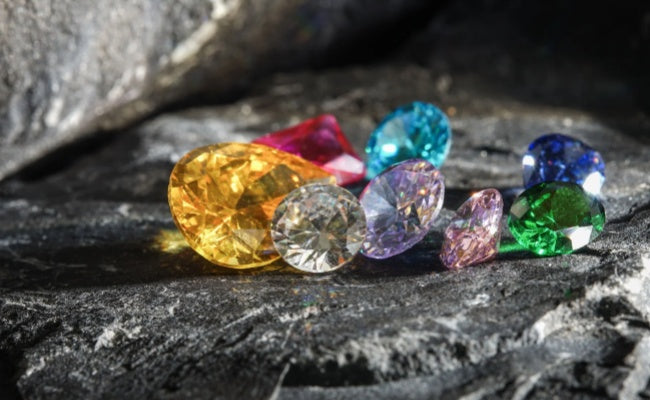


What is Aquamarine? The Ultimate Guide to Aquamarine Stone
In the dazzling world of gemstones, aquamarine stands out with its stunning blue hues—ranging from pale icy blue to deep bluish-green. Its distinctive color captures the essence of the sea, instantly transporting you to the crystal-clear lagoons of the Maldives.
Aquamarine is not just a beautiful stone; it is the birthstone for March, the traditional gift for a 19th wedding anniversary, and for centuries has been cherished as a talisman by sailors, royalty, and spiritual seekers.
But what lies behind this enchanting blue gem? Why is it so sought after? How is its price determined? As a consumer, how should you choose the perfect aquamarine?
This comprehensive guide to aquamarine will deeply explore everything you need to know. Whether you are a jewelry enthusiast, a collector, or a bride or groom seeking a unique aquamarine engagement ring, this article will serve as your most authoritative reference.
What is Aquamarine?
Aquamarine is an important member of the beryl family, the same mineral family that includes emerald and morganite. Its English name, "aquamarine", comes from the Latin aqua marina, meaning "sea water", a perfect description of the gem's characteristic blue-green tones.
Aquamarine's chemical formula is Be3Al2(SiO3)6; it is a beryllium aluminum silicate. Its mesmerizing blue color comes from trace amounts of iron, specifically the presence of divalent iron ions (Fe2+).
Aquamarine Physical Properties
Crystal system: Belonging to the hexagonal crystal system, aquamarine commonly forms well-defined six-sided prismatic crystals, a distinctive shape that makes raw specimens visually appealing.
Hardness: On the Mohs scale, aquamarine rates 7.5–8, making it highly durable—second only to diamonds, rubies, and sapphires—so it's perfectly suitable for rings, pendants, and other jewelry intended for everyday wear.
Specific gravity: 2.68–2.74; its relatively light weight makes it comfortable to wear.
Refractive index: 1.577–1.583, contributing to good luster and transparency.
Luster: Vitreous; when polished, surfaces exhibit bright reflections.
Cleavage: Imperfect, with fractures that are conchoidal or uneven.
Transparency: Ranges from transparent to translucent; high-quality aquamarine typically shows excellent transparency and clarity with few internal flaws.
Aquamarine Optical Properties
Aquamarine exhibits dichroism—showing different colors when viewed from different angles. This optical effect adds unique visual appeal to the gem. In natural daylight, aquamarine may display shades from sky blue to deep ocean blue, while under incandescent light it can show a slightly greener tone.
How is Aquamarine Formed?
Aquamarine primarily forms in pegmatites. Pegmatite is a coarse-grained igneous rock that forms during the final stages of magma cooling. The formation of aquamarine is the crystallization result of long, complex geological processes deep within the Earth.
Magma differentiation: As granite magma cools deep in the crust, minerals crystallize and separate. Residual magma rich in volatile components (such as water and fluorine) and rare elements (such as beryllium and lithium) remains.
Pegmatite formation: These residual, element-rich fluids intrude cracks in surrounding rock and slowly crystallize at lower temperatures, forming pegmatite veins. Because cooling is slow, crystals have time to grow large, so minerals in pegmatites are typically sizable.
Aquamarine crystallization: In cavities (vugs) within these veins, if conditions are right—usually temperatures around 400–600°C, sufficient geological pressure, and suitable chemistry—beryllium, aluminum, and silicon combine to form beryl crystals. When trace iron occurs in the magma, iron ions enter the crystal lattice and give the gem its alluring blue color.
Uplift and exposure: Over millions to billions of years of geological activity, rocks containing aquamarine are gradually uplifted toward the surface. Through weathering and erosion, the gems are eventually exposed.
What Color is Aquamarine?
The most captivating feature of aquamarine is its dreamy blue tones, reminiscent of seawater. Just as the sea's color shifts endlessly, aquamarine's color also varies, ranging from delicate sky blue to deep ocean blue—each tone radiating its own unique charm.
Light blue: The most common color, fresh and elegant like a clear sky. Light blue aquamarine is usually more affordable and suitable for everyday wear.
Pure blue: Moderately saturated and presenting a clear sea-blue, this is one of the most popular aquamarine hues on the market.
Deep blue: Rare and precious, showing a profound ocean blue with almost no green. Deep Intense Blue aquamarines are the most valuable and are known as "Santa Maria" blue.
-
What is a "Santa Maria" Aquamarine?
The name comes from the Santa Maria de Itabira mining district in Minas Gerais, Brazil, where stones of exceptionally intense, deep blue were once found. Although the original mine now produces very little, "Santa Maria color" has become a commercial term used to describe aquamarines with extremely high color saturation and top-quality deep blue, regardless of whether they originated in Brazil or Africa.
Blue-green: Blue with a noticeable green tint. While also beautiful, these stones typically carry slightly lower market value than the pure blue varieties.
Generally, the deeper and purer the color (i.e., the more pronounced the blue and the less green), the higher the value. Deep, evenly colored aquamarines are especially prized. Personal preference also matters—some people favor the soft elegance of light blue because it exudes a fresh, refined quality.
Factors that Affect Aquamarine Color
1. Iron content
Pure beryl is colorless (called goshenite). Aquamarine's blue color comes from trace amounts of iron in the crystal structure.
- Fe2+ (ferrous iron): Produces deep blue.
- Fe3+ (ferric iron): Produces yellowish or greenish tones.
The ratio of these two ions determines whether an aquamarine's hue leans more blue or more green.
2. Heat treatment
The vast majority of aquamarines on the market have been heat-treated. This is an industry-accepted enhancement method. Heating can remove yellow or green tones (effects of ferric iron), leaving a purer, more marketable blue. This treatment is permanent, won't fade over time, and does not compromise the gem's structural stability.
What is the Aquamarine Meaning?
Aquamarine Symbolic Meanings
Aquamarine is not only a marvel of geological processes but also a vessel for human feelings and beliefs. Its captivating blue symbolizes our yearning for a peaceful life, authentic self-expression, and a commitment to enduring love.
1. Courage and Protection
In ancient Mediterranean cultures, aquamarine was revered as a "treasure of the sea." Greek and Roman sailors believed aquamarine were treasures lost from the sirens' hoard and that the stones could calm the waves. This tradition made aquamarine a symbol of courage and protection. Beyond serving as a psychological talisman for sailors facing storms, in modern terms it represents the inner courage needed when facing life's upheavals or career changes. Aquamarine is also thought to form a spiritual shield that filters out negative external energies. For travelers or those who feel adrift in life, aquamarine symbolizes safe arrival at the other shore.
2. Youth and Health
Aquamarine's shades span from pale icy blue to deep teal, colors closely linked to water—the source of life. It symbolizes vitality. Ancient people believed wearing aquamarine could refresh one's appearance and slow the visible effects of aging, so it was often associated with the "fountain of youth." Aquamarine represents physical vigor and also symbolizes spiritual "cleansing." Like a stream washing pebbles, it was thought to cleanse the wearer's inner fatigue and impurities, promoting overall harmony and longevity.
3. Loyalty and Harmony
In gem lore, aquamarine is a well-known "stone of love," but unlike the passion of ruby, it signifies enduring, steady intimacy. Traditionally, husbands would gift aquamarine to their wives the day after the wedding, symbolizing a calm and lasting married life. It is believed to help mend emotional rifts and bring distant souls closer together. Additionally, it serves as a stabilizing symbol for harmonious relationships, representing the mutual trust and understanding couples need when dealing with life's small trials. In modern marriages, it stands for a loyalty that, like clear seawater, has been purified by time and remains untainted.
4. Wisdom and Insight
Aquamarine's clarity is linked to human thought and consciousness. In moments of confusion or difficult decision-making, aquamarine symbolizes the insight that clears the fog. It helps the wearer cut through emotional noise to make objective, wise choices. Many thinkers believe gazing into aquamarine can stimulate deep reflection, lifting one's mind above worldly distractions into a tranquil state conducive to profound understanding.
5. Communication and Expression
In modern spiritual healing, aquamarine corresponds to the throat chakra and represents integrity between speech and action. Wearing aquamarine is believed to help people who are shy or overly anxious find their voice and courageously express their truest desires. Aquamarine also symbolizes graceful communication: it softens harsh words and helps conversations flow smoothly like water, resolving unnecessary conflicts.
Aquamarine Birthstone Meanings
March Birthstone: Officially designated as the March's birthstone, aquamarine has an almost perfect resonance with the seasonal changes of this month. March is the transition from winter to spring, when the earth begins to awaken and melting glaciers flow into rivers. Aquamarine's enchanting blue resembles thawing ice and the first budding spring waters. It symbolizes the "awakening of hope" and the "restarting of vitality". For those born in March, wearing aquamarine birthstone jewelry can bring a sense of renewal—no matter what cold winters were endured, they can bloom again at this time.
Zodiac Birthstone: In astrology, aquamarine is the birthstone for Pisces and Aries. As a water sign, Pisces has a natural soulful affinity with aquamarine. It can enhance Pisces' intuitive abilities while protecting their sensitive hearts from external harm, helping them find balance between dream and reality. For passionate fire sign Aries, aquamarine serves as a "coolant." It helps impulsive Aries calm their mind, adding measured thought before action so courage is not reckless.
19th Wedding Anniversary Stone: Aquamarine is also the traditional gemstone for a 19th wedding anniversary, symbolizing that after nearly two decades of marriage the couple's feelings are as deep and pure as the sea and continually refreshed. It encourages spouses to continue exploring the depths of each other's souls, cultivating a tenderness more resilient than metal over the years they've shared.
Aquamarine Spiritual Meanings
In the realms of crystal healing and spiritual practice, aquamarine is believed to hold powerful energy and profound spiritual significance. Its spiritual core teaches us to live like water—flowing with nature, winning without fighting.
1. Calm and Tranquility
Aquamarine is called the "stone of calm," and its spiritual essence mirrors the ocean's capacity to embrace. Its frequency is said to help the wearer enter a "flow state"; it does not forcefully suppress negative emotions but gently washes away anxiety and intrusive thoughts like seawater cleansing a shore. For meditation practitioners, aquamarine is an excellent booster. It can quiet cortical activity, allowing consciousness to withdraw from the noisy material world and sink into the deepest, most tranquil layers of the self, helping individuals reconcile with their inner true selves.
2. Intuition and Spirituality
Aquamarine is closely linked to the element of water, which in spirituality symbolizes the subconscious and intuition. It is believed to heighten one's spiritual radar, improving sensitivity to subtle shifts in surrounding energy fields. This enhancement is not mystic hallucination but a "clarification of perception," enabling you to detect critical cues that rationality might miss when handling complex issues. Additionally, it supports communication with the "higher self" or universal energy. On the path of spiritual growth, aquamarine acts like an underwater spotlight, illuminating desires hidden by fear and guiding the wearer toward their destined life course.
3. Deep Resonance with the Chakras
In energy-healing systems, aquamarine's color energy mainly works on the throat and heart chakras, building a channel of "heart-throat unity." Aquamarine is primarily associated with the following energy centers:
- Throat Chakra: The main area of aquamarine's influence. It is believed to open and balance the throat chakra, promoting honest, clear communication. For those who struggle to express themselves, speak their truth, or give public presentations, aquamarine is seen as a powerful aid.
- Heart Chakra: Aquamarine's soothing energy also resonates with the heart chakra, helping heal emotional wounds and opening the heart to give and receive love.
- Third Eye: Aquamarine is used to activate higher perception, enhancing foresight and protecting the spirit from worldly illusions.
What is Aquamarine Good for?
In traditional beliefs and alternative therapies, aquamarine is thought to offer various physical and mental healing benefits. It's important to emphasize that these claims lack scientific validation and should not replace professional medical advice or treatment. Nonetheless, understanding these traditional views helps explain aquamarine's cultural significance.
1. Emotional and Psychological Healing Properties
Stress Reduction and Detox: Aquamarine is an emotional "purifier." It's especially suitable for those who feel "overloaded." When stress reaches a tipping point, wearing or holding aquamarine can provide a psychological comfort like "jumping into a cool lake," helping the nervous system recover quickly from stress responses.
Courage and Overcoming Fear: Legend says ancient sailors used it to seek the sea god's protection and to overcome fear of the deep. In modern terms, it can grant people courage to face the unknown—particularly helpful for social anxiety or for those who feel unable to speak up in important situations—offering gentle support.
Emotional Stabilizer: For people whose emotions fluctuate easily (such as those with strong water-sign traits like Cancer or Pisces) or for those who become irritable during menstrual cycles or stressful periods, aquamarine can balance internal "heat," preventing impulsive decisions driven by emotional outbursts.
2. Physical Healing Properties
Respiratory and Throat Health: Aquamarine is considered a guardian of the throat. Traditionally it's used to relieve sore throats, bronchitis, and seasonal allergy-related respiratory discomfort. Its "cooling" qualities are believed to help reduce localized inflammation.
Immune and Endocrine Support: Due to its association with the throat chakra, many healers believe it can support thyroid function and thereby regulate overall metabolism. It is also thought to indirectly boost immune resistance by reducing stress hormones (like cortisol).
Vision Relief: Ancient people sometimes soaked aquamarine in water to make "gem water" for rinsing the eyes. In the screen era, while we do not recommend doing that, gazing at aquamarine's color for visual relaxation can indeed alleviate eye fatigue caused by long hours at a computer.
3. Relationships and Social Benefits
Precise Communication: Aquamarine doesn't just make you "talk more"; it helps you "say the right things." It can filter out aggression and defensiveness in communication, allowing both parties to exchange views calmly and objectively.
Preserving Long-term Partnerships: Traditionally, aquamarine has been seen as the "stone of marital happiness." It symbolizes eternal youth and love, promotes understanding and tolerance between partners, and when a relationship is wearing down, it offers a gentle restorative energy that reduces needless arguments.
Enhancing Empathy: It helps us step outside self-centeredness to understand others' situations from a broader perspective, which is especially helpful when handling complex workplace relationships and family conflicts.
History of Aquamarine Stone
The history of aquamarine stretches back thousands of years, leaving a rich record of legends and uses across different civilizations. These historical stories add a charming cultural depth to aquamarine.
Ancient Egypt: In ancient Egypt, aquamarine was regarded as a symbol of happiness and eternal youth. Egyptians used aquamarine to make amulets and jewelry, believing it could protect the deceased on their journey to the afterlife.
Ancient Greece and Rome: The Greeks and Romans prized aquamarine, believing it to be a treasure of the sea gods Poseidon or Neptune and capable of protecting them from the dangers of the ocean. Sailors carried aquamarine amulets, praying to the sea gods for safe voyages. This tradition was so deeply rooted that aquamarine became one of sailors' most cherished talismans. The Romans also believed aquamarine could absorb the breath of youth and preserve vitality.
Medieval Europe: In the Middle Ages, aquamarine was thought to have magical healing and prophetic powers. It was said to reveal truth and detect lies, and was sometimes used in courts as a tool to witness honesty. Historically, many royals and nobles loved aquamarine. The British royal collection includes several exquisite aquamarine pieces, including Queen Elizabeth II's aquamarine crown, which was gifted by the Brazilian government in 1953 and set with many high-quality aquamarines.
Modern Developments: From the late 19th to early 20th century, with the discovery of large aquamarine deposits in Brazil, availability of aquamarine increased greatly, and it gradually transformed from an exclusive treasure of royalty and nobility to a beautiful gemstone accessible to a broader public.
Where is Aquamarine Found?
Aquamarine is found in many countries and regions around the world, and stones from each locality have unique characteristics and qualities.
Brazil: Undoubtedly, Brazil is the world's most important source of aquamarine, especially Minas Gerais. The Santa Maria de Itabira mining area in Brazil is particularly famous; the deep blue aquamarines from there are called "Santa Maria blue" and are synonymous with the highest quality. Although that mining area has ceased production, the term "Santa Maria" is still used to describe deep blue aquamarine of equivalent quality, regardless of actual origin. Other significant Brazilian sources include Bahia and Espírito Santo.
Pakistan: The Gilgit-Baltistan region in northern Pakistan, particularly the Karakoram mountain mines, produces high-quality aquamarine. These stones often have good transparency and attractive blue tones. Pakistani aquamarine is noted for its well-formed crystal habit, frequently appearing as hexagonal prismatic crystals, and is popular with mineral collectors.
Madagascar: As a country rich in gem resources, Madagascar produces large quantities of aquamarine, with quality ranging from commercial to gem grade. In recent years, Madagascar has become an important source of aquamarine supply.
Nigeria: Nigeria in Africa produces quality aquamarine and became an important supplier after significant deposits were discovered in the 1990s.
Mozambique: Mozambican aquamarine is valued for its pleasing color and relatively large crystal sizes.
Other Sources: Myanmar, Russia's Ural Mountains, the United States (Colorado and California), China's Xinjiang and Yunnan provinces, and Australia also have aquamarine deposits. Aquamarines from different sources may vary in color, clarity, and crystal quality, but origin alone is not the sole determinant of value. A high-quality aquamarine from a lesser-known source can be more valuable than a low-quality stone from a major locality.
How Much is Aquamarine Worth?
Understanding the factors that affect aquamarine's value is essential for buyers and collectors. Aquamarine's worth is determined by multiple factors; mastering this knowledge will help you make informed decisions when purchasing aquamarine jewelry.
1. Color
Color is the decisive trump card for aquamarine's value. When evaluating, pay attention to three dimensions: hue, saturation, and brightness.
Purity of tone: Deep blue aquamarines with high saturation are the most valuable, especially those that are nearly free of green tones. While natural aquamarine often carries a hint of green, modern taste favors less green, which increases value.
Santa Maria blue: This is the industry's top benchmark. It originates from the nearly exhausted Santa Maria mines in Brazil and represents an extremely deep, rich blue without gray undertones. Today, any gem from any origin that reaches this color level is labeled "Santa Maria color" and commands a premium.
About heat treatment: This is an open secret. Approximately 95% of aquamarines on the market undergo low-temperature heat treatment to remove yellow or green tones. This treatment is considered "acceptable" by industry standards and produces very stable color. Although untreated deep-blue stones are extremely rare, for gems of the same color grade today, whether they've been treated has far less price impact than the saturation of the color itself.
2. Clarity
Eye-clean clarity is the entry ticket to high-quality aquamarine. If an aquamarine shows obvious fractures or mineral inclusions to the naked eye, its value will drop sharply. Serious collectors look for completely pure crystals. Because aquamarine typically forms in pegmatites, producing large and often clean crystals, any visible impurity in this variety is an unacceptable flaw.
3. Cut
Cut is not only about shape but about balancing color depth and scintillation. Excellent cutting can maximize an aquamarine's beauty, enhancing its sparkle and luster.
Aquamarine exhibits pleochroism—its color may appear lighter or darker from different directions. A skilled cutter will orient the stone so the deepest blue faces upward from the table. Also, because aquamarine's color is generally light, a cut that is too shallow can cause "windowing" (the gem's center looks hollow); if the cut is too deep, the stone may appear dull. The emerald cut commonly showcases the color's purity best, while round and oval cuts tend to produce more sparkle.
4. Carat Weight
Aquamarine prices increase with carat weight, but not exponentially like rubies or diamonds. Large aquamarine rough is relatively common, so the per-carat price for a 5–10 carat aquamarine won't be tens of times higher than that of a 2-carat stone. Once a stone exceeds 25 carats while retaining rich color and perfect clarity, it reaches "museum-grade" or "top-collector" status; at that point price begins to reflect rarity rather than linear growth.
5. Aquamarine Price Range
Aquamarine prices vary widely—from a few dollars per carat to several thousand dollars—depending on quality.
Commercial grade aquamarine: About $10–$60 per carat. These stones are usually very pale, often close to "water color", appearing nearly transparent light blue and sometimes resembling a pristine clear quartz in certain lighting. Slight wispy inclusions or growth lines may be visible to the naked eye. Commercial-grade aquamarines are typically cut in bulk to standard sizes for fast-fashion jewelry or sterling silver pieces.
Fine-grade aquamarine: About $100–$350 per carat. When you visit a high-end mall jewelry counter, many of the attractive aquamarines you see belong to this grade. These stones have a noticeable blue tone—pleasant sky blue—and generally excellent clarity, often meeting the "eye-clean" standard. Cuts are more refined, showing better refraction and luster. Fine-grade aquamarine is a popular choice for affordable-luxury jewelry, ideal as the center stone for an engagement ring or an anniversary gift.
Gem-grade aquamarine: About $400–$1,200+ per carat. Stones at this level often display striking electric blue or deep ocean blue with very high color saturation, favored by collectors and high-end custom clients. In addition to outstanding color, gem-grade aquamarines typically feature superb designer cuts. Because the crystal structure is very pure, cutters can arrange facets precisely to make the stone's center appear alive with shimmering light.
Top-quality aquamarine: $1,500–$3,500+ per carat. This represents the top 1% of the aquamarine pyramid. These stones usually possess the exceptionally rare, deep blue with no gray or green undertones—the industry's coveted "Santa Maria color". This blue seems to draw the soul into the depths, radiating a subtle glow even in dim light. Top-quality aquamarines are extremely scarce in nature. Besides peak color, they often come in large carat weights (commonly over 10 carats) with flawless clarity.
How to Tell If an Aquamarine is Real?
Although aquamarine doesn't suffer the same widespread imitation problem as rubies or sapphires, its price rises sharply with color depth, so you will still find many pieces on the market that are counterfeit or of inferior quality sold as genuine.
Common aquamarine imitations:
1. Blue Glass (Man-made Glass)
Glass is the most common low-end imitation and typically shows up in cheap jewelry at tourist spots.
How to tell them apart:
- Look at inclusions: Natural aquamarine is usually very clear, but under a 10x loupe you may find tiny, parallel, tube-like inclusions (rain-like inclusions). This feature is like aquamarine's "fingerprint." If a large-carat stone is completely inclusion-free and the price seems too good to be true, it's very likely man-made. Glass often contains swirl patterns or round bubbles.
- Hardness: Natural aquamarine has a high hardness of 7.5–8; its facet edges should be sharp and crisp. Glass is much softer (Mohs 5–6) and after wearing will often show rounded or worn facets.
- Color uniformity: Aquamarine's blue is usually evenly distributed. If color concentrates in cracks or appears blotchy or banded, the stone might be dyed low-quality quartz or dyed glass.
- Thermal feel: A simple test is temperature—natural aquamarine, as a mineral, feels noticeably cool to the touch at first, while glass warms quickly to body temperature.
2. Blue Topaz
Topaz is the strongest competitor to aquamarine because the two look very similar, and topaz often costs only a third or less of aquamarine.
How to tell them apart:
- Density: Topaz is much denser than aquamarine. Two stones of the same volume will feel noticeably heavier if one is topaz.
- Pleochroism: Viewed from the side, aquamarine can show blue and nearly colorless tones; topaz usually shows weaker pleochroism.
- Brilliance: Topaz has a higher refractive index; its sparkle is generally stronger and more intense than aquamarine's.
3. Synthetic Spinel and Synthetic Aquamarine
Synthetic spinel is often used to imitate March birthstones; its color can look "too blue" compared with natural aquamarine. Under a Charles color filter, synthetic blue spinel often shows red or pink, while natural aquamarine retains its original color.
Synthetic aquamarine is technically producible (hydrothermal method), but because synthesis is expensive, it is uncommon on the market. Identifying this imitation requires microscope examination of growth patterns (V-shaped or wavy), which ordinary consumers may find difficult.
Aquamarine Gemstone in Jewelry
Because of its beautiful color, good durability, and relatively affordable price, aquamarine has a wide and varied range of uses in jewelry design.
1. Aquamarine Rings
Aquamarine rings have exploded in popularity in recent years, especially as a top choice for "nontraditional engagement rings".
The new favorite for engagement rings: More and more modern women are tired of the same old diamonds, and aquamarine engagement rings have grown increasingly popular as a unique alternative to traditional diamond rings. The soft blue of aquamarine symbolizes loyalty and harmony—qualities that resonate with the essence of marriage.
Cocktail rings: Because aquamarine often yields large, high-quality rough stones, designers love cutting them into 10–20 carat or even larger sizes for bold cocktail-ring centerpieces. Aquamarine cocktail rings catch and reflect light at dinners or social events, instantly drawing attention and showcasing the wearer's confidence and flair.
Classic settings: Aquamarine rings commonly use four-prong or six-prong settings; this open design allows maximum light to enter the stone, activating its cool brilliance. For those seeking a modern look or extra protection, bezel settings offer a clean, streamlined appearance while helping to prevent damage to large aquamarine stones from knocks.
At LUO Jewelry, we carefully select high-quality rough stones and use precise proportion cutting to ensure each ring displays a dynamic, shimmering beauty as it turns. Whether an engagement ring symbolizing eternal commitment or a statement cocktail ring, LUO Jewelry retains optimal light-through openings in the metal inner walls so that that deep blue becomes the wearer's most captivating accent.
2. Aquamarine Necklaces and Pendants
Aquamarine necklaces are extremely versatile and pair well with many wardrobe styles. From simple solitaire pendants to intricate designs, aquamarine's clear blue adds an elegant touch to the neck. A teardrop or pear-shaped aquamarine pendant quietly hanging at the collarbone can resemble a droplet rising from the sea. This kind of design is highly adaptable and works perfectly with both office shirts and evening gowns. In High Jewelry, aquamarine is often cut into multiple uniformly sized faceted stones or left as irregular freeform gems, woven into dramatic, waterfall-like necklaces.
In pendant design, LUO Jewelry has ingeniously adopted a "floating setting" technique to minimize metal coverage and allow light to penetrate the aquamarine from all angles. Wearing an LUO Jewelry aquamarine necklace is not just neck adornment; it feels like wearing a frozen tear of time, letting elegance quietly flow along the collarbone.
3. Aquamarine Earrings
Aquamarine earrings include studs, drops, hoops, and various other styles. Their delicate color suits everyday wear while also adding allure on formal occasions. Drop earrings are a natural stage for aquamarine. As the wearer moves, the stones capture and reflect surrounding light, visually brightening the complexion and making the eyes appear clearer. Small 3–5 carat aquamarine studs are an excellent choice for daily commuting—neither as heavy or somber as sapphire nor as sharp as white diamonds, they offer a composed elegance.
From lively tassel drops to minimalist four-prong studs, LUO Jewelry's aquamarine earrings aim to use the natural refraction of high-quality stones to cast a soft, deep blue halo around your face, instantly elevating presence.
4. Aquamarine Jewelry Styles Trends
Modern Minimalist Aquamarine Jewelry: Contemporary designers increasingly favor "de-decoration". Clean lines and minimalist designs highlight aquamarine's purity and align with modern aesthetics. Common approaches include tension settings, which make the stone appear to float between two metal edges with no excess lines to obstruct its transparency.
Vintage Aquamarine Jewelry: Drawing inspiration from Art Deco or Victorian-era designs, vintage styles combine intricate details with aquamarine to create a nostalgic atmosphere. Art Deco emphasizes geometric lines, symmetry, and crisp cuts. For example, an emerald-cut aquamarine surrounded by small step-cut diamonds or black onyx. This approach brings out aquamarine's cool clarity to the fullest.
Bohemian Aquamarine Jewelry: Recently, jewelry that preserves raw crystal shapes without fine faceting has become popular. Bohemian styles often wrap rugged metal textures around natural hexagonal aquamarine crystals, preserving the mineral's primal vitality—ideal for fashion influencers and artists seeking individuality.
5. Metal Pairings for Aquamarine Jewelry
White gold/platinum: The cool tones of white metals complement aquamarine's blue, a combination often described as "ice and sea". White metals enhance the gem's cool luster, creating a sacred, modern, minimalist sense of luxury. Aquamarine set in white gold or platinum is especially fitting for weddings, high-end dinners, or modern minimalist settings.
Yellow gold: The warm tones of yellow gold create a strong color contrast with aquamarine, producing a vintage, luxurious feeling that evokes Mediterranean sun and sea. Yellow gold aquamarine jewelry is particularly suitable for traditional celebrations and retro outfits, helping to boost presence.
Rose gold: The pink undertones of rose gold soften aquamarine's coolness, creating a dreamy "sunset at sea" effect—romantic and youthful. Rose gold aquamarine pieces are ideal for dates and spring–summer wear, and are especially popular with younger buyers.
Sterling silver: Silver settings offer high cost-effectiveness and an earthy texture that pairs well with aquamarine's natural character. Sterling silver aquamarine jewelry is great for daily commuting or travel and pairs well with bohemian styles for a distinctive, personal look.
6. Combinations with Other Gemstones
Aquamarine rarely stands alone; pairing it with other gems often produces an artistic effect where 1 + 1 > 2.
Aquamarine + Diamond: The "royal standard" that never fails. The diamond's fire fills the gaps in aquamarine's scintillation, making the entire piece appear more expensive and dignified.
Aquamarine + Pearl: A combination full of feminine charm. The pearl's warm luster and the aquamarine's clear brightness complement each other, exuding an aristocratic air—commonly used in wedding crowns or long sweater chains.
Aquamarine + Morganite: A "sibling" pairing from the beryl family. The powder-blue and pink tones are visually soothing and have been nicknamed the "cotton candy palette" by the jewelry world, much loved by romantics.
Aquamarine + Sapphire/Tanzanite: Using colors from the same family but with different saturation levels creates a deep ombré effect, delivering strong visual impact.
As experts in color storytelling, LUO Jewelry excels at enhancing a centerpiece's value through the "symbiotic aesthetics" of gemstones. Beyond colorful gem combinations, we also focus on contrast designs using hand-brushed gold, rose gold, or sterling silver to give jewelry a striking, layered fashion tension. This cross-era aesthetic ensures that every LUO Jewelry aquamarine piece retains its unique aesthetic value amid the fast pace of changing fashion.
7. Famous Aquamarine Jewelry
The Dom Pedro: The largest faceted aquamarine in the world, weighing 10,363 carats. Cut by renowned gem artist Bernd Munsteiner into an obelisk shape, it is now housed at the Smithsonian National Museum of Natural History. This gem showcases aquamarine's ultimate clarity and color.
The Roosevelt Aquamarine: A 1,298-carat rectangular step-cut aquamarine that the Brazilian government presented to U.S. First Lady Eleanor Roosevelt.
Queen Elizabeth II's Brazilian Tiara: This astonishing tiara is set with massive rectangular aquamarines and diamonds and was gifted to her by the Brazilian people in 1953 to celebrate her coronation. It was one of the Queen's favorite pieces of jewelry during her lifetime.
Care and Cleaning of Aquamarine Jewelry
Proper care keeps your aquamarine jewelry looking beautiful and extends its lifespan.
How to Care for Aquamarine Jewelry?
Avoid chemicals: Although aquamarine is relatively stable, avoid contact with strong acids, strong bases, and other harsh chemicals. It's best to remove aquamarine jewelry before using cleaning products, cosmetics, or perfume.
Avoid extreme temperatures: Aquamarine tolerates temperature changes relatively well, but avoid sudden shifts to prevent internal stress and cracking.
Avoid impacts: Despite its high hardness (7.5–8), aquamarine can still fracture from strong blows. Remove aquamarine jewelry during sports, heavy labor, or housework.
Store separately: Store aquamarine pieces separately from other jewelry to prevent scratches. Use a soft jewelry pouch or individual compartments in a jewelry box.
How to Clean Aquamarine Jewelry?
Gentle cleaning: The safest cleaning method is warm water and mild soap. Soak the jewelry in soapy water for a few minutes, then gently brush with a soft brush (like a baby toothbrush), paying attention to settings and crevices. Rinse with clean water and dry with a soft cloth.
Avoid ultrasonic cleaners: While aquamarine can often withstand ultrasonic cleaning, fractures or inclusions can be aggravated by ultrasonics. Consult a professional jeweler before using an ultrasonic cleaner.
Steam cleaning: Steam cleaning is generally safe for flawless aquamarine, but it may be risky for stones with fractures. Use cautiously or seek professional advice.
Professional cleaning: Have your aquamarine jewelry professionally cleaned and inspected regularly (for example, once a year) to ensure settings are secure and to catch potential problems early.
Conclusion
With its pure blue color, rich cultural connotations, and contemporary jewelry appeal, aquamarine holds a unique and important place in the gemstone world. Wearing aquamarine expresses a human longing for the romance of the sea. It can carry the ornate elegance of the Victorian era as well as the minimalist aesthetic of the 21st century. Choosing an aquamarine piece is not just selecting a color—it's choosing a clear, rational, and elegant way of life.
When buying aquamarine jewelry, prioritize reputable jewelers such as LUO Jewelry. LUO Jewelry is dedicated to making this deep-sea romance tangible: we select the most richly colored natural aquamarines and have experienced craftsmen hand-carve and finish each piece to ensure brilliant sparkle and pure character. Combined with cutting-edge design and authoritative certification, LUO Jewelry ensures each aquamarine piece has both aesthetic value and collectibility.
If you have more questions about aquamarine, feel free to consult our gem specialists anytime.