

What is Citrine? The Ultimate Guide to Citrine Stone
In the dazzling world of gemstones, few stones radiate the warm, joyful, and vibrant glow of autumn sunshine like citrine. As one of the most popular members of the quartz family, citrine is prized by jewelry designers for its charming golden-yellow hues and celebrated for its powerful energetic properties, earning it the titles "Merchant's Stone" and "Foundation of Success".
For those born in November, citrine is the birthstone symbolizing happiness and prosperity; for people pursuing career success and wealth accumulation, it's an indispensable feng shui treasure.
This Comprehensive Guide to Citrine will take you deep into every aspect of this enchanting gemstone. From its geological formation and physical properties to its cultural status throughout history; from practical tips for distinguishing genuine stones to how to use it for energy healing. Whether you're a gem collector, jewelry enthusiast, or a spiritual seeker looking to elevate your life energy, this article will provide the most complete and authoritative knowledge about citrine crystal.
What is Citrine?
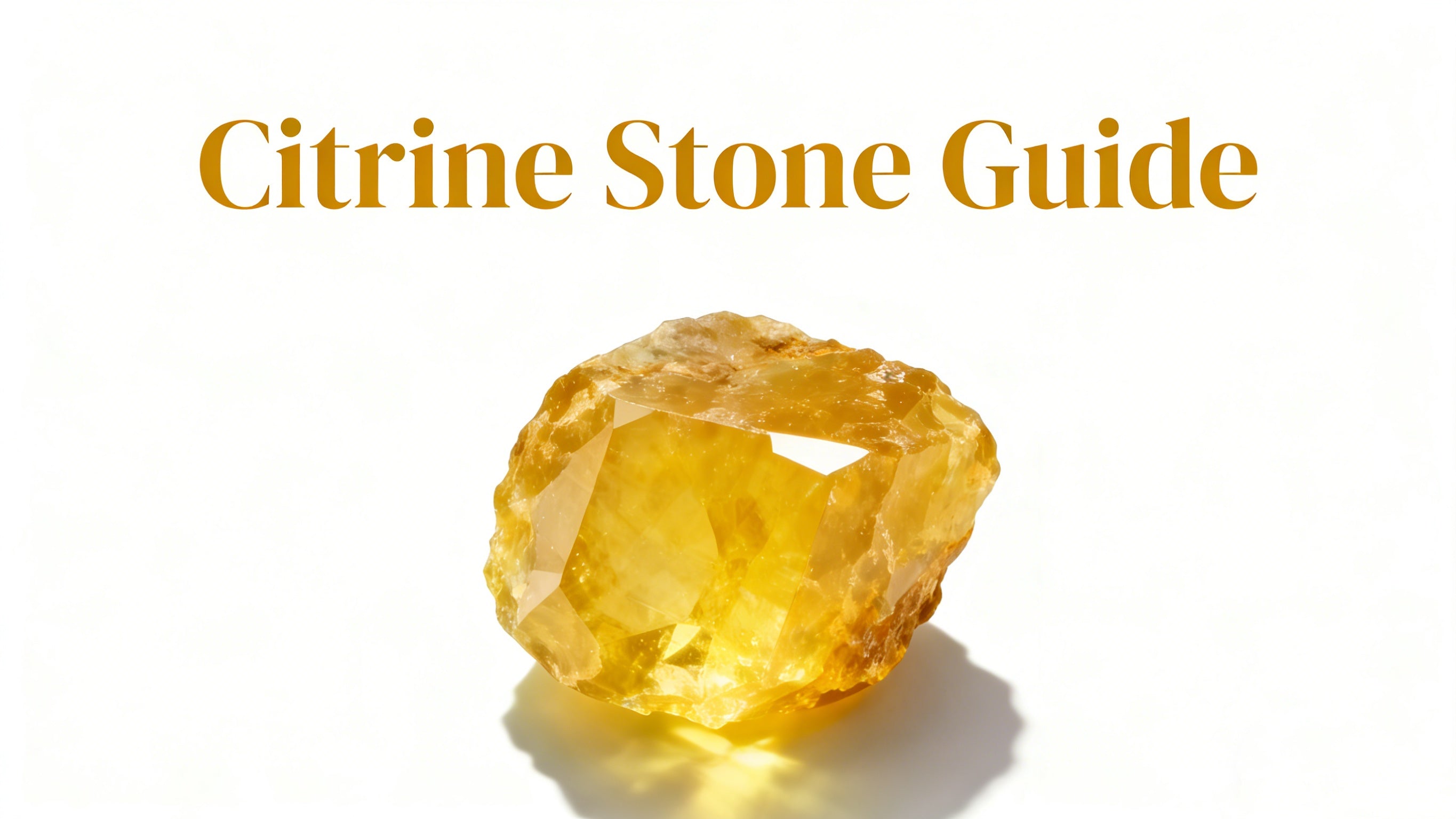
Citrine is a treasured variety of the quartz family. Its English name, "citrine", comes from the French word citron, meaning lemon, which aptly describes the stone's lemon-yellow to golden-orange tones. As a form of quartz, citrine's chemical composition is silicon dioxide (SiO₂), making it one of nature's most beloved yellow gemstones.
Citrine Physical Properties
From a mineralogical perspective, citrine stone possesses a range of distinct physical properties that determine how it performs in jewelry making and everyday wear.
- Hardness: Citrine rates 7 on the Mohs scale, making it a relatively durable gemstone suitable for daily wear. This hardness means citrine stone can resist most everyday abrasions but should still be kept away from harder materials (such as diamonds and sapphires).
- Specific Gravity and Density: Citrine's specific gravity is about 2.65, giving it a noticeable weight in the hand without being overly heavy. This characteristic is also a reference point for identifying authentic citrine.
- Refractive Index: Citrine's refractive index is approximately 1.544–1.553, which gives it good luster and brilliance. When light passes through citrine gemstone, it produces bright reflections and a soft internal glow.
- Cleavage and Fracture: Citrine lacks obvious cleavage planes but exhibits a conchoidal fracture. This means when citrine stone breaks, the surface of the break shows smooth, curved patterns similar to the inside of a shell.
- Birefringence: As a uniaxial crystal, citrine shows weak birefringence—difficult to detect with the naked eye but observable with professional instruments.
- Crystal Structure: Citrine occurs as clusters, geodes, or single crystals, featuring a hexagonal prismatic structure terminating in hexagonal pyramids.
- Transparency: Generally ranges from transparent to translucent. High-quality citrine crystals are clear and bright, with minimal visible inclusions or fissures.
- Thermal Conductivity: Like many natural gemstones, citrine stone has low thermal conductivity. When you touch citrine, it tends to feel cool to the touch, which is one method used to distinguish natural stones from some synthetic materials.
How is Citrine Formed?
The formation of citrine crystal is a long and wondrous geological process that typically takes millions of years. Understanding how citrine forms not only helps us better appreciate this gemstone but also explains why natural citrine is relatively rare.
Natural Formation Process
Natural citrine usually grows in fractures and cavities of rocks such as granite and gneiss. These spaces provide the room and a relatively stable chemical environment necessary for crystal growth. When silica-rich hydrothermal fluids slowly cool deep in the crust, silicon atoms gradually arrange into an ordered lattice structure, forming quartz crystals.
Crystal growth is extremely slow; a citrine crystal a few centimeters in size may take hundreds of thousands of years or longer to form. The surfaces of citrine often show natural striations and growth marks—features that do not reduce its value but instead serve as important indicators for identifying natural citrine.
The yellow color of citrine crystal mainly comes from trace amounts of iron within the crystal structure. When trivalent iron ions (Fe3+) substitute for some silicon in the lattice and color centers form under natural radiation, the quartz acquires its attractive yellow hue.
In some cases, amethyst can transform into citrine through geothermal processes. When amethyst is exposed to temperatures around 470°C, the iron ions can change valence, turning purple to yellow. This natural process occurs in certain geothermally active areas and also provides the theoretical basis for humans producing heat-treated citrine.
Heat-treated Citrine Stone
Because natural citrine crystal is scarce, the vast majority on the market (estimated at over 90%) is actually produced by artificially heat-treating amethyst or smoky quartz. The principle is that when amethyst is heated to between 470°C and 560°C, the charge state of the iron ions changes, causing the color to shift from purple to golden yellow or reddish-orange.
Heat-treated citrine crystal is nearly identical to natural citrine in chemical composition and physical properties; the main difference lies in how the color was formed. Natural citrine's color develops slowly over long geological periods, whereas heat-treated citrine's color is achieved quickly through artificial heating. This treatment is widely accepted as an industry standard in the gem trade, and treated stones will not fade under normal conditions.
*Note: Although the composition is the same, many collectors and those in the crystal healing community prefer untreated natural citrine (which is usually paler in color and may have a smoky quality).
What Color is Citrine?
The most notable characteristic of citrine is its warm yellow tones. Natural citrine stone typically displays a soft, slightly smoky yellow, while heat-treated citrine stone may exhibit a more vivid, saturated golden yellow.
In fact, the color range of this gemstone is far richer and more varied than we might imagine. Citrine's colors range from pale lemon yellow to deep orange-brown, and can be grouped into the following tonal categories:
- Pale yellow: Pale yellow citrine shows a light, bright hue like the morning sun. These stones are highly transparent and convey a fresh, elegant feeling. Pale yellow citrine is usually naturally formed and is moderately priced.
- Golden yellow: Golden yellow citrine is one of the most popular colors, with a brilliant, coin-like luster. This color has moderate saturation—neither too faint nor too intense—striking a perfect balance between visual impact and sophistication.
- Orange-yellow: Orange-yellow citrine carries distinct orange tones, reminiscent of the glow of sunset. These stones feel warm and vibrant, and are especially captivating under light.
- Madeira citrine: Madeira citrine is a prized variety named after the amber color of Madeira wine. It ranges from deep orange to reddish-brown, with rich, full-bodied color that collectors favor. Madeira citrine is often produced by heat treatment, and its unique hue makes it quite valuable.
- Palmeira citrine: Palmeira citrine displays a bright orange color and is primarily found in Brazil.
Factors Affecting Cirtine Color
The content and oxidation state of iron are key factors determining citrine's color. The higher the concentration of trivalent iron ions in the crystal lattice, the deeper the color. The distribution of iron ions within the lattice and the surrounding radiation environment also influence the final hue.
Crystal growth temperature and pressure conditions can also affect color. Citrine formed in different geological environments may exhibit subtle color differences because they experienced different temperature and pressure histories.
For heat-treated citrine, the temperature and duration of heating are the main factors that determine color. Lower temperatures (around 400°C) typically produce lighter yellow tones, while higher temperatures (around 500°C) tend to yield deeper orange hues.
Color Stability of Citrine Crystal
Citrine's color is fairly stable—whether naturally formed or heat-treated, it generally will not fade under normal conditions. However, prolonged exposure to intense sunlight may cause the color of some citrines to lighten slightly. Therefore, it is recommended to store citrine jewelry in a cool, dark place when not being worn.
It's worth noting that some "citrine" on the market has been produced by irradiation; colors from this treatment may be less stable and can fade when exposed to sunlight or heat. Genuine natural citrine and heat-treated citrine stone do not have this issue.
What is the Citrine Crystal Meaning?
Citrine is more than a beautiful gemstone; across cultures and traditions it carries rich symbolic meanings, making it a meaningful gift choice.
Citrine Symbolic Meanings
Wealth and Prosperity: Citrine's most widely known symbolism is wealth and prosperity. This association comes from its warm golden hue, which naturally evokes thoughts of gold, sunlight, and abundance. In business culture, citrine stone has been called the "Merchant's Stone". This name isn't without precedent. In 18th- and 19th-century Europe, many successful bankers and merchants kept large citrine clusters in prominent places in their offices. They believed citrine's vibrational frequency could attract business opportunities and help the wearer stay clear-headed during complex transactions. This cultural practice continues today; in modern workplaces many people regard citrine as a "luck stone", hoping it will help break professional bottlenecks.
Power and Dignity: In ancient China, yellow was the exclusive color of the imperial family, symbolizing the earth, moderation, and supreme authority. Because citrine's color is close to yellow, it was often regarded as an "imperial stone". Court nobles believed that wearing citrine gemstone not only signaled status but also prayed for national peace and abundant harvests. In the West, in 17th-century Scottish Highlands, citrine was set into warriors' sword handles—not only for decoration but also to gain divine protection, symbolizing invincible courage and honor.
Happiness and Positivity: Citrine's bright, cheerful color also makes it a symbol of joy, optimism, and positive energy. Like sunlight dispersing gloom, citrine gemstone is thought to bring a pleasant mood and help people maintain an upbeat outlook. This symbolism makes citrine jewelry an ideal gift for friends or family, expressing the wish that their lives be filled with sunshine and happiness.
Success and Confidence: Citrine's golden luster symbolizes the radiance of success and a confident attitude. In many cultural traditions, it is seen as a gemstone that can strengthen personal willpower and self-confidence. This meaning makes citrine gemstone an encouraging gift for someone facing an important challenge (such as exams, interviews, or presentations), conveying a blessing that they may succeed with confidence.
Citrine Birthstone Meanings
November Birthstone: As one of November's birthstones, citrine birthstone jewelry holds special significance for people born in that month. It represents wisdom, strength, and warmth, and is believed to bring good fortune and protection to November-born individuals. In Western tradition, wearing one's birthstone is thought to bring special blessings and energy.
Zodiac Birthstone: As a birthstone for Scorpio and Sagittarius, citrine birthstone holds an irreplaceable place in astrology. November falls in late autumn when days shorten and the air turns colder, and citrine birthstone is like a warming flame. For Scorpios and Sagittarians, it serves as a tempering influence: it can help the brooding Scorpio release doubts and make the free-spirited Sagittarius more practical. This cultural connotation makes it a top choice for Thanksgiving and birthday gifts, symbolizing "bringing warmth in the cold and holding hope in the dark".
👉 Click to Learn More About The Ultimate Guide to Zodiac Birthstones
13th Wedding Anniversary Stone: Traditionally, citrine gemstone is the gemstone for the thirteenth wedding anniversary, symbolizing a marriage that, after being tempered by time, still shines and remains as strong as gold.
Citrine Spiritual Meanings
In metaphysical circles, citrine crystal is regarded as a mineral with a very high vibrational frequency that resonates deeply with the human subtle energy system. In crystal healing and spiritual practice, citrine is attributed with rich spiritual meanings and energetic qualities.
1. Connection to the Solar Plexus Chakra
Within the chakra system, citrine crystal is closely connected to the Solar Plexus Chakra. This chakra sits above the abdomen and is associated with personal power, self-esteem, willpower, and self-control. Citrine's bright yellow color corresponds perfectly with the Solar Plexus Chakra's color, so it is believed to activate and balance this energy center.
When the Solar Plexus Chakra is balanced, people are said to feel confident, able to express themselves clearly, and possess a strong sense of personal power. Conversely, if this chakra is out of balance, it may lead to low self-worth, indecisiveness, or excessive need for control. Wearing citrine gemstone or placing it on the abdomen during meditation is thought to help harmonize this chakra, activate personal power, and boost confidence and decisiveness.
2. Spiritual Transformation and Manifestation
On a spiritual level, citrine is considered a powerful tool for manifestation. Many believe citrine's energy helps turn thoughts and intentions into reality. This idea stems from citrine's perceived "transformative" quality—just as its color may originate from the transformation of amethyst, it is thought to assist people in transforming visions into tangible outcomes.
In manifestation practices, people often hold citrine stone during meditation and infuse their goals and wishes into the stone, trusting that citrine will amplify those intentions and attract corresponding opportunities and resources. This practice is especially common among those seeking financial goals or career success.
3. Spiritual Protection and Energy Cleansing
Citrine is also seen as a stone of protection and purification. It is believed to create a protective energy field that repels negative energies. Unlike the defensive nature often attributed to obsidian, citrine's protection is an outward, active radiance. It is said to protect the wearer's etheric body by forming a golden shield around them, blocking emotional draining from people sometimes called "energy vampires". For highly sensitive people (HSPs), citrine stone can serve as an excellent spiritual shield.
At the same time, citrine crystal is believed to have self-cleansing properties. It is one of the few crystals thought not to require energetic clearing because it does not absorb negative energy in the same way some other crystals do; instead, it is said to transform, dissipate, or ground negative energies.
What is Citrine Good for?
(Disclaimer: The following content is based on metaphysical and crystal-healing traditions and is not a substitute for professional medical advice, diagnosis, or treatment.)
1. Mental and Emotional Healing Porperity
Citrine is often called "the healing stone" because of its immediate uplifting effect on emotions.
Mood enhancement: Citrine is believed to lift mood and dispel negative emotions. Its bright energy is likened to sunlight, illuminating the mind and bringing joy and optimism. Many choose to wear citrine gemstone when they feel down or low, hoping it will help improve their emotional state.
Boosting confidence: In crystal healing theory, citrine's link to the Solar Plexus Chakra—an energy center governing personal power and self-esteem—means its use is thought to strengthen confidence, giving people greater courage to face challenges and more ease in self-expression.
Reducing anxiety and stress: Citrine is considered to carry calming and soothing energy that can help alleviate anxiety and stress. During tense or stressful times, holding citrine stone while doing deep breathing and meditation is believed to bring calm and relaxation.
Promoting positive thinking: Citrine is seen as aiding a shift from negative to positive thinking. It is thought to help people see the brighter side of life and respond to difficulties and challenges more constructively.
2. Physical Healing Porperity
Digestive support: In crystal healing traditions, citrine is associated with the digestive system, particularly because of its connection to the Solar Plexus Chakra, which is located in the abdominal area. Some believe citrine stone can support digestive health and ease stomach discomfort.
Metabolism regulation: Citrine is thought to help regulate metabolism and promote the body's energy flow. Some people use citrine stone as an adjunct when trying to lose weight or undergo body detoxification.
Immune system support: Citrine's active energy is believed to support the immune system and help the body resist illness. This view is grounded in the idea that citrine can enhance overall vitality.
Fatigue relief: Citrine's bright energy is thought to help combat physical and mental fatigue and restore vitality. Many people wear citrine gemstone or keep it in their workspace when they feel low on energy.
3. Wealth and Career Benefits
Attracting wealth: This is perhaps citrine's most widely known benefit. Known as the "merchant's stone", citrine is believed to attract wealth and prosperity. Many business owners place citrine in their shops or offices hoping it will bring good business.
Decision support: Before major business negotiations or contract signings, touching citrine is said to help you think calmly, perceive the other party's true intentions, and avoid impulsive financial mistakes. Citrine's energy is believed to enhance leadership, decision-making ability, and business acumen.
Stimulating creativity: Citrine's connection to solar energy makes it a "yang", proactive energy that can stimulate mental activity and foster new ideas. Artists, writers, musicians, and others who need creativity and innovation often use citrine crystal to break through creative blocks, find new inspiration, and uncover innovative solutions.
Enhancing focus: Citrine is thought to help maintain mental clarity, improve concentration, and support memory. Placing citrine stone on the upper-left corner of a desk (the wealth area in feng shui) is believed to help you stay efficient when handling tedious tasks and attract leadership's attention.
The History of Citrine Stone
Although citrine is not as ancient or famous as diamonds or rubies, it has a long and interesting history in human culture, bearing witness to people's appreciation and esteem for this golden-yellow gemstone across different eras.
1. Ancient History
The use of citrine can be traced back to ancient Greece and Rome. In those times, yellow gemstones were prized for their rarity and beauty and were often used to make amulets, seals, and ornaments. Roman soldiers would wear citrine amulets, believing they offered protection in battle.
Archaeologists have found intaglios and jewelry made from citrine at ancient sites, demonstrating the high level of craftsmanship ancient people achieved with this gem. These ancient citrine pieces are now valuable museum artifacts, giving us a glimpse into past aesthetics and workmanship.
In the Middle Ages, citrine was popular among European nobility. It was often set into crowns, scepters, and religious objects. Citrine's golden hue made it an ideal symbol of power and wealth. At that time, owning citrine jewelry was a mark of fortune and status.
2. Renaissance
The Renaissance saw major advances in gem-cutting, and citrine—relatively accessible and beautiful—was widely used in jewelry making. Italian and French jewelers created many exquisite citrine pieces, some of which remain in royal and museum collections across Europe.
During this period, citrine stone was also frequently used in religious art and architectural decoration. Stained-glass windows in churches sometimes used citrine to represent divine light; its golden color was thought to symbolize the glory of God.
3. Victorian Era
The Victorian era (mid-to-late 19th century) was an important period in citrine's history. Queen Victoria herself had a fondness for smoky quartz from Scotland (a darker variety of quartz), and this royal preference helped popularize gemstones in the quartz family, including citrine.
In that era, citrine was often combined with intricate goldwork and used to make brooches, necklaces, earrings, and other jewelry. Victorian designs frequently mixed multiple gems; citrine's warm tone and relatively affordable price made it an ideal companion to diamonds, pearls, and other precious stones.
The Victorian period also saw the discovery of large citrine deposits in Brazil, greatly increasing supply and making citrine more accessible so more people could enjoy this beautiful gem.
4. 20th Century
In the 20th century, citrine maintained its place in the jewelry world. During the Art Deco movement, designers appreciated citrine's bright color and good cutting properties, producing many classic citrine jewelry pieces. Hollywood stars like Greta Garbo often wore large citrine jewelry, bringing it back into the fashion spotlight.
In the mid-20th century, with the development and application of heat-treatment techniques, citrine supply increased further. The widespread practice of producing citrine by heating amethyst and smoky quartz made citrine an even more readily available gemstone.
In the latter part of the 20th century, with the rise of New Age movements, citrine regained attention as an important crystal tool. Its use in crystal healing and spiritual practices gave it cultural significance beyond its value as a gem.
5. Modern Developments
Entering the 21st century, citrine continues to be favored by jewelry designers and consumers. In contemporary jewelry, citrine is used across styles—from classic and elegant to modern and avant-garde—showcasing the gem's versatility and adaptability.
Today, citrine is not only the birthstone for November but also the traditional gem for celebrating a 13th wedding anniversary. Its use in engagement rings, wedding gifts, and other important occasions has increased, making it a unique choice for expressing love and well-wishes.
Where is Citrine Found?
Citrine is produced in many parts of the world, but certain regions are known for yielding high-quality citrine stone.
1. Brazil
Brazil is the largest and most important source of citrine in the world, and the citrine produced there dominates the global market. Minas Gerais and Rio Grande do Sul are the most famous citrine-producing states.
Brazilian citrine is known for its excellent quality and range of colors. Citrine from Brazil can range from pale yellow to deep orange; some of the finest Madeira citrine comes from Brazil. Brazilian citrine deposits are often found in amygdaloidal cavities within basalt flows; these geodes can sometimes reach several meters in height and are filled with beautiful crystal clusters.
It is worth noting that many "citrine" stones on the Brazilian market are actually heat-treated amethyst. Brazil has abundant amethyst resources, and by applying heat treatment, these amethysts are converted into citrine for the global market.
2. Madagascar
Madagascar is another important source of citrine, and its output has increased significantly in recent years. Citrine from Madagascar is high quality, with vivid color and good transparency, making it popular on the international market.
Madagascar's citrine deposits are mainly located in the central and southern parts of the country. The geological conditions there are well suited for citrine formation, and the crystals produced often are large and have high clarity.
3. Bolivia
Bolivia has emerged in recent years as a source of high-quality citrine. The country is known for producing the unique ametrine (a single crystal showing both purple and yellow). Bolivian citrine often displays deep golden to orange-yellow hues, with bright color and excellent transparency, and is favored by collectors.
The Andes region in Bolivia is rich in mineral resources, including high-quality citrine deposits. These deposits are typically at high elevations, making extraction difficult, but the citrine produced is of outstanding quality.
4. Spain
Spain is an important European source of citrine stone, with Catalonia producing quality citrine. Spanish citrine is noted for its distinctive golden tones and good transparency. Although Spain's output is not as large as that of South American countries, its quality is excellent.
Historically, Spanish citrine held an important place in the European jewelry market. Many old European jewelry pieces likely contain citrine from Spanish mines.
5. Russia
The Ural Mountains in Russia also produce citrine. Citrine from this region is usually lighter in color, showing an understated lemon-yellow. Russian citrine holds a relatively small share of the international market but has a recognized place in local markets and among collectors.
As a world-famous gem-producing region, the Urals yield many precious stones in addition to citrine, such as emerald and tourmaline; the area's geological diversity provides ideal conditions for gem formation.
6. United States
Citrine is also found in Colorado, North Carolina, and California. While the U.S. is not a major commercial source of citrine stone, specimen-quality crystals from these areas are prized by mineral collectors.
Some Colorado mines produce citrine crystals with excellent form and vivid color that are considered collector's items. Certain areas of California also yield natural citrine; although production is limited, these finds have value for geological research.
7. Other source
In addition to the major locations listed above, African countries such as Zimbabwe, Zambia, and Namibia, as well as Asian countries like Myanmar and Sri Lanka, also produce citrine stone. Although output from these regions is relatively small, they sometimes yield very unique and high-quality citrine specimens.
How Much is Citrine Worth?
The value of citrine stone is influenced by multiple factors, ranging from the gemstone's own characteristics to market demand. When purchasing citrine jewelry, its value assessment is similar to that of diamonds and follows the 4C standard.
Main Factors Affecting Citrine Value
Color: color is the most important factor in determining citrine's value. Generally, citrine with high color saturation and a pure hue is more valuable. Deep golden-yellow to orange-yellow citrines—especially Madeira citrine—typically fetch the highest prices. Very pale colors or stones with obvious brownish tones are valued relatively lower.
Clarity: clarity is also a key determinant of value. High-quality citrine should be clear and transparent, with almost no visible inclusions or fractures. While tiny inclusions may be visible under magnification, flaws visible to the naked eye significantly reduce citrine's value. Completely clean large-carat citrines are relatively rare and therefore more valuable.
Cut: cut has an important impact on citrine's visual appeal and value. Excellent cutting maximizes a citrine's brilliance and fire, making it more dazzling. Precise cutting proportions, symmetry, and polish all affect the final value. Uniquely cut custom citrines often command higher prices.
Carat Weight: there is a positive correlation between carat weight and value, but citrine's price increases are not as steep as those of some rarer gemstones. Large-carat, high-quality citrines are worth more, but the per-carat price growth is relatively moderate. This makes buying large-carat citrine a cost-effective option.
Origin: origin matters to some collectors. Citrine from certain renowned sources may carry higher value due to distinctive color characteristics or historical significance. However, for most consumers, the gem's quality is more important than its origin.
Natural vs. Treated Cirtine: whether a stone is natural also affects value. Pure natural citrine typically commands a higher price than heat-treated citrine, although the two can be very similar in appearance and physical properties. Because natural citrine is relatively scarce, most citrine on the market is heat-treated—a treatment widely accepted in the gem trade.
Market Price Range
Citrine's price range is wide, from a few dollars per carat to several hundred dollars, depending on the factors above. Average-quality citrine may cost around $5–$20 per carat, making it a relatively affordable colored gemstone choice.
Mid-quality citrine with good color and clarity typically ranges from $20–$50 per carat. Citrine in this price range is suitable for everyday jewelry and offers high value for the money.
High-quality citrine, especially Madeira citrine with deep, rich color and excellent clarity, can reach $50–$150 per carat or more. Top-grade citrine crystals or uniquely cut citrine over 10 carats may command higher prices.
It's important to note that citrine is generally one of the more economical colored gemstones. Compared with pricier gems like sapphires, rubies, and emeralds, even high-quality citrine is only a fraction of their cost. This makes citrine an ideal choice for buyers on a budget who still want a large-carat, beautiful colored gemstone.
Citrine Stone in Jewelry
Citrine, with its beautiful color, good hardness, and relatively affordable price, is widely used in jewelry design and creation. From classic traditional styles to modern innovations, citrine displays unique charm across a variety of jewelry pieces.
Citrine Rings
Citrine rings are among the most popular types of citrine jewelry. With a Mohs hardness of 7, citrine is durable enough for everyday wear as a ring. From simple solitaires to glamorous cocktail rings, citrine can be showcased perfectly.
A solitaire ring is a classic way to highlight a citrine's beauty. A carefully cut citrine center stone set in a minimalist metal band is both elegant and refined. This design is especially suitable for larger carat citrines, allowing their color and luster to be fully displayed.
Halo rings surround the citrine center stone with small diamonds or other gems to create a dazzling effect. The warm tones of citrine contrast beautifully with the colorless brilliance of diamonds, making this a popular design pairing.
Vintage-style rings often use citrine as the centerpiece, paired with delicate metal engraving and detailed decoration. Victorian and Art Deco citrine rings are highly sought after in the antique jewelry market.
In recent years, citrine has increasingly been used in engagement rings. For couples seeking a distinctive, meaningful, and relatively affordable engagement ring, a citrine engagement ring offers a beautiful alternative.
LUO Jewelry's citrine engagement ring collection features center stones with rich color—from bright lemon yellow to deep orangey-yellow—each polished by hand dozens of times. Their golden yellow hue symbolizes happiness and prosperity, bringing auspicious meaning to marriage.
Our citrine ring styles range from minimalist to vintage to modern—there's something for everyone. To maximize light transmission through the crystal, we favor classic four-prong or six-prong settings so the citrine refracts fiery brilliance at your fingertips.
Citrine Necklaces and Pendants
Citrine necklaces and pendants are another popular way to showcase this gemstone's beauty. Citrine pendants can serve as everyday accessories or be worn for special occasions, and their versatility makes them a must-have in any jewelry collection.
Minimalist pendants typically feature a single citrine—either faceted or left in its natural form—hung on a delicate chain. This clean, elegant design is suitable for daily wear and is a popular gift choice.
Statement necklaces use multiple citrines or a large-carat citrine as the focal point, often accented with refined metalwork and other gemstones. These necklaces are perfect for formal events like dinners and parties, instantly elevating an outfit's glamour.
Long-chain designs showcase citrine's versatility and can be worn alone or layered to create depth. Mixing citrines of different sizes and cuts can produce a unique visual effect.
Our citrine necklaces are designed to add an unmistakable sense of sophistication to your neckline. Whether a simple teardrop pendant or a geometric modern design, each piece flatters the neck. Paired with 18K gold or 925 silver, the warmth of the metal complements the crystal's clarity. LUO Jewelry's citrine necklaces are especially popular among those who appreciate natural style and crystal energy—each piece is one of a kind.
Citrine Earrings
Citrine earrings range from petite studs to eye-catching drop styles, offering a wide variety to suit different occasions and tastes. Whether sleek studs or ornate tassel drops, citrine's warm tones bring friendliness and joy.
Studs are the most classic and practical citrine earring style, often featuring round or square-cut citrines set in simple metal posts. We pay special attention to lightness and movement in our earring designs; these pieces are ideal for everyday wear, adding a warm glow to the face. A pair of delicate LUO Jewelry citrine earrings is a perfect finishing touch for confident elegance.
Drop earrings highlight citrine's dynamic beauty as stones sway with the wearer's movement. Long drop earrings suit formal occasions, helping to elongate the face and add graceful charm.
Hoop earrings can be set with small citrines to create a sparkling circular effect that's both stylish and lively.
Asymmetrical designs are increasingly popular in modern jewelry—mismatched citrines of different sizes or styles show personality and creativity.
Citrine Bracelets and Bangles
Citrine bracelets and bangles add elegance and charm to the wrist and make perfect accessories to complete a look.
Beaded bracelets are made from multiple citrine beads strung together and can be worn alone or stacked with other bracelets. Pairing citrine with other gems or materials (such as pearls or silver) creates rich visual interest.
Chain bracelets set citrine into delicate metal chains for a refined, elegant look suitable for everyday wear and formal occasions.
Bangles range from simple single bands to ornate wide styles; citrine adapts beautifully to each. Citrine-set bangles often become the focal point on the wrist, attracting attention.
Citrine Brooches and Other Accessories
Although brooches are less common today than rings and necklaces, citrine brooches remain treasured pieces for lovers of classic and vintage styles. Victorian and Art Deco citrine brooches hold an important place in antique jewelry collections.
Modern designers are also exploring citrine in other accessories—hairpieces, tie clips, cufflinks, and more—offering a wider variety of citrine jewelry options for both men and women.
What Metal Pairs Well with Citrine?
Citrine pairs well with various precious metals; different metal choices will create distinct visual effects and styles.
Gold and citrine are a classic combination—their warm tones echo each other, producing a harmonious, cozy overall effect. 18K or 14K gold are common choices, balancing quality and cost.
White gold and platinum create a striking contrast with citrine; the cool-toned metals accentuate citrine's warm color and are often used in modern minimalist styles.
Rose gold's pink tones combine softly and romantically with citrine's golden-yellow, especially popular among younger women and ideal for crafting gentle, elegant looks.
Silver offers a relatively affordable option; its luster paired with citrine can also present a refined, beautiful effect, particularly suitable for everyday jewelry.
What is the Best Gemstone Cut for Cintrine?
Citrine can be cut in many ways, and different cuts showcase different aspects of the gemstone.
The round brilliant cut is the most classic style; it maximizes citrine's sparkle and fire and suits a wide range of jewelry designs.
Oval cuts can make citrine appear larger while maintaining good brilliance, commonly chosen for rings and pendants.
The emerald cut uses rectangular facets to highlight citrine's clarity and color purity, producing an elegant, stately effect.
Pear and heart cuts add romantic flair and are often used for pendants and earrings.
Fancy cuts such as triangular or kite shapes are increasingly popular in contemporary creative jewelry, showing designers' unique perspectives and citrine's versatility.
How to Tell If a Citrine is Real?
For consumers looking to buy citrine, knowing how to distinguish genuine from fake, evaluate quality, and choose the right citrine is essential. Citrine on the market is mainly in three categories: natural citrine, heat-treated citrine (treated amethyst or smoky quartz), and simulated citrine.
1. Natural Citrine vs. Heat-treated Citrine
In the gem trade, the vast majority of commercially sold citrine is actually heat-treated amethyst. Although chemically still quartz, their collectible value and energetic significance differ greatly.
Look at color distribution:
- Heat-treated amethyst: Color is often concentrated near the crystal tips, showing deep orange or reddish-brown tones and uneven coloration. The base of the crystal often has a noticeable opaque white zone (the original root of the amethyst).
- Natural citrine: Color tends to be pale yellow, champagne, or smoky yellow. Its color distribution is very even, and the crystal is usually transparent or semi-transparent throughout, rarely showing a dead-white base.
Look for pleochroism (dichroism):
- With a professional dichroscope, natural citrine may show slight color variation at different angles; heat-treated quartz typically loses this subtle pleochroism.
2. Real Citrine vs. Glass / Artificial Imitations
This is a material-based authenticity test.
Observe for bubbles:
- Use a loupe to inspect the interior. If you see small round bubbles, it's 100% glass. Natural crystal may contain fractures, cloud-like inclusions, or mineral inclusions, but will never show round air bubbles.
Touch and thermal feeling:
- Temperature test: Even in hot summer, natural crystal feels cool to the touch at first and warms slowly in your hand. Glass or plastic imitations will warm quickly to body temperature.
- Tongue test: An old but effective method—gently touch with your tongue. Natural quartz's coolness is sharp and lasting, whereas glass feels milder.
Double-image effect (double refraction):
- Place the crystal over a strand of hair. Looking through the transparent crystal, if the hair appears doubled, it indicates birefringence and suggests real crystal; a single image suggests glass.
Hardness test:
- Citrine has a Mohs hardness of 7; glass is about 5–5.5, and a small knife is around 5.5. A real citrine can scratch glass or a steel blade while remaining undamaged.
3. Observe Internal "Growth Patterns" and Inclusions
Natural markings: Natural citrine experiences environmental disturbances during growth. If you see cotton-like inclusions, internal fissures, or tiny coexisting mineral crystals inside the stone, these are strong indicators of natural origin.
Manmade synthetic (hydrothermal): There is also "synthetic citrine" on the market, whose composition is also silicon dioxide. These imitations are extremely pure with almost no inclusions but often have unnaturally vivid and perfect color. If you see a string of beads where every bead is perfectly transparent with identical color and the price is very low, it's highly likely synthetic.
Care and Cleansing of Citrine Crystal
Proper care of citrine jewelry ensures it maintains its beautiful luster over time and extends its lifespan. Although citrine is relatively durable, it still requires appropriate care.
How to Clean Citrine Jewelry?
Regular cleaning keeps citrine looking bright and beautiful. The safest cleaning method is to use mild soapy water:
- Prepare a bowl of warm water and add a few drops of gentle dish soap or mild soap.
- Soak the citrine jewelry in the soapy water for about 10–15 minutes.
- Use a soft-bristled toothbrush to gently scrub the stone and settings to remove dirt and oils.
- Rinse thoroughly with clean water to remove all soap residue.
- Pat dry gently with a soft, lint-free cloth.
For set jewelry, be careful not to pull on the prongs; gently clean both the stone and the metal. Avoid using an ultrasonic cleaner on citrine that has fractures or inclusions, as vibrations can enlarge cracks.
Steam cleaning is safe for most citrine, but avoid it if the stone has fractures or has been treated/fillings. Professional jewelry cleaning is the safest option—jewelers have the equipment and expertise to clean pieces safely and effectively.
How to Care for and Store Citrine Jewelry?
Proper storage prevents scratches, knocks, and other damage. Store each citrine piece separately in a soft pouch or its own compartment in a jewelry box to avoid rubbing between stones of different hardness.
Keep storage in a cool, dry place, avoiding direct sunlight and extreme temperatures. Citrine (especially natural, untreated stones) is sensitive to heat and strong light. Prolonged exposure to strong sunlight may cause fading. It's best to remove citrine when going to the beach or sunbathing.
Regularly check the settings to ensure prongs are secure and not worn. If you notice any issues, take the piece to a professional jeweler for repair promptly to avoid losing the stone.
Citrine has a hardness of 7; while sturdy enough for daily wear, avoid contact with harder materials to prevent scratches. Remove citrine jewelry during vigorous exercise, housework, or activities that may result in impact.
Avoid prolonged exposure to strong sunlight—although citrine's color is relatively stable, long exposure may cause slight fading. Also avoid contact with chemicals such as cleaners, perfumes, and cosmetics, which can damage the stone or metal settings.
Remove citrine jewelry when swimming or soaking in hot springs; chlorine, saltwater, and high temperatures can harm stones and settings. It's also recommended to remove jewelry when sleeping to prevent unconscious bumps or pressure.
How to Cleanse Citrine Crystal?
Although citrine has a self-cleansing ability, periodic energetic cleansing helps keep it at its best:
- Moonlight bath: Place citrine under the full moon overnight—this is the gentlest and safest way to recharge.
- Sage smoke: Light white sage and let the smoke envelop the crystal to clear attached negative energy.
- Crystal cluster charging: Place citrine on a clear quartz cluster or inside an amethyst geode overnight.
*Note: Do not use sunlight to cleanse citrine, for the reasons mentioned above (it may fade).
Conclusion
Citrine, a gemstone as warm and radiant as sunlight, occupies a unique and important place in the gem world with its enchanting golden hues, rich cultural meanings, and relatively affordable price. I hope this comprehensive guide helps you fully understand citrine—whether you are new to this gemstone or already a citrine enthusiast, may you find valuable information and inspiration here.
As November's birthstone, citrine makes a thoughtful gift for loved ones; as the "merchant's stone", it symbolizes wishes for wealth and success; as everyday jewelry, it adds elegance and confidence to the wearer. Whether you seek to improve feng shui, boost personal energy, or are simply captivated by that intoxicating golden color, owning a citrine is a lovely investment.
LUO Jewelry selects natural citrine from high-quality sources worldwide and, with exquisite craftsmanship and modern aesthetics, creates a range of jewelry that shines with the light of wealth and joy. Whether it's a simple citrine ring, a delicate citrine pendant necklace, or a raw stone for meditation, each citrine piece embodies nature's gift and handcrafted beauty. We believe every LUO Jewelry citrine piece is not only an accessory that brightens an outfit but also an extension of the wearer's inner strength and confidence.
If you have more questions about citrine, please feel free to consult our gem experts at any time!