
What Are Precious Gemstones?
When shopping for gemstone jewelry, you may come across the terms "precious gemstones" and "semi-precious gemstones." These labels appear on product descriptions, in jewelry store conversations, and throughout online shopping guides, yet many consumers don't fully understand what they mean. Does a precious gemstone always carry more value than a semi-precious one? Is this classification based on scientific criteria, or something else entirely?
The answer might surprise you. This distinction isn't about scientific measurement at all—it's rooted in tradition, history, and centuries-old market conventions. Understanding this difference will help you make smarter, more confident decisions when selecting gemstone jewelry, whether you're shopping for an engagement ring, a special gift, or a piece that speaks to your personal style.
At LUO Jewelry, we believe informed customers make happier buyers. This guide will walk you through everything you need to know about precious gemstones, how they compare to semi-precious stones, and how to choose the right gemstone for your specific needs.
What Are Precious Gemstones?
The Traditional Definition
Precious gemstones refer to a small, historically significant group of gemstones that have been prized above all others for centuries. This classification dates back to the Victorian era, when jewelers and gem traders began separating gemstones into two categories: precious and semi-precious.
The term "precious" doesn't come from a modern gemological laboratory or a scientific rarity index. Instead, it reflects historical trade practices, royal preferences, and cultural traditions that developed over hundreds of years across different civilizations. These four gemstones earned their elevated status through a combination of extreme rarity at the time, exceptional beauty, and their association with wealth, power, and royalty.
The Four Traditional Precious Gemstones
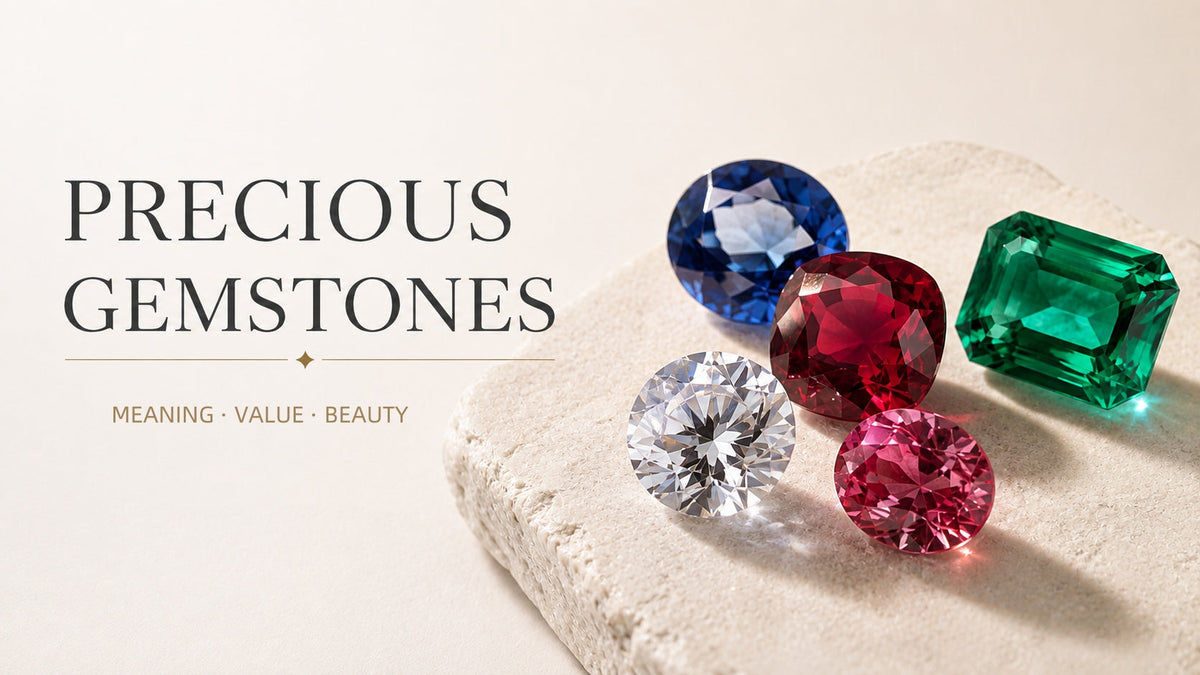
Only four gemstones have traditionally held the title of "precious":
- Diamond — Known for its unmatched hardness and brilliant sparkle, diamond has become synonymous with engagement rings and enduring love.
- Ruby — This vivid red gemstone has symbolized passion, courage, and vitality throughout history, often associated with royalty and protection.
- Sapphire — Most commonly recognized in its stunning blue variety, sapphire also comes in nearly every color except red (which would classify it as ruby, since both are corundum).
- Emerald — Prized for its rich green color, emerald has been treasured since ancient Egyptian times, famously favored by Cleopatra herself.
These four gemstones share several characteristics: exceptional hardness (with the exception of emerald, which has more inclusions), striking color saturation, and a long history of use in royal jewelry, religious artifacts, and important cultural ceremonies.
Why Are They Called Precious Gemstones?
Understanding why these specific four gemstones earned "precious" status requires looking at several interconnected factors rather than a single scientific standard.
Historical value played a significant role in this classification. Diamonds, rubies, sapphires, and emeralds were among the first gemstones traded along ancient trade routes, appearing in historical records from Egyptian, Roman, and Persian civilizations. Their long-documented history contributed to their prestigious reputation.
Rarity at the time of classification also mattered tremendously. Before modern mining techniques and global exploration expanded gemstone sources, these four stones were genuinely difficult to find in significant quantities. Large deposits of high-quality material were limited to specific regions, making these gemstones scarce commodities.
Desirability among royalty and the wealthy elite reinforced their status. European monarchs, Indian maharajas, and other ruling classes consistently favored these four gemstones for crowns, scepters, and formal jewelry, creating a cultural association between these stones and power.
Cultural significance varies by gemstone and region, but each of these four stones carries symbolic weight across multiple cultures. Rubies represented protection in ancient Burma, sapphires symbolized wisdom and royalty in medieval Europe, and emeralds held spiritual significance in various South American cultures long before European colonization.
Market demand historically concentrated around these four gemstones, as jewelers, traders, and consumers developed strong preferences that persisted for generations. This demand created established market infrastructure, pricing conventions, and trading networks specifically built around these stones.
Traditional jewelry terminology solidified this classification through decades of use in the jewelry industry. Once jewelers, gemologists, and consumers adopted this terminology, it became standard practice, even as our understanding of gemstone rarity and value evolved.
Here's the crucial point every jewelry buyer should understand: "Precious" is primarily a traditional and commercial classification rather than a scientific measure of a gemstone's quality or beauty. This distinction matters because it prevents you from assuming that every diamond, ruby, sapphire, or emerald automatically outperforms every other colored gemstone in terms of value, rarity, or visual appeal.
What Are the Most Precious Gemstones?
Now that we've established what makes a gemstone "precious," let's examine each of these four stones more closely, along with an honest discussion about whether this traditional classification still reflects actual market value today.
1. Diamond
Diamonds hold the title of hardest natural substance on Earth, scoring a perfect 10 on the Mohs hardness scale. This exceptional durability makes diamonds ideal for everyday wear, particularly in engagement rings that need to withstand decades of daily activities. Diamonds form deep within the Earth's mantle under extreme pressure and heat, typically taking billions of years to develop.
Beyond their physical properties, diamonds have become deeply embedded in modern romantic traditions, largely due to successful 20th-century marketing campaigns that positioned diamonds as the ultimate symbol of eternal love. Today's diamond market offers remarkable variety, from classic colorless stones to fancy colored diamonds in pink, blue, yellow, and even red hues.
2. Ruby
Rubies belong to the corundum mineral family and derive their striking red color from trace amounts of chromium. The finest rubies display a color often described as "pigeon's blood red"—a deep, vivid red with slight blue undertones that represents the pinnacle of ruby quality.
Natural, untreated rubies with excellent color and clarity rank among the rarest gemstones in the world, often commanding prices that exceed comparable-sized diamonds. Myanmar (formerly Burma) has historically produced the world's finest rubies, though Mozambique has emerged as a significant source of high-quality material in recent decades.
👉 Explore More: The Ultimate Guide to Ruby Stone
3. Sapphire
Sapphires share the same mineral composition as rubies (corundum) but occur in every color except red. While blue sapphires remain the most recognized and traditionally valued, sapphires also appear in pink, yellow, orange, green, purple, and colorless varieties.
Kashmir sapphires, mined from a now largely depleted region in the Himalayas, represent the historical gold standard for blue sapphire quality, known for their velvety, intense blue color. Today, Sri Lanka, Madagascar, and Myanmar produce most of the world's fine sapphires, offering excellent quality at more accessible price points.
👉 Explore More: The Ultimate Guide to Sapphire Stone
4. Emerald
Emeralds belong to the beryl mineral family, colored green by trace amounts of chromium and vanadium. Unlike diamonds, rubies, and sapphires, emeralds almost always contain visible inclusions, sometimes called "jardin" (French for garden) due to their moss-like appearance under magnification.
These inclusions are so characteristic of emeralds that gemologists consider them part of the stone's natural identity rather than a flaw to be avoided entirely. Colombian emeralds, particularly those from the Muzo and Chivor mines, have set the historical standard for emerald quality, prized for their rich, slightly bluish-green color.
👉 Explore More: The Ultimate Guide to Emerald Stone
Precious Gemstones vs. Semi-Precious Gemstones
What Are Semi-Precious Gemstones?
Semi-precious gemstones encompass every gemstone that doesn't fall into the traditional "big four" category. This includes dozens of beautiful, geologically fascinating stones such as amethyst, citrine, topaz, tourmaline, garnet, peridot, aquamarine, tanzanite, alexandrite, opal, moonstone, and many others.
Despite the "semi" prefix suggesting lesser status, these gemstones offer tremendous diversity in color, pattern, and optical effects that the traditional precious stones simply cannot match. Amethyst provides rich purple hues ranging from pale lilac to deep violet. Citrine offers warm golden and orange tones reminiscent of autumn sunlight. Tourmaline comes in virtually every color imaginable, sometimes even displaying multiple colors within a single stone (called bi-color or watermelon tourmaline).
Many semi-precious gemstones also boast excellent durability suitable for everyday wear. Topaz, for instance, ranks 8 on the Mohs hardness scale, making it quite resistant to scratching. Garnet typically ranks between 6.5 and 7.5, offering solid durability for rings, bracelets, and other frequently worn pieces.
Precious vs. Semi-Precious Gemstones: Key Differences
While the precious/semi-precious classification doesn't reliably predict value or quality, some general patterns do emerge when comparing these categories, though exceptions exist throughout.
Market perception and branding differ significantly between categories. Precious gemstones benefit from centuries of marketing, cultural reinforcement, and consumer familiarity. When someone mentions "diamond ring" or "ruby necklace," most people immediately understand the reference and its associated prestige, even without gemological training.
Availability and mining volume generally favor semi-precious gemstones, though notable exceptions exist. Amethyst, for example, occurs in substantial quantities worldwide, making it far more affordable and accessible than rubies or emeralds of comparable size.
Price ranges typically run higher for precious gemstones at equivalent quality levels, particularly for diamonds and fine rubies. However, this generalization breaks down quickly when comparing high-end semi-precious specimens against lower-quality precious stones, as we discussed in the previous section.
Historical and cultural weight remains stronger for the traditional precious gemstones, particularly in Western wedding and engagement traditions. This cultural association influences purchasing decisions even when semi-precious alternatives might offer better value or more unique aesthetic appeal.
Color variety overwhelmingly favors semi-precious gemstones. While sapphires do occur in multiple colors, no single precious gemstone variety matches the color range available across different semi-precious stones like tourmaline, garnet, or beryl (which includes both emerald and the semi-precious aquamarine and morganite).
Durability for everyday wear varies within both categories rather than following a strict precious/semi-precious divide. Diamond and sapphire offer exceptional durability among precious stones, while emerald requires more careful handling due to its inclusion-prone structure. Similarly, some semi-precious stones like topaz and garnet offer excellent durability, while others like opal require gentler care.
Are Precious Gemstones Always the Most Valuable Gemstones?
Here's where we need to challenge a common misconception: No, the four traditional precious gemstones are not always the most valuable gemstones on the market.
👉 Explore More: What Are The Most Valuable Gemstones
This might seem counterintuitive given everything we've discussed about their historical prestige, but market realities tell a more nuanced story. Several semi-precious gemstones can absolutely exceed the value of average or even good-quality diamonds, rubies, sapphires, or emeralds under the right circumstances.
Consider exceptional alexandrite, a color-changing gemstone that shifts from green in daylight to red under incandescent light. Fine alexandrite specimens, particularly those from the original Russian deposits, can command prices rivaling or exceeding those of fine sapphires, simply due to their extraordinary rarity and the fascinating optical phenomenon they display.
👉 Explore More: The Ultimate Guide to Alexandrite Stone
Fine Paraíba tourmaline offers another compelling example. This neon blue-green gemstone, first discovered in Brazil's Paraíba state in the late 1980s, contains trace amounts of copper that create an electric, almost glowing color unlike anything else in the gem world. High-quality Paraíba tourmalines regularly sell for prices per carat that exceed many diamonds, making them among the most expensive colored gemstones available today.
High-quality jadeite, particularly the vivid green "Imperial jade" variety prized in Chinese culture, can achieve extraordinary values that surpass typical ruby or sapphire prices. Some exceptional jadeite pieces have sold at auction for millions of dollars, reflecting both their rarity and deep cultural significance.
Rare garnet varieties, including tsavorite (a vivid green garnet) and demantoid garnet (known for its exceptional fire and brilliance), can also command premium prices that challenge conventional assumptions about precious versus semi-precious value hierarchies.
Exceptional tanzanite, discovered relatively recently in 1967 in Tanzania, displays a striking blue-violet color that has captivated collectors and jewelry enthusiasts. While tanzanite is technically more available than some other rare gemstones, exceptional specimens with intense color saturation can still command impressive prices.
This brings us to a fundamental truth about gemstone valuation: gemstone value is determined by a combination of rarity, quality, demand, origin, treatment, and market conditions—not simply by whether a gemstone is classified as precious or semi-precious.
Understanding this principle protects you from making assumptions based solely on gemstone category. A mediocre-quality sapphire with poor color saturation and visible inclusions might actually cost less than a stunning specimen of tsavorite garnet or Paraíba tourmaline. When shopping for gemstone jewelry, focus on the specific quality characteristics of the individual stone rather than relying solely on its traditional classification.
How to Choose the Right Precious Gemstone for Jewelry?
Selecting the ideal gemstone depends heavily on the jewelry piece's purpose, how frequently you'll wear it, and your personal style preferences. Here's practical guidance for common jewelry categories.
For Engagement Rings
Engagement rings require gemstones capable of withstanding decades of daily wear, including exposure to household chemicals, occasional bumps, and constant friction from hand movements. Diamond remains the traditional choice for good reason: its exceptional hardness (10 on the Mohs scale) makes it virtually scratch-proof under normal wearing conditions.
Sapphire has gained significant popularity as an alternative engagement ring center stone, offering excellent durability (9 on the Mohs scale) along with beautiful color options beyond traditional blue, including pink, yellow, and padparadscha (a rare pink-orange variety). Ruby also works well for engagement rings, given its comparable hardness to sapphire, though its bold red color makes a more dramatic style statement than traditional diamond or sapphire choices.
Emerald requires more careful consideration for engagement rings due to its natural inclusions and relative fragility compared to diamond or sapphire. If you love emerald's rich green color but worry about durability, consider protective setting styles like bezel settings that shield the stone's edges from impact.
For Everyday Jewelry
Jewelry worn frequently—think stud earrings, simple pendants, or stacking rings—benefits from gemstones that resist scratching and chipping during regular activities. Diamond, sapphire, and ruby all perform excellently in this category due to their superior hardness ratings.
Among semi-precious options, garnet, topaz, and aquamarine offer solid durability suitable for everyday wear. These gemstones can provide beautiful color variety at more accessible price points compared to precious stone alternatives, making them practical choices for pieces you'll wear regularly without excessive worry about damage.
For Statement Jewelry
Statement pieces meant for special occasions rather than daily wear offer more flexibility in gemstone selection, since they'll experience less physical stress overall. This category allows you to prioritize visual impact, unique color, or unusual optical effects over pure durability concerns.
Emerald shines in statement jewelry, where its rich color and historical prestige create dramatic visual impact for special events. Semi-precious options like tanzanite, with its striking blue-violet color, or opal, with its mesmerizing play-of-color, also work beautifully for statement pieces worn occasionally rather than daily.
For Personalized Jewelry
Personalized jewelry—including birthstone pieces, anniversary gifts, or custom designs reflecting personal meaning—opens up gemstone selection beyond traditional precious stones entirely. Birthstones, for instance, include both precious and semi-precious options across the twelve months, from garnet (January) to peridot (August) to tanzanite (December, alongside turquoise and zircon).
👉 Explore More: Birthstones by Month, The Ultimate Guide to Zodiac Birthstones
When selecting gemstones for personalized pieces, consider what colors and stones hold special meaning for the recipient, whether through birth month association, symbolic meaning, or simple personal preference. This category represents an excellent opportunity to explore semi-precious gemstones that might not fit traditional categories but offer deeper personal significance.
How to Buy Precious Gemstones: A Practical Checklist
Making an informed gemstone purchase requires evaluating several key factors beyond simply choosing between precious and semi-precious categories. Use this checklist when shopping for your next gemstone piece.
1. Verify Authenticity and Treatment Disclosure
Reputable jewelers should provide clear information about whether a gemstone is natural, treated (such as heat-treated sapphires or ruby, which is common and acceptable), or synthetic. Ask for this information explicitly if it's not readily provided.
2. Request Certification for Significant Purchases
For higher-value gemstones, especially diamonds above one carat or fine colored stones, ask for certification from recognized gemological laboratories like GIA (Gemological Institute of America) or AGL (American Gemological Laboratories). These certificates verify authenticity and document the stone's specific characteristics.
3. Evaluate the Four Cs Comprehensively
While originally developed for diamonds, the concepts of color, clarity, cut, and carat weight apply broadly across gemstone types. Understand how these factors specifically impact value for your chosen gemstone, since the ideal characteristics vary between stone types (excellent clarity matters more for diamonds than emeralds, for instance).
4. Consider the Setting and Metal Type
The gemstone represents only part of the overall jewelry piece. Ensure the setting provides adequate protection for the stone's hardness level, and choose metal types (platinum, gold, silver) that complement both your budget and the gemstone's color.
5. Assess Your Lifestyle and Wearing Frequency
Match gemstone durability to intended use, as discussed in previous sections. Don't select a delicate, inclusion-prone gemstone for a ring you'll wear while gardening or exercising regularly.
6. Compare Pricing Across Multiple Sources
Gemstone pricing can vary significantly between retailers based on sourcing, markup practices, and overhead costs. Research typical price ranges for your desired gemstone type, size, and quality level before making purchasing decisions.
7. Understand Return and Warranty Policies
Reputable jewelers should offer clear return policies and warranty coverage for their gemstone jewelry. This protection matters particularly for significant investments in fine jewelry pieces.
8. Trust Reputable, Transparent Sellers
Choose jewelers who willingly answer questions, provide documentation, and demonstrate genuine gemological knowledge rather than relying solely on marketing language or high-pressure sales tactics.
Final Thoughts
Diamond, ruby, sapphire, and emerald certainly deserve their reputation as exceptional gemstones, offering proven durability, timeless beauty, and deep cultural significance that spans centuries. However, dismissing semi-precious gemstones as automatically "lesser" overlooks the tremendous value, beauty, and rarity available within this diverse category, from fiery Paraíba tourmaline to color-changing alexandrite to vivid tsavorite garnet.
The most important factors when selecting gemstone jewelry remain consistent regardless of precious or semi-precious classification: quality characteristics specific to that gemstone type, appropriate durability for your intended use, authentic sourcing and treatment disclosure, and personal aesthetic preference that resonates with your individual style.
At LUO Jewelry, we celebrate both precious and semi-precious gemstones for their unique qualities, offering thoughtfully designed pieces that showcase each stone's natural beauty. Whether you're drawn to the timeless elegance of a diamond, the passionate color of a ruby, or the striking uniqueness of a Paraíba tourmaline, we invite you to explore our gemstone collection and discover the perfect gemstone piece that speaks to your personal story.
Ready to find your ideal gemstone jewelry piece? Browse our curated collection at LUO Jewelry, where quality craftsmanship meets exceptional gemstones, regardless of traditional classification labels.