
What is the Best Gemstone for Engagement Rings?
When we talk about engagement rings, the first image that comes to most people’s minds is often a sparkling round diamond set in a simple six-prong white gold mount. Over the past half-century that image has almost become the standard symbol of a romantic promise. However, more and more modern couples are realizing that when everyone follows the same path, that path gradually loses its original meaning—the unique emotional weight that belongs only to the two people involved.
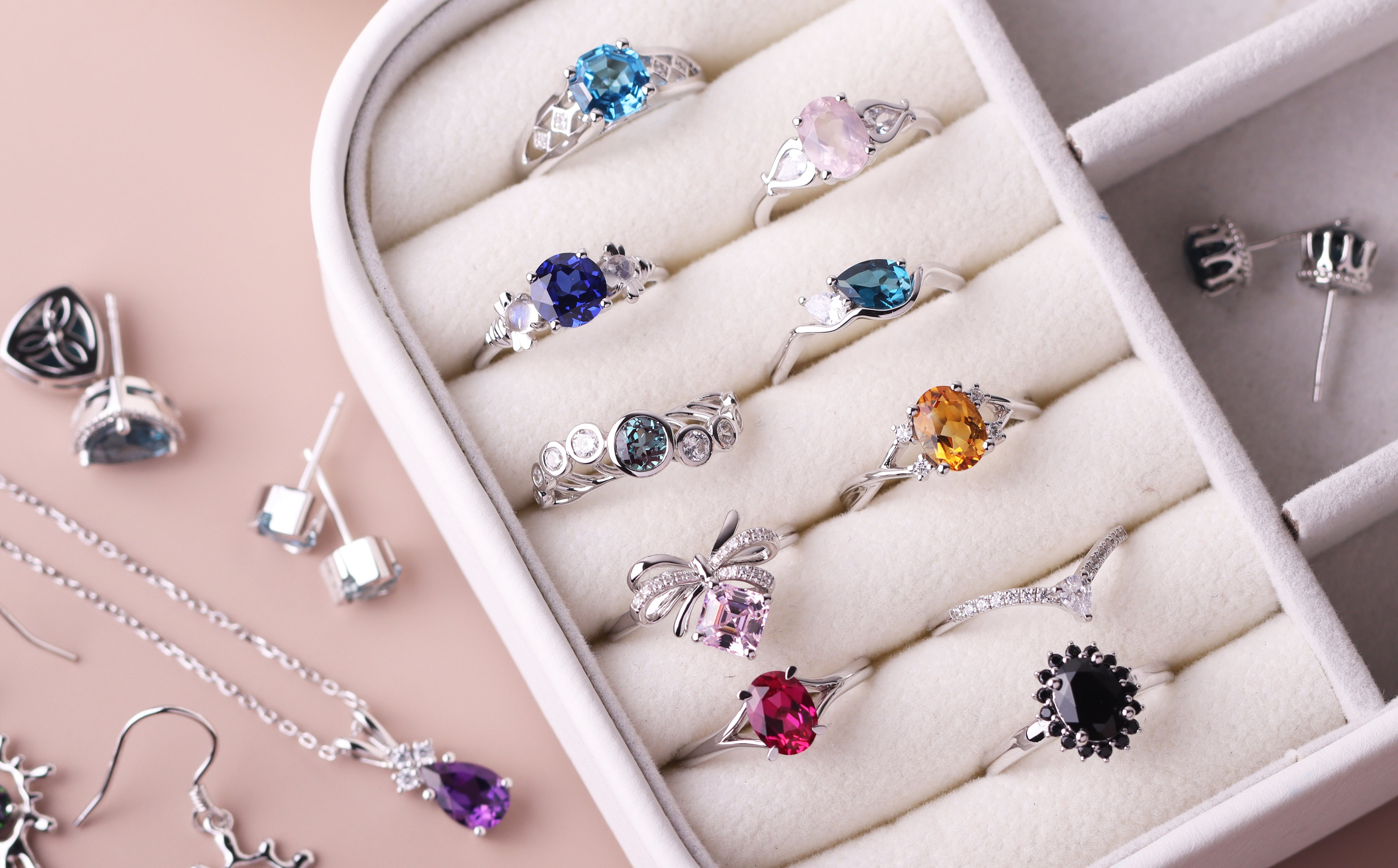
An engagement ring shouldn’t be a fill-in-the-blank answer; it should be a narrative, a complete story about how you met, fell in love, and decided to stay together. It’s in this cultural context that colored gemstone engagement rings have entered the contemporary jewelry scene with stunning force. They offer color depth and storytelling power beyond diamonds and can reflect the unique texture of each love story in a highly personal way. Jewelry market data from recent years show a rising proportion of consumers choosing nontraditional gemstones as the center stone for engagement rings, especially among younger people who value uniqueness and self-expression.
At LUO Jewelry, we firmly believe the perfect engagement ring isn’t about following tradition but about telling your story. Each natural colored gemstone we carefully select carries the power of millions of years of nature, and our job is to blend that power with your love story to create a true heirloom that belongs to you.
What Makes a Gemstone Ideal for Engagement Rings?
Before diving into the characteristics of specific gemstones, we need to establish a scientific and comprehensive evaluation framework. The fundamental difference between an engagement ring and other jewelry is that it’s a precious item meant to be worn day after day. Therefore, choosing a gemstone must balance practicality and emotional value—losing either could cause the ring to lose its luster over the years.
1. Durability
The Mohs hardness scale is the international standard for measuring a mineral’s resistance to scratching, rated from 1 to 10, with diamond at the top at 10. For engagement rings worn every day, gemologists commonly recommend choosing gemstones with a Mohs hardness of at least 7. The logic is straightforward—dust particles in our daily environment are mainly composed of silica, which has a Mohs hardness of about 6.5 to 7. If a gemstone’s hardness is below that threshold, simply coming into contact with air and dust can leave tiny scratches on its surface. Over time, these accumulate and the gemstone will gradually lose its original transparency and brilliance.
Of course, hardness isn’t the whole story of durability—toughness (resistance to breaking and chipping) is equally important. Hardness and toughness are not always positively correlated. Emerald is a representative example: its Mohs hardness ranges from about 7.5 to 8, meeting the hardness guideline, but because it naturally contains many fissures and inclusions (commonly called a “garden” in the trade), its toughness is relatively low, and it requires extra care during everyday wear.
2. Symbolism
Human perception of color is never neutral—every hue carries deep cultural associations and emotional resonance, and a gemstone’s color is its most direct emotional language. The deep navy of sapphire has long been associated with loyalty, wisdom, and enduring promise, which helps explain why sapphire engagement rings have appeared in royal weddings from medieval European courts to modern monarchies. Ruby’s intense red conveys passion, courage, and steadfast love, while emerald’s translucent green symbolizes vitality, growth, and the strength of two people putting down roots together over time.
When choosing a colored gemstone for an engagement ring, take some time to reflect on the color and warmth of the relationship the ring represents, then look for the gem that best answers those feelings. That process itself is a profound declaration.
Symbolic meanings of popular gemstones:
- Diamond: symbolizes eternity and indestructible love
- Ruby: represents fiery passion and courage
- Sapphire: signifies loyalty, wisdom, and nobility
- Emerald: carries visions of hope, renewal, and prosperity
- Morganite: conveys gentle, romantic affection
3. Color and Uniqueness
An engagement ring is more than a token of love; it’s also a public declaration of the wearer’s personal style and aesthetic, since it will appear in countless public settings and form a complete picture together with the wearer’s everyday outfits, skin tone, and lifestyle.
Different colors convey distinctly different temperaments and moods:
- Colorless (diamond): pure, classic, versatile
- Blue (sapphire, aquamarine): calm, rational, profound
- Red (ruby, garnet): passionate, powerful, brave
- Green (emerald): lively, harmonious, vintage-elegant
- Pink (morganite, pink sapphire): gentle, romantic, feminine
- Black (black diamond, black spinel): mysterious, avant-garde, independent
Cool-toned skin often looks particularly striking with the backing of a sapphire or aquamarine, while warm-toned skin naturally harmonizes with rubies, morganite, or garnets. Someone with a reserved, understated personality may prefer the quiet, unpretentious beauty of aquamarine, whereas a passionate, outgoing person may be instantly captivated by the strong visual impact of ruby or emerald. Additionally, many gemstones show unique optical effects—such as the asterism in sapphire or the adularescence in moonstone—traits that add an irreplaceable charm to an engagement ring.
4. Care and Maintenance
No matter how precious a gemstone is, without proper daily care it will fade over time. Different gemstones vary considerably in their sensitivity to light, chemicals, temperature changes, and physical impact, and these differences directly determine how complex their daily care will be. For people with busy lifestyles who rarely have time to meticulously care for jewelry, choosing a gemstone that is highly durable and relatively easy to maintain is a wise way to ensure the ring remains beautiful for decades.
Low-maintenance gemstones:
- Diamond, sapphire, ruby: can be cleaned with ultrasonic cleaners; strongly resistant to chemical corrosion
- Spinel: extremely stable, virtually no special care required
Medium-maintenance gemstones:
- Morganite, aquamarine: avoid high heat and sudden temperature changes
- Tanzanite: avoid ultrasonic cleaning
High-maintenance gemstones:
- Emerald: often oiled, avoid chemicals and ultrasonic cleaning
- Opal: contains water, avoid dry environments and sudden temperature shifts
- Pearl: organic gemstone, susceptible to acid and alkali damage
Top 10 Best Gemstones for Engagement Rings
1. Diamond
Although this article aims to broaden your understanding of colored gemstones, we must still acknowledge that diamond’s status as the top choice for engagement rings is largely supported by its undeniable objective advantages. Leading all natural gemstones with a Mohs hardness of 10 and showing near-perfect toughness, diamonds perfectly fit the romantic image of “eternal love”. Moreover, diamonds require almost no special care—periodic cleaning with water and a soft brush is sufficient—making them the most suitable gemstone for long-term daily wear.
A diamond’s colorless or near-colorless quality allows it to seamlessly pair with any metal tone and any clothing style; this universality is difficult for colored gemstones to match. Furthermore, a diamond’s outstanding optical properties—high refractive index and dispersion—give it unparalleled fire and brilliance.
However, diamond’s limitations are also clear—at comparable price points, a diamond’s visual impact is often less striking than that of a high-quality colored gemstone of the same price, and because the diamond market is highly standardized, diamond engagement rings can easily give an impression of “sameness,” lacking that unforgettable uniqueness.
LUO Jewelry’s diamond engagement ring collection injects modern aesthetics into the classic, offering truly collectible choices for couples seeking balance between tradition and individuality.
2. Sapphire Gemstone
The tradition of sapphire engagement rings dates back to medieval Europe, when people believed the color of sapphire symbolized heaven and embodied divine grace and steadfast vows. This tradition was revived in the modern era by Princess Diana’s famous 18-carat Sri Lankan sapphire engagement ring in 1981, and after Kate Middleton continued to wear the ring, sapphire secured an unshakable place in contemporary engagement-ring culture.
From a gemological perspective, sapphire (corundum) ranks a 9 on the Mohs scale—second only to diamond. Its toughness is also excellent, making it almost equal to diamond in durability. Sapphire’s color range is vast: from pale sky blue to deep inky blue, from cornflower blue with a violet hint to Ceylon blue with a greenish tint. Each hue has its own visual personality, and the most prized are the cornflower blue sapphires from Sri Lanka and the royal blue sapphires from Myanmar. It’s important to note that as members of the corundum family, non-blue corundums are usually called “fancy sapphires”, including pink, yellow, orange, and the rare padparadscha (orange-pink), which further broadens the sapphire family’s color spectrum.
LUO Jewelry selects top-quality lab-grown sapphires, offering a more cost-effective choice compared to natural sapphires, creating sapphire engagement rings with a royal aura for every couple seeking noble and lasting beauty.
3. Ruby Gemstone
If sapphire represents the deep, rational side of love, ruby embodies its passionate, fearless side. In many cultures, ruby is considered the “king of gems”, symbolizing burning love and fearless courage. Rubies and sapphires both belong to the corundum family and share a Mohs hardness of 9, so their durability is equally unquestionable. Truly high-quality rubies—the deep red known in the trade as “pigeon’s blood”—are extremely rare, primarily found in the Mogok region of Myanmar. Their per-carat price can even exceed diamonds of comparable quality, making them one of the most expensive gemstones by unit price in the world.
When choosing a ruby engagement ring, there are a few key details to watch for: many rubies on the market have been heat-treated. This treatment is an industry-recognized and commonly disclosed practice and does not necessarily affect the gem’s value, but consumers should ask sellers for full disclosure. In addition, natural rubies almost always contain some inclusions; be highly cautious of stones that claim to be flawless internally yet are sold at ordinary prices, as they may be synthetic rubies or dyed garnets.
LUO Jewelry offers high-quality lab-grown ruby engagement rings. Each ruby comes with a certificate from an authoritative gemological laboratory, so your investment is backed by reliable verification.
4. Emerald Gemstone
Emerald’s unique green is one of nature’s most intoxicating colors. It is distinct from the yellow-green of peridot and the bright green of tsavorite; emerald presents a pure green with a deep blue undertone. This color has been given its own name in gemology—“emerald green”—to emphasize its singularity and irreplaceability. Cleopatra’s famed love of emeralds has long been a notable story in jewelry history, and Hollywood’s Golden Age screen goddesses helped make emeralds a hallmark of Art Deco and Art Nouveau jewelry.
However, selecting an emerald engagement ring is one of the areas of colored-gem buying that requires the most expertise, because high-quality natural emeralds almost invariably contain many fissures and liquid inclusions. In French these inclusions are poetically called “jardin” (garden). These features are not only important for identifying natural emeralds but also serve as distinctive markers separating them from synthetic emeralds. The vast majority of emeralds on the market have been clarity-enhanced—typically with cedar oil or synthetic resins—to improve transparency and appearance. Buyers should understand the level of treatment and avoid exposing emerald engagement rings to ultrasonic cleaners or steam cleaning and other high-intensity cleaning methods.
LUO Jewelry offers high-quality lab-grown emerald engagement rings. We invest great effort in tracing origin and controlling quality for every emerald, ensuring each emerald engagement ring can stand the test of time.
5. Morganite Gemstone
Morganite made a rapid transformation from a “secret among niche gemstone lovers” to “Instagram’s most popular engagement ring gemstone” in a relatively short time. The reasons are easy to understand: its charming peach-pink hues paired with rose gold produce an irresistibly warm, soft look that precisely taps into contemporary tastes for “natural, romantic, and tactile” aesthetics. Morganite belongs to the beryl family, a relative of emerald and aquamarine, and has a Mohs hardness of 7.5 to 8—fully meeting the durability needs for everyday wear in an engagement ring.
Morganite also offers an appealing advantage—at comparable gemstone quality, it’s usually much less expensive than sapphires or rubies. That lets buyers get a larger, more dazzling stone within a reasonable budget, giving the ring a stronger visual presence.
LUO Jewelry’s morganite engagement ring collection uses carefully designed rose-gold settings to fully release morganite’s most enchanting pink tones, offering a heartfelt choice for the modern bride who seeks gentle, romantic beauty.
6. Aquamarine Gemstone
Aquamarine’s color is exactly as its name suggests—a clear tone between sky blue and sea green, evoking the calmest, deepest stretches of tropical waters. In ancient Rome, sailors regarded aquamarine as a gift from the sea god, believing it would protect them through storms. Over time, that symbolism evolved into wishes for calm, clarity, and mutual protection—beautifully resonant with the themes of marriage.
Aquamarine, like morganite, is part of the beryl family and has a Mohs hardness of 7.5 to 8. It is typically very clean internally, with few visible inclusions to the naked eye, giving it a highly transparent, glassy appearance. Compared to other colored gemstones, aquamarine is relatively affordable, yet its clear beauty rivals that of pricier gems, making it an ideal choice for couples seeking understated, sophisticated elegance.
At LUO Jewelry, we pair top-quality aquamarines with refined platinum or white-gold settings to create engagement rings that combine serene aesthetics with exquisite craftsmanship.
7. Garnet Gemstone
Many people associate garnet with deep red, but that’s a huge misconception. The garnet family contains a rare breadth of colors in the gem world. It ranges from classic wine-red (almandine), vivid orange-red (spessartine), to almost unrivaled emerald-green varieties (demantoid, tsavorite), and even the very rare color-change garnets—covering nearly every hue of the rainbow except blue.
Take demantoid garnet, for example: it has a higher dispersion than diamond (the ability to split white light into spectral colors), producing breathtaking fire in the right light. Its distinctive “horsetail” inclusions are a hallmark of top-quality natural demantoid. Tsavorite, with its bright, saturated green, is an excellent alternative for those who love green gems but can’t afford high-priced emeralds. Garnets are relatively easy to care for in daily wear, and their unique color options and friendly price points give them natural differentiating power.
LUO Jewelry selects a variety of red-garnet engagement rings to offer truly distinctive choices for couples who want to express their love in an original way.
8. Black Gemstones
Black is undoubtedly the most controversial color choice for engagement rings. That controversy is precisely why choosing a black gemstone often signals a clearer, more resolute aesthetic stance and personal statement. Among black gemstones, black spinel and black onyx are most commonly used in fine jewelry.
Black spinel reaches a Mohs hardness of 8 and has excellent luster and a glass-like clarity; its deep matte black creates strong visual tension against metal settings. In recent years, due to its rarity and unique aesthetic value, black spinel has gained increasing attention in the high-end jewelry market. Black onyx has a Mohs hardness of about 6.5 to 7, which is on the acceptable edge. Its opaque pure black tone forms a striking contrast with metal, performing exceptionally well in Gothic, minimalist, and industrial-inspired jewelry designs.
LUO Jewelry’s black spinel engagement ring collection is designed for couples with a distinct aesthetic vision who aren’t afraid to defy tradition—because the deepest colors often hold the most steadfast emotions.
9. Alexandrite Gemstone
Among colored gemstones, alexandrite is perhaps the only one that can give its wearer two distinctly different visual surprises in a single day—appearing a deep blue-green or olive green in daylight or under fluorescent light, then transforming into an enchanting purplish-red or raspberry red under incandescent light or candlelight. This breathtaking color-change effect perfectly captures alexandrite’s captivating dual personality. It symbolizes a mature, profound view of love: true, deep affection can show different faces in different environments and circumstances, yet its core remains genuine and precious. This resonates beautifully and deeply with how many modern couples understand marriage.
Alexandrite belongs to the chrysoberyl family and has a Mohs hardness of 8.5—second only to diamond and corundum—giving it excellent durability and making it well suited for everyday, frequent wear. However, choosing alexandrite is one of the most demanding areas of all gemstone selection. Natural alexandrite is extremely rare; much of what circulates in the market is lab-grown alexandrite, which matches natural stones closely in chemical composition and optical effects but comes at a lower price.
LUO Jewelry selects lab-grown alexandrite with strong color-change effects to create truly one-of-a-kind engagement rings for couples seeking the rarest beauty.
10. Amethyst Gemstone
Amethyst offers a mesmerizing range of purple hues, from pale lavender to deep royal purple. In many cultural traditions, amethyst is associated with calm, wisdom, and intuition; its purple tones are thought to bring inner peace and strengthen deep emotional bonds between two people—an especially meaningful symbolism for couples who view marriage as a spiritual journey. In the Victorian era, amethyst’s rich purple made it a staple of royal jewelry collections. Today, amethyst remains a distinctive choice for engagement and wedding jewelry, especially prized by those who appreciate historical aesthetics and spiritual symbolism.
Amethyst has a Mohs hardness of 7, which means it requires a bit more care in daily wear than sapphires or rubies; avoid direct abrasion with other jewelry or hard objects. Amethyst is also somewhat sensitive to prolonged strong light, and long-term exposure to intense sunlight may cause its color to fade. Still, among natural colored gemstones suitable for engagement rings, amethyst offers the most accessible price point, allowing couples on a budget to own a colored gemstone engagement ring that still carries historical depth and visual beauty.
LUO Jewelry carefully selects top-quality natural amethyst with even, rich color and excellent clarity, and uses thoughtful setting designs to showcase its most compelling purple. This way, every bride who loves this royal hue can find her perfect amethyst engagement ring.
Comparison of the Best Colored Gemstones for Engagement Rings
After summarizing the strengths and considerations for the eight gemstones above, we can make a more intuitive side-by-side comparison across several key dimensions to help readers quickly identify the best fit for their personal needs and preferences.
Overall Best Choice: Sapphire
Sapphire performs well and balances durability, emotional symbolism, color variety, and market recognition. It’s especially suitable for couples who want to maintain traditional elegance while adding personal color. The cultural cachet from royal endorsements also gives sapphire engagement rings a timeless value that transcends trends.
Best for Romantic Occasions: Ruby
No gemstone declares love as directly and passionately as a ruby. For those who believe love should be proclaimed boldly, a pigeon-blood ruby engagement ring is an unparalleled emotional statement.
Best for Vintage Lovers: Emerald
The aesthetic heritage of Art Deco and Art Nouveau pairs naturally with the deep green of emeralds. For couples enamored with vintage style and historical beauty, an emerald engagement ring is almost irreplaceable.
Best Value for Money: Morganite
Morganite engagement rings offer an attractive price entry point while preserving a high-quality visual appeal, allowing couples on a tighter budget to own a colored gemstone engagement ring without compromising on looks.
|
Gemstone |
Mohs Hardness |
Color Range |
Relative Price |
Symbolism |
Care Difficulty |
Recommended For |
|
Diamond |
10 |
Colorless/near-colorless |
High |
Eternity, purity |
Low |
Those seeking classic, universal appeal |
|
Sapphire |
9 |
Blue hues/multi-color |
High |
Loyalty, wisdom, eternity |
Low |
Those seeking regal character and durability |
|
Ruby |
9 |
Red hues |
Very high |
Passion, courage, deep love |
Low |
Those expressing romantic passion |
|
Emerald |
7.5-8 |
Green hues |
High |
Vitality, growth, harmony |
Medium-high |
Vintage-style enthusiasts |
|
Morganite |
7.5-8 |
Pink/peach hues |
Medium |
Gentleness, romance, modernity |
Low-medium |
Modern brides pursuing a soft aesthetic |
|
Aquamarine |
7.5-8 |
Blue-green hues |
Medium |
Calm, clarity, protection |
Low-medium |
Those seeking understated sophistication |
|
Garnet |
6.5-7.5 |
Full color range |
Low–medium |
Passion, vitality, loyalty |
Medium |
Those seeking uniqueness and differentiation |
|
Black Spinel |
8 |
Black |
Medium |
Mystery, resolve, individuality |
Medium |
Those with a strong personal style statement |
|
Alexandrite |
8.5 |
Blue-green/purplish-red |
Very High |
Mystery, transformation, eternal love |
Low |
Those with a strong personal style statement |
|
Amethyst |
7 |
Purple hues |
Low–medium |
Calm, wisdom, and intuition |
High |
Delicate and vintage-style enthusiasts |
How to Choose the Best Gemstone for Your Engagement Ring?
Understanding each gemstone’s objective traits is just the first step. The real choice must come back to the wearer — the person who will live, work, and grow with this ring every day.
1. Choose by Lifestyle
If your job or daily life involves heavy manual work, outdoor activities, or frequent hand contact, durability should be a top priority. In that case, sapphire or diamond—thanks to their near-top hardness and toughness—are the wisest choices, while emerald, amethyst or garnet may require more cautious consideration.
Conversely, if your life is relatively gentle and orderly and you have the patience and time for regular jewelry care, your selection can widen considerably. Any gemstone that draws you aesthetically—including emerald or morganite—can be seriously considered.
2. Choose by Personality and Style
Your instinctive reaction to color is often the most honest clue to your aesthetic personality. The gem that first catches your eye at the jewelry counter is quite possibly the one that suits you best, because human color preferences are largely rooted in deeper character traits and emotional makeup.
If you tend to express emotions precisely and forcefully, ruby or deep blue sapphire will match your temperament. If you prefer to convey warmth more softly and delicately, morganite or aquamarine can present that sensibility beautifully. If you naturally resist tradition in a measured way and are drawn to aesthetics with historical weight, one of the emeralds, amethysts or garnets may be the stone waiting to meet you.
3. Plan According to Your Budget
The pricing system for colored gemstones is fundamentally different from the highly standardized pricing of diamonds, which gives consumers greater flexibility. With the same budget, the colored gemstone market often delivers greater visual impact and emotional value.
If your budget is ample, top-tier Burmese pigeon blood rubies or Ceylon royal blue sapphires are naturally the undisputed choices. If you want maximum visual impact within a reasonable budget, morganite, aquamarine, and demantoid garnet are all very competitive options.
If your budget is truly limited, lab-grown gems can be a viable alternative—examples include LUO Jewelry’s lab-grown sapphires, lab-grown rubies, lab-grown emeralds, and lab-grown alexandrites. Lab-grown gemstones are real gems just like natural ones; apart from different growth environments and conditions, they have no differences in physical, chemical, or optical properties. More importantly, lab-grown gems offer a higher cost-performance ratio: for the same price as a natural gemstone, you can get a larger carat weight in a lab-grown stone.
Budget Levels and Recommendations:
|
Budget |
Entry Level |
Mid Level |
High End ($ 7,000 - 20,000) |
Luxury ($ 20,000以上) |
|
Best Choices |
l Morganite (1–2 ct), Aquamarine (1–2 ct), Black spinel |
l 0.5–1 ct quality diamond, 1–2 ct sapphire, large-carat morganite with diamond halo |
l 1–2 ct high-quality diamond, quality ruby/sapphire, alexandrite |
l high-carat diamonds, pigeon blood rubies, royal blue sapphires, natural black diamonds |
|
Strategy |
Choose larger-carat colored stones—visual impact surpasses small diamonds |
Balance the diamond 4 Cs (sacrifice some color/clarity while ensuring cut) |
Pursue top color and clarity; consider rare varieties |
Choose top-tier gems with collectible and investment potential |
|
Design Suggestions |
Put the budget into the stone; choose a simple, classic design |
Consider more refined designs and custom options |
Fully custom design; consider brand added value and after-sales service |
Consider internationally renowned designers for custom pieces, emphasizing legacy value |
4. Find Resonance Through Symbolism
Finally—and most importantly—consider how well the gemstone’s symbolic meaning resonates with the inner spirit of your relationship. You might choose the birthstone for your partner’s birth month as the center stone for the engagement ring (see our monthly birthstone guide). You could pick a stone color linked to where or how you met, or a gem that holds special meaning for you.
Did your love grow slowly and steadily over many years? The timeless blue of sapphire might be the color of your story. Did your meeting feel like destiny, and has your relationship burned with unstoppable passion from day one? Then the ruby’s fiery red might be the only color worthy of your love’s temperature. Find the stone that makes you both feel an indescribable certainty the moment you see it, and let that gemstone engagement ring become the most beautiful embodiment of your relationship.
Why Choose LUO Jewelry Gemstone Eengagement Rings?
In the personalized world of colored gemstone engagement rings, LUO Jewelry’s core promise is “creating a unique treasure for every unique love.” Behind this promise are long-held principles and investments across multiple dimensions: gem sourcing, craftsmanship standards, custom services, and our value system.
1. Carefully Selected Natural Gemstones
LUO Jewelry maintains long-term direct sourcing relationships with top suppliers in the world’s major colored gemstone regions. Every stone considered for our selection undergoes strict quality screening and is accompanied by identification certificates from authoritative gemological laboratories (including GIA, GRS, Gübelin, etc.), ensuring full and transparent disclosure of each gem’s natural attributes and treatment history. We refuse to compromise on gemstone quality because we understand that an engagement ring represents more than a present—it’s a precious investment whose value must be honored for decades to come.
2. Handcrafted by Artisans
Each LUO Jewelry ring is carefully made by our experienced jewelers using traditional handcraft techniques. From initial stone pairing and metal shaping to final polishing, every step of the production process reflects our artisans’ relentless pursuit of quality. Handcrafting not only delivers higher precision and stricter quality control, it also means each gemstone engagement ring born in our studio carries the warmth and character of human hands—an individuality that cannot be mass-produced.
3. Customizable Engagement Rings
We offer fully customized engagement ring services: you can specify the gemstone type, size, color, and quality, choose the metal, and even add personalized engraving inside the band. Every detail can be precisely tailored to your preferences and needs. Our jewelry consultants will accompany you throughout the journey from concept to finished piece, ensuring the ring you receive is the one you’ve always imagined—truly unique and meaningful to your story.
4. Better Value
By purchasing directly from source suppliers and handling our in-house jewelry design, LUO Jewelry compresses the multiple middle margins typical in traditional jewelry retail. This lets us offer more competitive pricing while maintaining top-tier gemstone quality and exquisite craftsmanship. We firmly believe a beautiful, meaningful engagement ring should not be out of reach because of price. Enabling more love stories to have a fitting jewelry witness is a goal LUO Jewelry consistently strives to achieve.
Conclusion
Choosing an engagement ring is a comprehensive decision about values, aesthetic preference, lifestyle, and emotional expression. Adding a colored gemstone opens the door to a broader, richer, and more personal narrative. Whether it’s the regal depth of sapphire, the passionate warmth of ruby, the vintage elegance of emerald, the modern softness of morganite, or the calm clarity of aquamarine, each gemstone is a miracle formed by nature over millions of years—and every love deserves a miracle that resonates with its spirit.
So, what gemstone is best for an engagement ring? There is only one answer: the one that best tells your story. At LUO Jewelry, we offer nearly twenty different colored gemstones, each with its own symbolic meaning. You’ll be able to find the gemstone engagement ring that suits you best. Everything we do is to help you find it and present it in the most perfect way to celebrate the love that deserves to be remembered forever.