
What Finger Does a Promise Ring Go on?
Among all forms of jewelry that can convey emotion, the promise ring stands out for its unique blend of tenderness and significance, becoming one of the most meaningful gifts between modern couples. It doesn’t carry the weight of social expectation that an engagement ring does, nor does it represent the legal commitment of a wedding band. Instead, it materializes a growing relationship in a more private, more authentic way—into a piece that can be worn and felt every day. For this reason, more and more couples are taking the selection of a promise ring seriously—not only considering style and material carefully but also seeking the wearing approach that best fits their relationship.
However, compared with engagement rings, promise rings haven’t gone through centuries of customary rules that create strict traditions. Engagement rings have an established place to be worn in most cultures worldwide, while promise rings give wearers much more freedom. That freedom has caused confusion for some people: which finger should a promise ring be worn on? Will the choice of finger cause misunderstanding by others? And what different emotional signals do different finger positions convey?
In short, there is no one-size-fits-all answer for a promise ring. It can be worn on different fingers depending on the depth of the relationship, the stage of the romance, cultural background, and how much personal symbolic meaning is attached to it. Understanding the historical and cultural meanings each finger carries can help couples make a more ceremonious choice and let this small ring become a quiet yet powerful punctuation in their relationship.
What is a Promise Ring?
At the core of a promise ring is the breadth and depth contained in the word “promise”. In the most common understanding, a promise ring symbolizes mutual fidelity, hopes for the future, and a serious attitude toward the relationship. It typically appears before engagement, representing that the two people have solemnly promised each other, "I take this relationship seriously, and I’m willing to work for our future," even though they haven’t yet entered discussions of marriage.
But the meaning a promise ring can carry goes far beyond that. In a broader context, a promise ring can have different meanings:
- A promise ring can be a friendship vow ring, representing a deep bond that transcends romantic ties;
- A promise ring can be a ring of self-commitment, symbolizing a person’s solemn vow to personal growth, goals, or a lifestyle;
- A promise ring can also represent family ties, conveying warmth and protection among relatives.
Because the emotional dimensions a promise ring can hold are so rich, it becomes a jewelry language that crosses relationship types, giving all forms of sincere feeling a visible, tangible form.
Difference between Promise Ring and Engagement Ring
This is a common question when people learn about promise rings, and the differences between the two are actually much deeper than mere appearance. Giving a promise ring usually happens earlier in a romantic relationship; its message is “I take this relationship seriously; we’re moving toward something deeper," rather than “I’m ready to marry you." Its traditions are relatively flexible—there are no strict social rules about design style, which finger it’s worn on, or the occasions for gifting; it follows the couple’s own preferences and aesthetics more closely.
An engagement ring is entirely different. It appears at the highly ceremonial moment of a proposal and its core meaning is a person’s intention and resolve to marry—to directly signal marriage. Engagement rings follow strong social traditions; in most Western cultures, they are almost always worn on the left ring finger, and they carry heavier social expectations in terms of material, design, and perceived value.
In short, a promise ring marks a stage in the relationship, while an engagement ring is the formal declaration that the relationship is moving toward marriage. The two differ clearly in emotional weight, social meaning, and wearing traditions.
What Finger Do You Wear a Promise Ring on?
The most honest answer about choosing a finger for a promise ring is: there’s no hard rule. Unlike engagement rings, which are almost conventionally worn on the left ring finger, the placement of a promise ring is a personal statement chosen by the wearer according to their feelings, cultural identity, and lifestyle. The most common choices include the left ring finger, right ring finger, middle finger, index finger, and pinky. Some people also wear a promise ring on a necklace close to the heart. Each choice carries its own emotional logic and symbolic meaning worth considering.
1. Left Ring Finger
The traditional romantic choice.
The left ring finger holds a special place in jewelry traditions. This custom comes from the ancient Roman concept of the “vein of love” (Vena Amoris), the belief that a vein in the left ring finger runs directly to the heart. That belief has made this ring finger culturally linked to love, relationships, and deep commitment. Wearing a promise ring on the left ring finger is the option that most closely resembles an engagement ring in symbolism; it signals to others that this relationship is deeply important and that the partners are moving seriously toward one another.
Many couples who are discussing marriage and have made plans for a shared future prefer the left ring finger for their promise ring because the placement itself suggests a move toward marriage. It’s especially fitting for long-term, stable relationships in which partners have already had deep conversations about the future and want to express the seriousness of their commitment to the world.
Of course, this choice comes with a common concern: a ring on the left ring finger is likely to be mistaken for an engagement ring, which can lead to unnecessary explanations or misunderstandings. For couples who don’t want to reveal engagement-related information, or who are serious but not yet at the engagement stage, that external assumption can be bothersome. Also, if the relationship does eventually move toward engagement, fitting both a promise ring and an engagement ring on the same finger is a practical issue to consider in advance.
2. Right Ring Finger
The most flexible and clever choice.
The right ring finger is often seen in jewelry culture as a symbol of independence and personal choice, making it one of the most popular placements for a promise ring. It preserves the ring finger’s cultural association with love and commitment while using the “right hand” to clearly distinguish itself from the traditional engagement-ring location. This distinction rarely raises questions from others about whether the wearer is engaged. That combination of symbolic meaning and avoidance of misunderstanding makes the right ring finger a balanced and flexible option.
For younger couples, partners in long-distance relationships, or those who are serious but not planning marriage in the near term, the right ring finger offers an ideal spot that expresses emotional warmth without carrying heavy social interpretations. It allows the promise ring to exist on its own terms rather than being constantly compared to or confused with an engagement ring.
3. Middle Finger
A modern, independent stance.
In traditional jewelry symbolism, the middle finger is associated with balance, responsibility, and personal stability. Wearing a promise ring on the middle finger conveys a more modern, independent vibe. People who choose the middle finger often want the ring to stand on its own for its beauty and meaning, rather than conforming to traditional frameworks or social expectations. The middle finger is visually prominent—centered on the hand—so whether worn alone or stacked with other rings, it makes a striking impression.
For those who care less about traditional symbolism and more about personal aesthetic expression, the middle finger is a comfortable choice. It’s close enough to the ring finger to retain some emotional association, while still keeping a clear distance from engagement traditions to avoid confusion.
4. Index Finger
A historical symbol of personal commitment and leadership.
Throughout history the index finger has been closely associated with leadership, confidence, personal identity, and a sense of authority. In many ancient cultures, kings and nobles commonly wore signet rings on their index fingers to signal status and decisiveness. This historical background makes the index finger one of the most persuasive places to wear a self-commitment ring—especially for those who view their ring as a vow of personal growth, a declaration of life goals, or a symbol of a pledge between friends.
If a ring represents a commitment to yourself—whether it’s giving up a habit, pursuing a dream wholeheartedly, or standing by your values during hard times—the index finger’s connotations of “confidence” and “determination” strongly resonate with that personal core. Likewise, in the context of friendship pledge rings, the index finger is a powerful choice that lets the friendship be remembered with an upright, resolute presence.
5. Pinky Finger
A blend of personal style and family tradition.
The pinky finger has a long and interesting history in jewelry culture. From Victorian-era signet rings to today’s stacking trends, the pinky has always been a stage for personal style and unique expression. People who choose to wear a commitment ring on the pinky often have a strong sense of individuality; they appreciate the visual lightness and comfort that this finger provides and value any cultural ties it may have to family tradition. In some families, pinky rings have been passed down as symbols of kinship, giving this placement a distinctive sense of heritage.
6. Worn as a Necklace
A choice close to the heart.
For some wearers in particular circumstances, wearing a commitment ring on a necklace—close to the chest—is the most meaningful option. This approach is especially suitable for people whose jobs prevent them from wearing rings on their fingers, or for those in long-distance relationships who want their partner’s gift kept near their heart at all times. When a ring hangs over the chest, physically closest to the heart, that intimacy gives this wearing method a deeper emotional weight—it’s not an announcement to the world so much as a conversation with one’s own heart.
At LUO Jewelry, many couples choose minimalist promise rings designed for everyday wear on the right ring finger, allowing the ring to symbolize commitment while maintaining a modern and personal style.
How to Choose the Right Finger for Your Couple’s Promise Ring?
Among all discussions about which finger to wear a promise ring on, the most important guiding principle is always to choose the position that means the most to both of you, rather than blindly following external rules. The following considerations may help you make the decision that fits you best.
1. How Serious is the Commitment?
If the ring represents a relatively lighthearted stage of a relationship—such as a new romance full of hopeful beginnings—then the middle or index finger can be a natural choice. They look pleasing visually and won’t burden the relationship with heavy traditional symbolism.
If this is a long-term, serious relationship and you’re already discussing future possibilities, the ring finger—either left or right—carries deeper emotional symbolism and can give the commitment the weight it deserves. For couples who want the promise ring to clearly signal “we’re on the path to marriage," the left ring finger is undoubtedly the most powerful choice.
2. Do You Want to Avoid Engagement Confusion?
If avoiding others mistaking a promise ring for an engagement ring is a priority, the right ring finger or the middle finger both offer clear and elegant solutions. The right ring finger mirrors the emotional symbolism of the ring finger while distancing it from engagement tradition by being on the “right” hand; the middle finger, with a more modern visual language, steps entirely away from any engagement associations.
3. Does Symbolism Matter to You?
If you care about the meaning behind every detail, learning about the cultural and historical symbolism of each finger and matching it to what your commitment represents can add rich emotional layers to the ring. The index finger symbolizes confidence and leadership; the middle finger, balance and stability; the ring finger, love and commitment; and the pinky, individuality and legacy—each choice is a silent language waiting to resonate with your story.
4. Is Comfort Important?
No matter how meaningful the jewelry, it must be comfortable to wear. Fingers vary in width and length, and your daily work and lifestyle will affect the best place to wear the ring. People who use their hands for fine work may find rings on certain fingers more prone to wear or inconvenience; the ring’s width and thickness will also affect how comfortable it feels on different fingers. While considering symbolism, make sure the ring can realistically fit into your daily life—comfort is the foundation for it to truly serve its purpose.
What to Do with a Promise Ring after Engagement?
When a committed relationship becomes an engagement, people often face a practical question: what should be done with the original promise ring? There’s no single correct answer, but several commonly accepted options each carry their own significance.
1. Move It to the Right Ring Finger
This is the most common and natural choice. It allows the promise ring to remain part of the wearer’s life without competing with the new engagement ring, letting each piece carry memories from different relationship stages.
2. Wear It Stacked
A more fashion-forward approach is to stack the promise ring with the engagement ring and later the wedding band on the same finger. This creates a set rich in personal narrative, making each ring an indelible marker on the timeline of the relationship.
How to stack an engagement ring and promise ring?
The most common way is to wear the engagement ring on the inside and the promise ring on the outside, that is, to wear the engagement ring first and then the promise ring.
This is because engagement rings usually represent a higher level of commitment, conveying a clearer intention and commitment to get married to the outside world, and therefore tend to be placed closer to the heart. In addition, this stacking method can maintain the visual protagonist status of the engagement ring and facilitate the addition of wedding rings in the future.
3. Turn It into a Family Heirloom
This is a warm, long-term perspective. The youthful, pure beauty embodied in a promise ring is worth preserving in a cherished memory box and, when the time is right, passing on as an emotional legacy to the next generation.
4. Wear It as a Necklace
This is also an emotionally coherent choice. When the finger already holds the engagement ring, wearing the promise ring on a necklace keeps it close while protecting that tender memory of how the relationship first blossomed.
Can Men Wear Promise Rings?
Commitment rings have never been exclusively for women. More and more men are adopting commitment rings as an important way to express feelings, integrating them confidently and naturally into everyday style. Men tend to choose ring placements similar to women's—the right or left ring finger is still the most common option—while the middle and index fingers are also popular among men for their broader visual surface. Men’s commitment rings often lean toward simpler, wider, and more understated aesthetics; a minimalist metal band or a design with subtle texture can convey emotional meaning while remaining in harmony with a masculine overall look.
How to Choose a Meaningful Promise Ring?
A truly cherished promise ring is more than a beautiful piece of jewelry—it’s an emotional imprint of a relationship at a particular moment. It should have enough personal symbolism to remind the wearer of that important moment whenever they look at it; it should have enduring design appeal so it remains attractive across ages and styles; and it should be suitable for everyday wear, becoming an accessible emotional companion in daily life.
1. Personal Symbolism
There are many ways to give a promise ring personal meaning. The most direct is using birthstones: setting your partner’s birthstone or both of your birthstones in one ring makes it uniquely yours from the start. Beyond that, elements tied to shared memories—whether a motif representing the city where you met, a nature symbol you both love, or a number or symbol with special meaning—can be permanently incorporated through engraving or inlay. An inscription on the inside of the band is a subtle but powerful personal touch: a phrase meaningful to you both, an important date, or simply the initials of your names can elevate the ring from a piece of jewelry to a private emotional keepsake.
2. Timeless Design
Unlike engagement rings, promise rings are often worn for longer periods and in more varied life situations, so a design that stands the test of time is especially important. Simple band designs, with their minimalist purity, have remained popular for decades and never truly go out of style. Nature-inspired patterns—flowers, leaves, branches, waves—keep designs fresh while conveying an enduring quality through their connection to the natural world. Likewise, minimalist gemstone rings that feature one or a few carefully chosen colored stones deliver memorable visual impact through restraint.
3. Everyday Wear
Practicality matters too. Choosing gold, platinum, or other well-treated precious metals helps ensure the ring retains its beauty and structural integrity with long-term daily wear. Comfort features of the band—the polish of the inner surface and the band’s width—determine whether the ring can genuinely become part of your life rather than something reserved only for special occasions.
4. LUO Jewelry Promise Rings
In the world of promise rings, LUO Jewelry has carved a distinctive path with its deep understanding of personalization and meaningfulness. LUO Jewelry believes a promise ring should not be a copy of some preset template, but the concrete form of a unique connection, a beautiful dream, or a vow worth remembering.
Most of our promise ring designs are intentionally created with timeless silhouettes. From vibrant gemstone promise rings full of life to finely crafted designs whose every detail echoes natural aesthetics. Each piece is crafted to celebrate meaningful stories that are uniquely yours, allowing them to transition beautifully into stackable rings or cherished keepsakes after engagement.
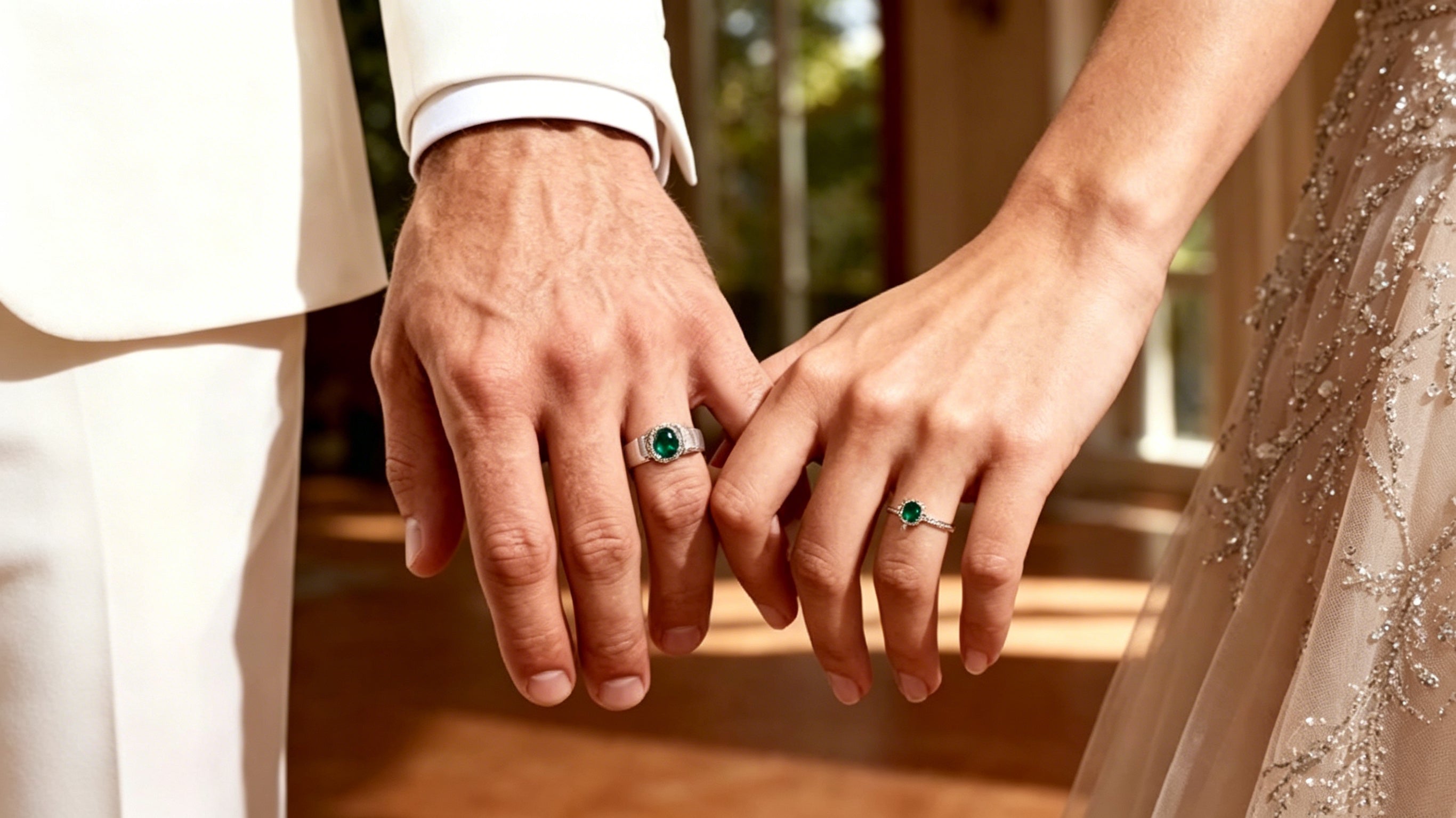
LUO Jewelry’s colored gemstone promise ring collection is especially notable. The natural color language of these gems gives every ring an emotional expression that goes beyond form—deep sapphires convey loyalty and eternity, gentle pink opals speak of romance and tenderness, lively emeralds symbolize growth and hope, and mysterious amethysts carry a special air of dreams and intuition. At LUO Jewelry, each gemstone is treated as a language, and every ring is a carefully written love letter waiting to meet its destined wearer.
Whether you are marking a new chapter, honoring a commitment, or expressing a future intention, select a thoughtfully crafted promise ring as a lasting symbol.
Conclusion
Which finger to wear a promise ring on ultimately points to the nature of your relationship and your own inner feelings.
- The left ring finger carries the deepest romantic tradition and suits couples whose relationship has deepened and is moving toward marriage.
- The right ring finger, with its flexibility and clarity, offers a composed solution for a wider range of relationship states.
- The middle finger, with a modern and independent stance, welcomes those who do not want to be defined by tradition.
- The index finger, historically associated with confidence and decisiveness, becomes an ideal place for personal promises and friendship vows.
- The pinky finger, with its dual meaning of personal expression and family heritage, appeals to wearers with unique jewelry narratives.
- Wearing a ring as a necklace provides wearers in special situations the closest, most intimate emotional safeguard near the heart.
Whichever finger you choose, the most important thing is that the choice is genuine and meaningful for both of you and is a decision you make together after fully understanding each other’s feelings. A good promise ring will grow more precious with time, because what it carries is not just the weight of a ring but the sincerity and courage of two people choosing to cherish one another at a particular moment.