
What Finger Does an Engagement Ring Go On?
Choosing an engagement ring is one of the most meaningful decisions you'll make when planning a proposal, but knowing which finger to place it on can feel surprisingly confusing. With cultural variations, personal preferences, and evolving traditions all playing a role, many people find themselves searching for clear answers before popping the question or accepting a proposal.
This guide walks you through everything you need to know about engagement ring finger placement, from the traditional customs rooted in ancient history to modern interpretations that honor personal style. Whether you're preparing to propose, recently got engaged, or simply want to understand the symbolism behind ring placement, this article will give you the clarity you need.
What Ring Finger Is the Engagement Finger?
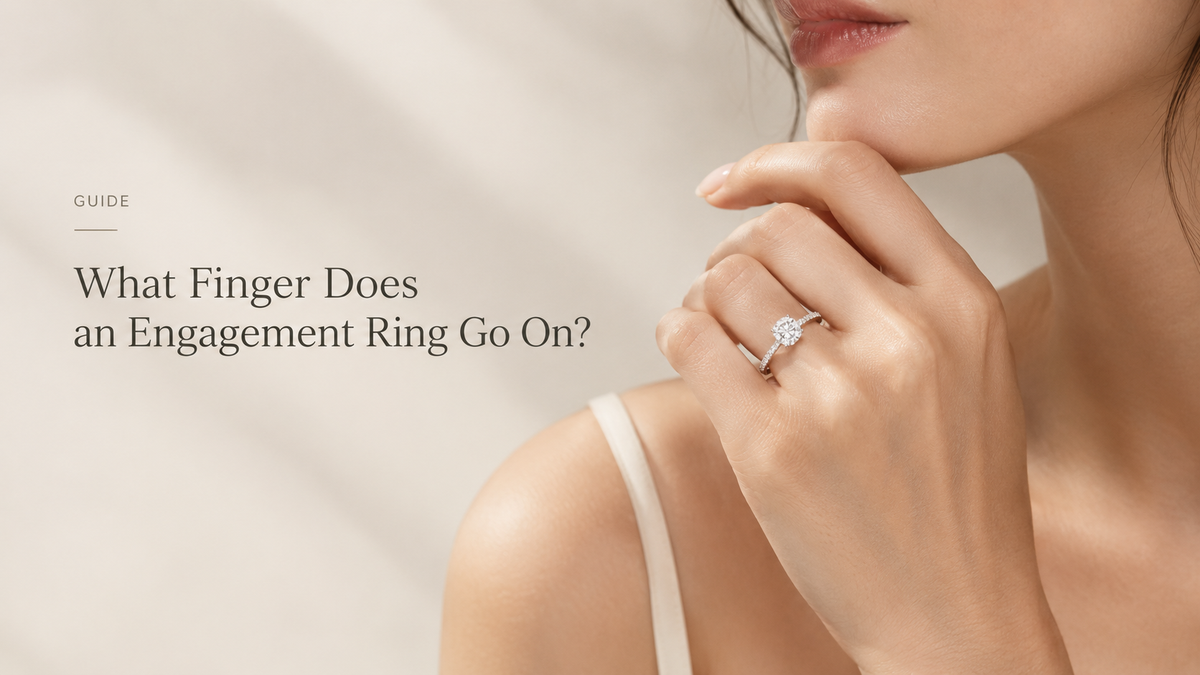
The traditional engagement ring finger is the fourth finger on the left hand, commonly known as the ring finger. This finger sits between the pinky and the middle finger, and it has held this special significance for centuries across many Western cultures, including the United States.
When someone asks, "what ring finger is the engagement finger", they're typically referring to this specific digit on the left hand. This tradition remains the most widely recognized standard in America, Canada, the United Kingdom, and numerous other countries where Western marriage customs prevail.
Why Do People Wear Engagement Rings on the Left Hand?
The ancient Romans believed that a vein called the vena amoris, which translates to "vein of love", ran directly from the fourth finger on the left hand straight to the heart. While modern anatomy has since disproven this specific claim, since our circulatory system doesn't actually work this way, the romantic idea captured hearts for generations and cemented this finger's association with love and commitment.
The reasoning behind this tradition traces back thousands of years, and understanding the history adds a layer of meaning to this simple act of wearing a ring. Ancient beliefs, romantic notions, and practical considerations have all contributed to making the left ring finger the accepted engagement ring finger.
1. Historical Tradition
The vena amoris concept originated in ancient Egypt and was later adopted by the Romans, who spread this belief throughout their empire. Egyptian civilization viewed the circle shape of a ring as a powerful symbol of eternity, with no beginning and no end, representing everlasting love. When combined with the belief about a direct vein to the heart, placing a ring on this particular finger became a natural way to symbolize an eternal bond connected directly to one's deepest emotions.
This tradition continued through medieval Europe, where it became formalized in wedding customs. As Christianity spread across the continent, church ceremonies began incorporating this practice, further solidifying the left ring finger as the appropriate placement for both engagement and wedding rings.
2. Romantic Symbolism
Beyond the historical anatomy myth, the left ring finger carries deep romantic symbolism that resonates even today. Many couples appreciate the poetic notion that their ring rests on a finger believed to connect directly to their heart, even knowing the scientific inaccuracy behind the original belief.
This symbolism has proven remarkably durable because it speaks to something people want to believe about love: that it's not just a mental or social decision but something deeply connected to our physical being. The vena amoris legend, though scientifically incorrect, continues to add romance and meaning to modern engagements.
Can You Wear an Engagement Ring on Your Right Hand?
While the left hand remains the standard choice in most Western countries, wearing an engagement ring on the right hand isn't incorrect or unusual in certain contexts. Several cultures and countries have different customs that place equal or greater importance on the right hand for engagement and wedding rings.
In countries such as Germany, Russia, India, Norway, and several Latin American nations, wearing engagement and wedding rings on the right hand represents the standard practice rather than an exception. These variations often stem from different cultural, religious, or historical influences that shaped marriage customs independently from Western European traditions.
Some people also choose the right hand for practical reasons. If you're left-handed and work with your hands frequently, you might prefer keeping your ring on your less dominant hand to protect it from daily wear and tear. Others switch hands due to swelling, sizing issues, or simply personal comfort.
Religious and cultural backgrounds can also influence this choice. For instance, in Orthodox Christian traditions common in Greece and Eastern Europe, brides and grooms typically wear their rings on the right hand as a symbol of their faith and cultural heritage. Understanding these variations helps explain why you might see different customs even within diverse communities in the United States.
Ultimately, whether you choose the left or right hand, what matters most is that the placement feels meaningful and comfortable to you and your partner. There's no universal rule that makes one choice more valid than another, especially as global influences continue shaping how people express their commitments.
Is the Engagement Ring Finger the Same for Men?
Traditionally, engagement rings have been associated primarily with women, but this custom has evolved significantly in recent decades. Men who wear engagement rings typically follow the same convention, placing their ring on the fourth finger of the left hand, mirroring the tradition established for women.
This practice has grown more common as society embraces more inclusive approaches to relationships and marriage. Same-sex couples, in particular, have helped popularize the idea that engagement rings aren't gender-specific, leading to greater acceptance of men wearing engagement rings just as women do.
For men who choose to wear an engagement ring, the same considerations apply regarding hand and finger choice. Some prefer the left hand to align with traditional customs, while others might choose the right hand based on personal preference or cultural background. The growing variety of men's engagement ring styles, from classic bands to rings featuring gemstones, reflects this expanding acceptance of diverse expressions of commitment.
What Is the Meaning for Rings on Fingers?
Beyond engagement and wedding rings, different fingers carry their own symbolic meanings when it comes to jewelry. Understanding these meanings can help you make more intentional choices about where you wear your rings, whether for special occasions or everyday style.
1. Thumb
Rings worn on the thumb have historically symbolized wealth, power, and status. In ancient times, thumb rings were often associated with authority figures and were sometimes used as a way to display one's social standing or professional achievements.
In contemporary fashion, thumb rings have become a popular style choice that doesn't necessarily carry specific symbolic weight but rather serves as a bold, statement-making accessory. Many people choose chunky or unique designs for thumb rings simply because this larger digit can accommodate more substantial jewelry pieces.
2. Index Finger
The index finger has long been associated with leadership, ambition, and confidence. Throughout history, rings worn on this finger often signified authority or social rank, with many historical figures and leaders choosing this finger to display symbols of their power.
Today, wearing a ring on the index finger often reflects personal style and can suggest a bold, assertive personality. This finger provides excellent visibility for statement rings since it's frequently used in gestures and remains prominently visible.
3. Middle Finger
The middle finger occupies a neutral position both physically and symbolically. Since it sits at the center of the hand, rings worn here don't carry strong traditional associations related to romance or commitment.
This makes the middle finger a popular choice for balance in ring stacking or for showcasing a single statement piece without the symbolic weight attached to other fingers. Many people choose this finger simply for aesthetic reasons, appreciating how a ring looks centered on the hand.
4. Ring Finger
As discussed throughout this article, the ring finger holds the most significant symbolic meaning of all fingers, particularly on the left hand. This finger represents love, commitment, and partnership, making it the standard choice for engagement rings and wedding bands.
The deep-rooted history and romantic symbolism associated with this finger, especially the vena amoris legend, have made it synonymous with matters of the heart across countless cultures and generations.
5. Pinky Finger
The pinky finger carries interesting historical significance, particularly in certain professional and social contexts. In some traditions, pinky rings have symbolized membership in specific groups, professional achievements, or family heritage, such as signet rings passed down through generations.
In modern fashion, pinky rings offer a subtle way to add jewelry without the boldness of larger statement pieces on other fingers. This finger's smaller size makes it ideal for delicate bands or petite designs that add a touch of elegance without overwhelming the hand.
How Do You Wear an Engagement Ring and Wedding Ring Together?
Once you're married, you'll likely want to wear both your engagement ring and wedding band together, and there are several approaches to consider for this combination.
Which Ring Goes on First?
Traditionally, the wedding band goes on first, positioned closer to your heart, with the engagement ring placed on top of it. This order stems from the wedding ceremony itself, where the wedding band is placed on your finger during the vows, symbolizing the more immediate commitment being made in that moment.
The engagement ring, having been given earlier as a symbol of the promise to marry, then goes back on top after the ceremony, sitting slightly further from your hand's palm. This arrangement allows both rings to be visible while honoring the sequence of your relationship's milestones.
What If You Want to Wear Them Differently?
While the traditional order remains popular, plenty of couples choose alternative arrangements based on comfort, ring design, or personal preference. Some people prefer wearing their wedding band on top if their engagement ring has a more delicate setting that might get damaged by friction between the two rings.
Others choose to wear their rings on different hands entirely, or they might use a ring guard or spacer that keeps the two rings connected, preventing them from shifting throughout the day. Custom-designed wedding sets, where the engagement ring and wedding band are created to fit together seamlessly, have also grown in popularity, eliminating concerns about proper order or fit altogether.
Should the Engagement Ring and Wedding Band Match?
Matching your engagement ring and wedding band isn't a requirement, though many couples choose complementary designs for a cohesive look. Some prefer rings crafted from the same metal, such as pairing white gold or platinum engagement rings together, to create visual harmony when worn side by side.
Others intentionally mix metals or styles, creating an eclectic look that reflects their personal taste rather than adhering to matching conventions. If you're planning to wear both rings together long-term, it's worth considering how the two pieces will look and feel combined, particularly regarding comfort and how the settings interact with each other during daily wear.
How Do You Wear an Engagement Ring and Promise Ring?
Promise rings typically precede engagement rings in a relationship timeline, symbolizing commitment before an official engagement takes place. When someone receives both a promise ring and later an engagement ring, the most common practice involves moving the promise ring to a different finger once the engagement ring is received.
Many people choose to wear their promise ring on the right hand after becoming engaged, keeping the left ring finger available for the engagement ring. This transition allows both pieces of jewelry to maintain their significance without competing for the same symbolic placement.
Some individuals choose to wear their promise ring on a necklace instead, keeping it close while freeing up finger space for the engagement and eventually wedding rings. Others may retire their promise ring altogether once engaged, viewing the engagement ring as the natural progression of that earlier commitment.
There's no strict rule governing this transition, so couples should feel free to decide what feels most meaningful for their relationship and how they want to honor each stage of their journey together.
👉 Click to Learn More: What Finger Does a Promise Ring Go On?
How to Choose an Engagement Ring for Your Ring Finger?
Selecting the perfect engagement ring involves more than just picking a beautiful design. Several practical and aesthetic factors deserve consideration to ensure your ring fits properly, complements your lifestyle, and reflects your personal style.
1. Determine the Right Ring Size
Before purchasing a ring, it's essential to know exactly which finger it will be worn on, along with the precise size needed for a comfortable fit. Getting sized professionally at a jewelry store provides the most accurate measurement, though many retailers also offer at-home sizing kits for convenience.
Keep in mind that finger size can fluctuate due to temperature, time of day, and other factors, so it's often best to get sized when your hands are at a normal temperature rather than after exercise or in extremely hot or cold conditions. At LUO Jewelry, we recommend consulting our detailed Ring Sizing Guide to help ensure your ring fits comfortably from the moment you receive it.
2. Consider Diamond or Gemstone as the Main Stone
Diamonds have long served as the traditional choice for engagement rings, prized for their durability, brilliance, and timeless appeal. Their hardness makes them exceptionally suitable for daily wear, as they resist scratching and maintain their sparkle for generations.
However, gemstones have gained significant popularity as alternatives or complements to diamonds, offering unique colors and personal meaning that diamonds simply can't provide. Choosing a gemstone based on its symbolic meaning, such as sapphires representing wisdom and loyalty or emeralds symbolizing rebirth and love, adds a deeply personal touch to your ring.
Birthstones offer another meaningful option, allowing you to select a gemstone that corresponds to your birth month, creating a connection between the ring and your personal identity. Alternatively, choosing a gemstone that commemorates a significant milestone in your relationship, such as the location of your first date or a shared favorite color, can transform your engagement ring into a deeply personal symbol of your unique love story.
At LUO Jewelry, we specialize in creating stunning gemstone engagement rings that celebrate individuality, offering an extensive selection of colored stones alongside traditional diamonds to suit every preference and story.
👉 Click to Learn More: What is the Best Gemstone for Engagement Rings?
How to Buy a Colored Gemstone Engagement Ring?
3. Consider the Gemstone Shape
The shape of your center stone significantly influences the overall look and feel of your engagement ring. Round brilliant cuts remain the most popular choice due to their exceptional sparkle and timeless appeal, working well with virtually any setting style.
Oval, cushion, and emerald cuts offer distinctive alternatives that can make fingers appear longer and more elegant while providing a unique aesthetic that stands out from traditional round stones. Pear and marquise shapes add a touch of drama and vintage charm, appealing to those seeking something with more personality and visual interest.
When selecting a shape, consider how it complements your hand's natural proportions and your personal style, since this decision will influence how the ring looks and feels every single day.
4. Consider the Ring Metal
The metal you choose for your engagement ring band affects both its appearance and durability. Platinum offers exceptional strength and a naturally white sheen that never fades, making it a popular choice for those seeking a low-maintenance, long-lasting option.
White gold provides a similar aesthetic to platinum at a more accessible price point, though it typically requires occasional rhodium plating to maintain its bright white color over time. Yellow gold has experienced a resurgence in popularity, offering warm, classic elegance that pairs beautifully with both diamonds and colored gemstones.
Rose gold delivers a romantic, vintage-inspired look with its distinctive pink hue, appealing to those seeking something a little different from traditional metal options. Each metal type offers distinct advantages, so considering your lifestyle, skin tone, and personal aesthetic preferences will help guide this important decision.
5. Consider the Ring Setting
The setting you choose plays a crucial role in both the ring's appearance and how securely your center stone is held in place. Prong settings remain incredibly popular because they allow maximum light exposure to the stone, enhancing its natural brilliance and sparkle.
Bezel settings offer superior protection for the stone by surrounding it with a metal rim, making this option ideal for those with active lifestyles or professions that involve frequent hand use. Halo settings, which surround the center stone with smaller accent diamonds or gemstones, create the illusion of a larger stone while adding extra sparkle and dimension to the overall design.
Pavé settings, featuring small stones set closely together along the band, add subtle sparkle without overwhelming the design, while solitaire settings offer timeless simplicity that puts the focus entirely on the center stone. Considering your daily activities, personal style, and desired level of stone protection will help you select the setting that best suits your needs and preferences.
Conclusion
Understanding which finger an engagement ring belongs on involves appreciating both timeless traditions and the flexibility modern couples now enjoy. While the fourth finger on the left hand remains the most widely recognized choice, rooted in centuries of history and romantic symbolism, personal preference and cultural background can rightfully influence this decision.
Whether you're drawn to the traditional vena amoris legend, considering practical factors like your profession or lifestyle, or simply want to honor your own unique relationship story, there's no single correct answer that applies universally. What matters most is that your engagement ring, wherever you choose to wear it, represents a meaningful symbol of your commitment and love.
At LUO Jewelry, we understand that every love story is unique, which is why we offer a stunning collection of gemstone engagement rings designed to reflect your individual style and story. From vibrant sapphires to elegant emeralds, our carefully crafted pieces combine timeless quality with personal meaning, helping you find the perfect ring to celebrate this exciting chapter in your life. Explore our collection today and discover an engagement ring that truly tells your story.