
What Is Ruby? The Ultimate Guide to Ruby Stone
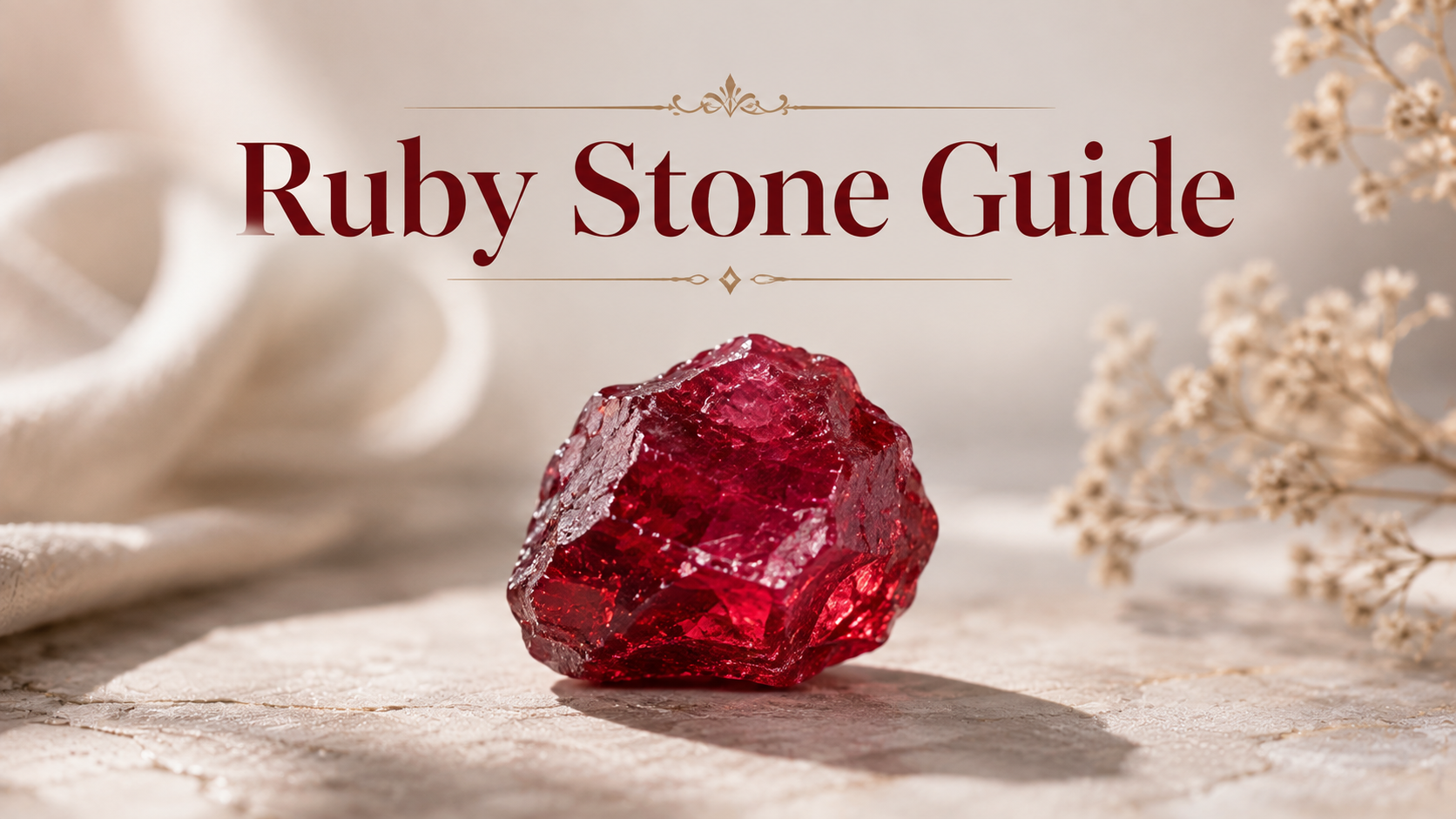
Ruby is one of the world's most valuable colored gemstones, prized across cultures and centuries for its striking beauty. As a member of the corundum mineral family, ruby stands apart from other gems through its combination of vibrant red color and exceptional durability. For thousands of years, civilizations from India to Europe have treasured ruby as a symbol of passion, protection, and prosperity, weaving it into royal crowns, sacred rituals, and cherished family heirlooms.
At LUO Jewelry, ruby gemstones are celebrated for their rich color, timeless symbolism, and ability to create meaningful jewelry pieces that carry personal significance for generations. Whether you're drawn to ruby because of its fiery beauty or its deep historical roots, understanding this remarkable gemstone will help you appreciate why it remains one of the most sought-after stones in fine jewelry today.
What Is Ruby Stone?
Ruby is a variety of corundum, a crystalline form of aluminum oxide that ranks among the hardest natural materials on Earth. Its chemical composition consists of aluminum oxide (Al₂O₃), a relatively simple formula that belies the complexity of how this gemstone actually forms in nature. What transforms ordinary corundum into the fiery red gemstone we recognize as ruby is the presence of chromium, a trace element that infiltrates the crystal structure during formation and produces that signature red hue.
Here's something that surprises many people: ruby and sapphire are actually the same mineral. Both gems belong to the corundum family and share identical physical properties, including hardness and crystal structure. The only meaningful difference lies in color, which depends entirely on which trace elements become incorporated during the crystal's growth. When corundum develops a red color from chromium, gemologists classify it as ruby. When corundum forms in any other color, including blue, pink, yellow, or green, it receives the classification of sapphire instead. This distinction explains why ruby holds such a special place in the gem world, since it represents the only color variety of corundum that receives its own unique name.
👉 Explore More on The Ultimate Guide to Sapphire Stone
Ruby Physical Properties
Understanding ruby's physical characteristics helps explain both its beauty and its practicality as jewelry. The table below outlines the key properties that define this gemstone.
| Property | Description |
| Mineral Family | Corundum |
| Chemical Formula | Al₂O₃ |
| Hardness | 9 on Mohs Scale |
| Crystal System | Hexagonal |
| Luster | Vitreous |
| Transparency | Transparent to opaque |
| Main Color | Red |
The hardness rating of 9 on the Mohs scale deserves particular attention, since it places ruby just below diamond in terms of scratch resistance. This exceptional durability means that ruby can withstand daily wear far better than many other gemstones, making it an excellent choice for rings and other jewelry pieces that experience regular contact with surfaces.
Why Is Ruby Considered a Precious Gemstone?
Ruby holds a place among the "Big Four" precious gemstones, joining the ranks of sapphire, emerald, and diamond in this exclusive category.
Several factors contribute to this elevated status.
- First, ruby's rarity plays a significant role, since gem-quality specimens with vivid color and good clarity occur far less frequently than many other colored stones.
- Second, ruby's durability, stemming from its high hardness rating, ensures that jewelry pieces can be passed down through generations without significant wear.
- Third, the intensity of ruby's color creates an emotional and visual impact that few other gemstones can match. A high-quality ruby seems to glow from within, capturing light in a way that draws the eye immediately.
- Finally, ruby's historical importance across multiple cultures and centuries has cemented its reputation as a gemstone of genuine significance rather than a fleeting trend.
These combined qualities explain why ruby continues to command premium prices and widespread admiration in the contemporary jewelry market.
How Is Ruby Formed?
The formation of ruby represents one of nature's more remarkable geological processes. It begins when aluminum-rich rocks form deep underground, typically in metamorphic environments where existing rock formations undergo significant transformation. Extreme heat and pressure work together over extended periods to transform these mineral deposits, creating the conditions necessary for crystal growth.
During this transformative process, chromium atoms occasionally enter the developing crystal structure, replacing some of the aluminum atoms within the corundum lattice. This chromium incorporation is what ultimately produces ruby's characteristic red color. The entire process unfolds gradually, with ruby crystals developing over millions of years as geological conditions remain stable enough to support continued growth. This lengthy formation timeline, combined with the specific geological conditions required, explains why natural rubies form in only a limited number of locations worldwide.
Why Are Natural Rubies So Rare?
The rarity of high-quality natural ruby stems from an unusually demanding set of geological requirements. For ruby to form at all, the surrounding rock must contain a notable lack of silica, since silica readily bonds with aluminum and would prevent the corundum crystal from developing properly. Additionally, the presence of chromium must coincide precisely with the corundum formation process, as this trace element cannot be introduced after the crystal has already solidified.
Beyond these compositional requirements, ruby formation also demands a very specific pressure environment that must remain stable across geological timescales. Even minor deviations in temperature or pressure can result in different mineral formations entirely, or produce corundum with insufficient chromium content to create visible red color. This combination of stringent requirements means that geological locations capable of producing ruby remain quite limited across the globe. As a direct consequence, high-quality natural ruby carries substantial value, particularly when specimens display strong color saturation combined with good transparency.
What Color Is Ruby?
Ruby's color range extends across several distinct shades, though all fall within the red spectrum. The most typical colors include vivid red, deep red, purplish red, and pinkish red, with variations depending on the specific chromium content and the presence of other trace elements within individual specimens. Each of these color variations possesses its own particular appeal, and personal preference often plays a significant role in which shade a buyer finds most attractive.
What Is the Most Valuable Ruby Color?
Among all ruby colors, one specific shade commands the highest prices and greatest admiration within the gemstone trade: Pigeon Blood Ruby. This exceptional color designation refers to rubies displaying an intense, vivid red with a slightly bluish undertone that creates remarkable depth and saturation. The color must appear highly saturated throughout the stone, without any brownish or grayish modifiers that would diminish its visual impact.
Historically, the finest examples of pigeon blood ruby have come primarily from Myanmar, formerly known as Burma. The unique geological conditions found in this region have produced some of the most celebrated rubies in gemstone history, and Myanmar-origin stones with this coveted color classification continue to achieve exceptional prices at auction. While other locations occasionally produce rubies approaching this color quality, Myanmar remains synonymous with the pigeon blood designation in the minds of collectors and gem enthusiasts.
What Are the Ruby Meanings?
Ruby Symbolic Meanings
Throughout human history, ruby has accumulated rich layers of symbolic meaning that extend well beyond its physical beauty. These meanings have evolved across different cultures while maintaining certain consistent themes that continue to resonate with people today.
1. Love and Passion
Ruby has long been associated with matters of the heart, representing romantic love in its most intense form. The gemstone's deep red color naturally evokes associations with passion and desire, making it a fitting symbol for devotion between partners. Many cultures have historically given ruby as a gift to express profound romantic feelings, viewing the stone as a physical embodiment of emotional intensity that words alone cannot fully capture.
2. Courage and Strength
Beyond romantic connotations, ruby also carries symbolic weight related to personal character and inner strength. Historical traditions have consistently linked ruby to bravery, viewing warriors and leaders who wore the stone as embodying courage in the face of adversity. This association extends to confidence and leadership qualities as well, with ruby often considered a stone that empowers its wearer to make bold decisions and take decisive action when circumstances demand it.
3. Protection and Good Fortune
Traditional beliefs across multiple cultures held that ruby offered tangible protective qualities to those who possessed it. Ancient peoples believed the stone could protect against danger, whether from physical harm, misfortune, or malevolent forces. Additionally, ruby carried associations with prosperity, with many believing that the gemstone could attract wealth and favorable circumstances to its owner. While contemporary understanding of gemstones has evolved considerably, these historical beliefs continue to influence how many people view ruby today, adding an extra layer of meaning to jewelry pieces that incorporate this stone.
Ruby Birthstone Meanings
Beyond its general symbolic associations, ruby holds a specific place in birthstone traditions that many people find personally meaningful when selecting jewelry.
Which Birthstone Month Is Ruby?
Ruby serves as the traditional birthstone for July, making it a popular choice for those born during this summer month who want jewelry connected to their birth date. The symbolic qualities associated with July birthstones align closely with ruby's broader meanings, encompassing passion, confidence, strength, and vitality. For individuals born in July, wearing ruby jewelry offers a way to connect with these traditional qualities while enjoying a genuinely beautiful gemstone.
👉 Explore More on What is July Birthstone?
Ruby Zodiac Birthstones
In addition to its monthly birthstone status, ruby also holds significance as a zodiac birthstone for both Cancer and Leo.
For those born under Cancer, ruby is believed to enhance emotional strength and provide a sense of security during challenging times. For Leo individuals, the connection feels particularly fitting given this sign's association with confidence, leadership, and vibrant energy, all qualities that align naturally with ruby's symbolic meaning.
Wearing ruby as a zodiac stone allows individuals to feel a deeper personal connection to their jewelry, one that extends beyond simple aesthetic appeal into the realm of personal identity and astrological tradition.
👉 Explore More on The Ultimate Guide to Zodiac Birthstones
Anniversary Stone
Ruby also carries significance within marriage anniversary traditions, specifically representing both the 15th and 40th wedding anniversaries.
For couples celebrating fifteen years together, ruby symbolizes the enduring passion and commitment that has carried their relationship through the early years of marriage. When couples reach their 40th anniversary, ruby takes on additional meaning, representing the deep, seasoned love that develops only through decades of shared experience.
Gifting ruby jewelry to commemorate these milestones offers a meaningful way to honor lasting relationships while providing a gemstone that will continue to be treasured for years to come.
👉 Explore More on The List of Gemstones A-Z
Ruby Spiritual Meaning
Within crystal healing traditions and spiritual practices, ruby occupies an important position as a stone associated with powerful, activating energy. Practitioners commonly describe ruby as representing energy, passion, motivation, and emotional strength. Unlike gemstones associated with calming or soothing qualities, ruby is generally viewed as an energizing stone, one that encourages action, vitality, and engagement with life rather than passive contemplation. This spiritual reputation has made ruby particularly popular among those seeking to overcome lethargy, boost their motivation, or reconnect with their sense of purpose and drive.
What Is Ruby Good For?
Beyond its spiritual associations, many people believe ruby offers specific healing benefits across emotional, physical, and energetic dimensions. While these claims exist outside conventional medical science, they represent centuries of accumulated belief that continue to influence how people relate to this gemstone.
Emotional and Psychological Healing Properties
Ruby is often credited with encouraging a positive mindset and strengthening emotional resilience during difficult periods. Many crystal healing practitioners suggest that ruby helps alleviate anxiety while promoting greater mental clarity, allowing individuals to approach challenges with a calmer, more focused perspective. The stone is also believed to inspire confidence, motivation, and creativity, qualities that can prove valuable both in personal relationships and professional pursuits.
Perhaps most significantly, ruby is thought to assist those working through emotional obstacles or past trauma. Practitioners suggest that the stone's energizing properties can help individuals move past emotional blockages that might otherwise keep them stuck in unproductive patterns, encouraging genuine healing and forward progress.
Physical Healing Properties
In addition to emotional benefits, traditional beliefs also attribute several physical healing properties to ruby. The stone is commonly associated with heart health and improved circulation, with some practitioners suggesting that ruby's red color connects symbolically to blood and cardiovascular function. Ruby is also believed to enhance physical stamina and endurance, making it a popular choice among those seeking additional energy for demanding physical activities.
Detoxification represents another commonly cited benefit, with some believing that ruby supports the body's natural immune function and helps eliminate toxins more effectively. Additionally, certain traditions associate ruby with fertility and reproductive health, suggesting that the stone helps balance related bodily systems.
Chakra Healing Properties
Within chakra healing traditions, ruby is associated with two significant energy centers. The Root Chakra, known as Muladhara, connects to feelings of safety, stability, and physical grounding. Ruby is believed to strengthen resilience within this chakra, enhancing feelings of security and helping individuals overcome fear, stress, and self-doubt that might otherwise undermine their sense of stability.
Ruby also connects strongly to the Heart Chakra, or Anahata, which governs matters of love and emotional connection. Working with ruby in relation to this chakra is thought to strengthen bonds within relationships while encouraging forgiveness and emotional healing. Many practitioners also believe ruby helps enhance self-worth and self-acceptance, allowing individuals to approach both themselves and their relationships with greater compassion.
How to Use Ruby for Energy Healing?
For those interested in incorporating ruby's believed energetic properties into daily life, several approaches have become popular among crystal healing enthusiasts.
Wearing ruby jewelry represents perhaps the most practical method, since pieces like ruby rings, pendants, or bracelets ensure consistent energy flow throughout the day. This approach works particularly well for those seeking ongoing motivation, emotional healing, or a sense of protection as they move through daily activities.
Meditation with ruby offers another popular practice, with many practitioners holding the stone during meditation sessions to enhance focus, passion, and spiritual awareness. Placing ruby directly on the Root Chakra or Heart Chakra during meditation is believed to help balance energy flow through these important centers.
Placing ruby within living or working spaces provides a third method for those wanting to incorporate the stone's believed benefits into their environment. Many people position ruby stones in prominent locations at home or in the office, believing this attracts positive energy and vitality into the space. Some practitioners also recommend placing ruby beneath a pillow, suggesting this practice promotes deeper, more restful sleep alongside emotional healing during the night.
Ruby in History and Culture
Ruby's cultural significance spans continents and millennia, with different civilizations developing their own unique relationships with this remarkable gemstone.
Ruby in Ancient India
Within ancient Indian culture, ruby held an especially exalted position, often described as the "king of gemstones" due to its perceived power and value relative to other precious stones. Ancient Indian texts associated ruby closely with the sun, viewing the stone as a terrestrial representation of solar energy and power. This connection established ruby as a symbol of both political power and spiritual protection, with rulers and nobility often incorporating the stone into ceremonial objects and personal adornment as a way of demonstrating their authority and seeking divine favor.
Ruby in Ancient Burma
In ancient Burma, now known as Myanmar, ruby held deep cultural significance that extended into military and royal traditions. Warriors traditionally believed that ruby offered genuine protection during combat, with some historical accounts describing soldiers embedding rubies directly into their skin before battle in hopes of gaining invulnerability. Beyond military applications, ruby was also treasured extensively by Burmese royalty, who incorporated the finest specimens into royal regalia and considered access to quality ruby deposits a matter of considerable political importance.
Ruby in European Royal Jewelry
European royal families have long maintained a fascination with ruby, incorporating the gemstone extensively into crowns, royal collections, and aristocratic jewelry throughout history. Various European monarchies have featured ruby prominently in their crown jewels, often pairing the stone with diamonds to create dramatic contrasts of color and brilliance. This tradition of royal appreciation for ruby has continued into modern times, with prominent ruby pieces still appearing in royal collections and high-profile jewelry auctions around the world.
Where Are Rubies Found?
Understanding ruby's geographic origins provides valuable context for appreciating both the gemstone's rarity and its varying characteristics across different sources.
Myanmar Ruby
Myanmar remains the most celebrated source of quality ruby worldwide, with the Mogok Valley representing the most significant historical mining region. This area has produced some of the finest rubies ever discovered, including specimens displaying the coveted pigeon blood color that commands premium prices in the gemstone market. Mogok Valley rubies are particularly known for their exceptional color quality, often displaying the vivid, saturated red that collectors and jewelry enthusiasts prize above all other variations.
Other Ruby Sources
While Myanmar maintains its reputation as the premier ruby source, several other locations contribute meaningfully to global ruby production.
- Mozambique has emerged as an increasingly important source in recent decades, producing rubies with good color and clarity that have gained significant market recognition.
- Thailand has historically served as both a mining location and a major trading and treatment center for rubies from throughout the region.
- Sri Lanka contributes rubies typically displaying a somewhat lighter, more pinkish tone compared to Myanmar specimens.
- Madagascar has become an increasingly significant source in recent years, producing rubies across a range of qualities.
- Vietnam rounds out the list of notable sources, having produced some rubies with color quality approaching that of fine Myanmar specimens.
Why Does Ruby Origin Matter?
Origin plays a substantial role in determining a ruby's overall value and desirability within the gemstone market. Rubies from certain locations, particularly Myanmar, often command premium prices simply due to their geographic origin, independent of other quality factors. This premium reflects both historical reputation and the genuine tendency for certain locations to produce rubies with superior color characteristics.
Origin also influences typical color patterns, since different geological environments tend to produce rubies with characteristic hues and saturation levels. Finally, origin affects market value more broadly, with certified origin information often significantly impacting a ruby's price at auction or through reputable dealers. For buyers considering significant ruby purchases, understanding origin can provide valuable context for evaluating whether a stone's price aligns reasonably with its overall quality and rarity.
How Much Is Ruby Worth?
Ruby valuation depends on five primary factors that gemologists and buyers should understand when evaluating any specimen.
Color stands as the most important valuation factor by a significant margin. The most valuable rubies display that intense, saturated red color discussed earlier, ideally approaching the pigeon blood standard. Stones with color that appears too light, too dark, or too brown will command substantially lower prices regardless of other quality factors.
Clarity represents the second major consideration, though buyers should understand that natural rubies typically contain inclusions and silk, which are fine needle-like mineral formations within the stone. Completely flawless natural rubies are extremely rare, and their scarcity means that even minor inclusions are generally accepted as normal characteristics rather than significant defects, provided they don't interfere excessively with the stone's overall beauty or structural integrity.
Cut quality significantly influences both brilliance and color display, since a well-executed cut maximizes how light interacts with the stone. Poor cutting can make even a stone with excellent color appear dull or lifeless, while skilled cutting can enhance the visual impact of a ruby's natural color.
Carat weight affects value in a notably non-linear fashion, with larger high-quality rubies commanding disproportionately higher prices per carat compared to smaller stones. This pricing pattern reflects the increasing rarity of larger rubies with excellent color and clarity, since finding substantial rough material capable of yielding a large, high-quality finished stone becomes increasingly difficult as size requirements increase.
Origin and treatment round out the primary valuation factors, with untreated natural rubies commanding the highest values in the marketplace. Heat treatment represents the most common treatment applied to rubies, used to improve color and clarity in stones that might otherwise display less desirable characteristics. While heat-treated rubies remain popular and affordable options, untreated stones with excellent natural color command substantial premiums among collectors and serious buyers.
Ruby Price Range
Ruby prices span an enormous range depending on the factors discussed above. Modest quality rubies suitable for everyday jewelry might sell for relatively affordable prices per carat, while exceptional untreated Myanmar rubies with pigeon blood color can command prices reaching tens of thousands of dollars per carat at auction. This wide price spectrum means that ruby jewelry remains accessible to buyers across various budgets, while also offering genuine investment-grade options for serious collectors.
Ruby vs Diamond: Which Is More Valuable?
While diamonds generally maintain a reputation as the ultimate symbol of luxury, certain top-quality rubies can actually exceed diamond prices on a per-carat basis. Exceptional Myanmar rubies with outstanding color, clarity, and provenance have achieved auction prices that rival or surpass comparable diamonds. Ultimately, value depends heavily on rarity, quality, and origin rather than any inherent superiority of one gemstone over another. This reality has led increasing numbers of buyers to consider ruby as a genuine alternative to diamond, particularly for those seeking something distinctive and less commonly seen in everyday jewelry.
Natural Ruby vs Lab Grown Ruby Gemstone
Understanding the distinction between natural and lab-grown ruby helps buyers make informed decisions based on their priorities and budget considerations.
What Is Natural Ruby?
Natural ruby forms through the geological processes described earlier in this guide, developing over millions of years within the Earth's crust under specific temperature and pressure conditions. These stones are mined directly from the ground at locations like Myanmar, Mozambique, and other established ruby-producing regions.
What Is Lab-Grown Ruby?
Lab-grown ruby, also called synthetic ruby, shares identical chemical composition and physical properties with natural ruby but forms in controlled laboratory conditions rather than through natural geological processes. Scientists use various methods to recreate the conditions necessary for corundum crystal growth, typically achieving results in a matter of weeks or months rather than the millions of years required for natural formation.
What Are the Differences Between Natural and Lab-Grown Ruby?
While natural and lab-grown rubies share the same chemical and physical properties, several important differences distinguish them.
Natural rubies typically contain inclusions and growth patterns that reflect their unique geological history, while lab-grown specimens often display more uniform characteristics with fewer natural inclusions.
Price represents perhaps the most significant practical difference, with lab-grown rubies costing considerably less than natural stones of comparable size and color quality.
Rarity value also differs substantially between the two categories, since natural rubies benefit from genuine scarcity while lab-grown stones can be produced in essentially unlimited quantities. For buyers prioritizing budget-friendly options with excellent color and clarity, lab-grown ruby offers an attractive alternative. For those valuing natural origin and the inherent rarity that comes with it, natural ruby remains the preferred choice despite the higher associated cost.
👉 Explore More on Lab Grown Ruby Vs. Natural Ruby, What is the Difference?
How to Tell If a Ruby Is Real?
Distinguishing genuine ruby from imitations or synthetic alternatives requires careful examination, ideally performed by a qualified gemologist. Several indicators can help identify authentic natural ruby, including the presence of natural inclusions when examined under magnification, since perfectly clean stones raise suspicion about potential synthetic origin. Color consistency also provides clues, as natural rubies often display slight color zoning or variation that synthetic stones may lack.
Professional testing using specialized equipment provides the most reliable verification method, examining factors like refractive index, specific gravity, and internal characteristics that distinguish natural ruby from synthetic alternatives or imitation materials like red spinel or garnet. For significant purchases, obtaining a certificate from a reputable gemological laboratory offers the strongest assurance of authenticity and helps protect buyers from unknowingly purchasing misrepresented stones.
Ruby Gemstones in Jewelry
Ruby's combination of beauty, durability, and symbolic meaning makes it an excellent choice across virtually every category of fine jewelry. Understanding how ruby performs in different jewelry applications can help buyers select pieces that align with their lifestyle and personal style preferences.
Ruby Engagement Rings
Many couples increasingly consider ruby as an alternative to traditional diamond engagement rings, and several compelling reasons support this choice. Ruby's romantic symbolism aligns naturally with the significance of engagement, representing the passion and commitment central to marriage. Additionally, ruby's exceptional durability, reflected in its hardness rating of 9 on the Mohs scale, ensures the stone can withstand daily wear associated with an engagement ring worn continuously for years or decades.
Beyond practical durability, choosing rubies also offers couples a unique alternative to diamonds, allowing them to select a stone that feels more personally distinctive while still conveying the seriousness and romantic significance traditionally associated with engagement jewelry.
Ruby Rings for Women
Beyond engagement applications, ruby rings serve numerous purposes within women's jewelry collections. Many women appreciate ruby rings for everyday elegance, since the stone's vibrant color adds visual interest to both casual and formal outfits. Ruby rings also make meaningful anniversary gifts, particularly for couples celebrating the milestone anniversaries traditionally associated with this gemstone. For those seeking statement jewelry pieces, larger ruby rings featuring bold designs can serve as genuine conversation pieces that showcase personal style and appreciation for fine gemstones.
Ruby Earrings
Ruby earrings offer another popular way to incorporate this gemstone into personal style, ranging from simple stud earrings perfect for everyday wear to elaborate drop or chandelier designs suitable for formal occasions. The proximity of earrings to the face means that ruby's warm red tones can complement skin tone beautifully, adding a healthy glow that many wearers find flattering.
Ruby Necklaces and Pendants
Ruby necklaces and pendants provide yet another avenue for showcasing this gemstone, whether through simple solitaire pendants that let the stone's color speak for itself or more elaborate designs incorporating multiple rubies alongside complementary gemstones. Pendant necklaces featuring ruby often serve as meaningful gifts, particularly for July birthdays or milestone anniversaries.
Combinations with Other Gemstones
Ruby pairs beautifully with numerous other gemstones, creating jewelry pieces with enhanced visual impact and symbolic meaning. Diamond remains a particularly popular pairing choice, since diamond's brilliant white sparkle creates striking contrast against ruby's deep red color. Ruby also combines effectively with other colored gemstones like sapphire or emerald, allowing designers to create pieces with rich, multi-colored appeal that showcase several precious stones simultaneously.
👉 Explore More on Matching Ruby Gemstone Pairs
Care and Cleaning of Ruby Jewelry
Proper care ensures that ruby jewelry maintains its beauty and value across years of wear, making it essential for owners to understand appropriate maintenance practices.
How to Care for Ruby Jewelry?
While ruby's hardness makes it quite durable compared to many other gemstones, certain precautions remain important for preserving its condition over time. Avoiding harsh chemicals represents a fundamental care principle, since exposure to household cleaners, chlorine, or other aggressive substances can potentially damage ruby settings or affect the stone's surface over time. Cleaning ruby jewelry with mild soap and warm water provides a safe, effective approach for regular maintenance without risking damage.
Storage practices also matter significantly, with experts recommending that ruby jewelry be stored separately from other pieces to prevent scratching. Despite ruby's considerable hardness, contact with other jewelry items, particularly those set with diamonds, can potentially cause surface damage over extended periods.
How to Clean Ruby Jewelry?
For routine cleaning, gently washing ruby jewelry using warm water combined with mild dish soap effectively removes everyday dirt and oils without risking damage to the stone or setting. Using a soft-bristled brush, such as a clean toothbrush, allows for gentle cleaning around setting details where dirt commonly accumulates. After washing, thoroughly rinsing the piece under clean water and drying it with a soft cloth completes the cleaning process. For jewelry with sentimental or significant monetary value, periodic professional cleaning by a qualified jeweler provides additional assurance that pieces remain in excellent condition.
👉 Explore More on Gemstone Jewelry Cleaning & Care Guide
Conclusion
Ruby is one of the world's most iconic gemstones, carrying a legacy that spans continents, cultures, and centuries of human history. Its vibrant red color, exceptional durability, and rich symbolism combine to create a gemstone that feels genuinely meaningful rather than merely decorative. Whether chosen as a July birthstone celebrating personal identity, selected for an engagement ring representing lasting commitment, or simply appreciated as a beautiful personal jewelry piece, ruby represents a story that lasts well beyond any single moment or occasion.
Explore LUO Jewelry's ruby gemstone collection and discover a meaningful ruby piece designed to celebrate love, confidence, and individuality. From elegant ruby rings to stunning necklaces and earrings, each piece offers an opportunity to connect with this extraordinary gemstone's timeless beauty and enduring significance.