
What is Emerald? The Ultimate Guide to Emerald Stone
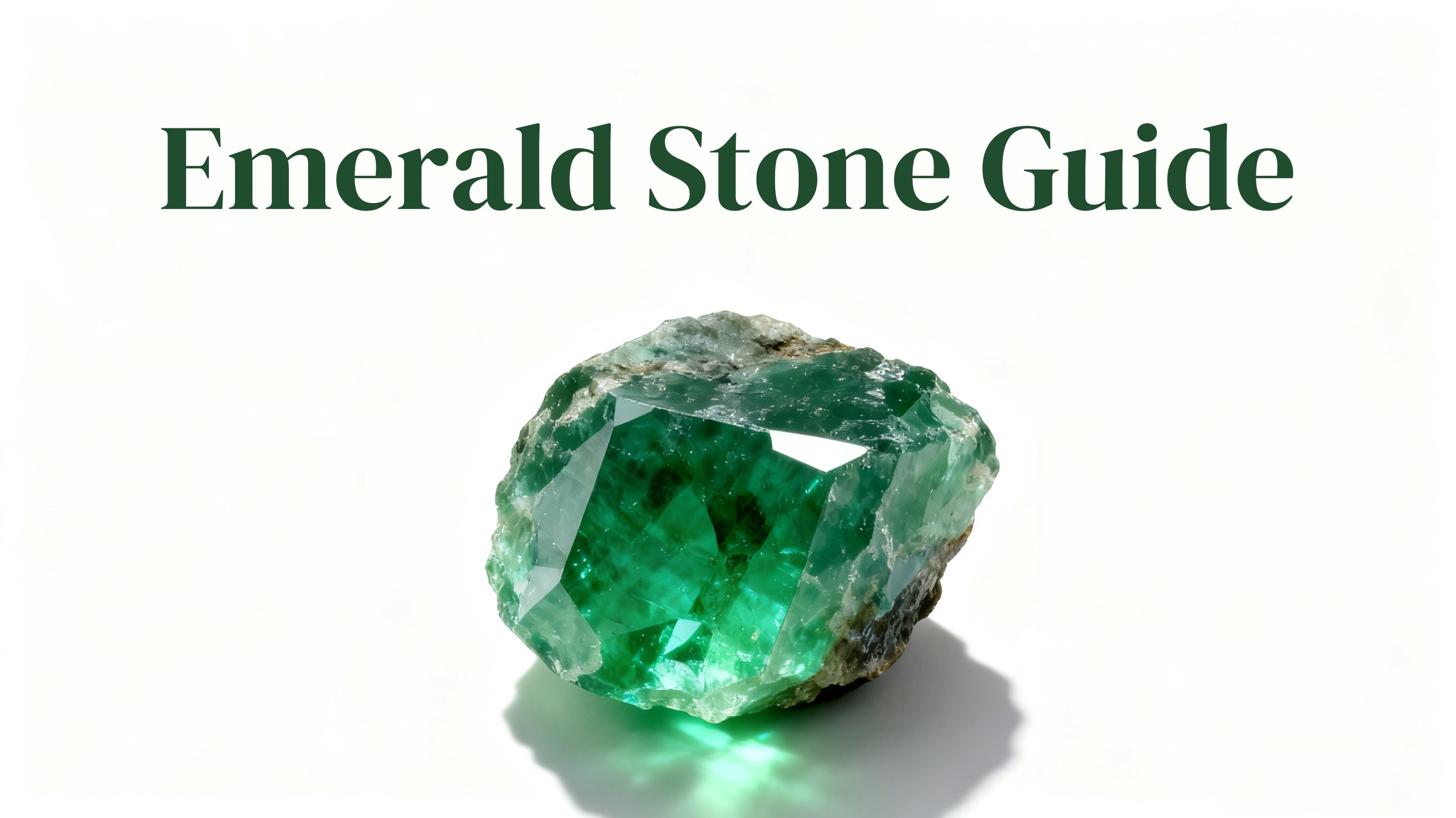
Among all gemstones, few can, like the emerald, capture human imagination for thousands of years with a single color. It is the embodiment of spring, a symbol of rebirth, life, and eternal love, and one of nature’s most enchanting wonders. As one of the “Big Four” precious gems (diamond, ruby, sapphire, emerald), the emerald is hailed as the “king of green gems” for its deep, rich, and unique green.
As the birthstone for May, the emerald is deeply ingrained in gem history with the meaning of the “stone of hope”. In modern times, it’s also a star in engagement rings, anniversary jewelry, and high-end jewelry designs. For buyers, purchasing an emerald is not only a financial investment but also an emotional one.
However, the world of emeralds is full of complex terms: from “Muzo Green” to “jardin” (garden effect), from oiling treatments to origin premiums. If you’re looking for the most comprehensive, authoritative information on emeralds, this Ultimate Guide to Emeralds Stone will be your ultimate encyclopedia. We will explore its formation, history, identification methods, and how to care for this delicate gem.
What is an Emerald?
Emerald belongs to the beryl family and is a beryllium aluminum silicate mineral with the chemical formula Be3Al2(SiO3)6. Other members of the beryl family include aquamarine and morganite, but emerald is undoubtedly the most expensive and prized among them. Its English name, “emerald”, comes from Old French esmeralde and ultimately traces back to the Greek smaragdos, meaning “green gem”.
Pure beryl is colorless; emerald’s green color arises when trace amounts of chromium or vanadium replace aluminum ions during crystal growth. These trace elements give emeralds their distinctive and valued color. Sometimes iron is also present in trace amounts, affecting the green’s tone (for example, making it slightly yellowish or bluish).
Physical Properties of Emeralds
- Hardness: On the Mohs scale, emeralds rate 7.5–8, making them relatively hard gemstones.
- Toughness: Although emeralds have a relatively high hardness (7.5–8), their toughness is poor. Because of naturally occurring internal fractures and inclusions, emeralds are brittle and can crack under severe impact. This is why emeralds often require special cutting styles (emerald cut) to protect their edges.
- Specific Gravity: Emeralds have a specific gravity between 2.67 and 2.78, a property that helps gemologists identify authenticity.
- Refractive Index: Emeralds have a refractive index of 1.577–1.583 and a birefringence of 0.005–0.009; these optical characteristics give them a captivating luster.
- Crystal System: Emeralds belong to the hexagonal crystal system, and crystals often form as hexagonal prisms.
- Clarity: High-quality emeralds should be transparent to translucent, but completely flawless emeralds are extremely rare.
- Inclusions: The presence of inclusions is considered a hallmark of natural emeralds. Common inclusions appear as garden-like, feather-like, needle-like, or three-phase (trapped fluid-solid-gas) inclusions.
How are Emeralds Formed?
The formation of emeralds is, geologically speaking, an “unlikely coincidence.” This is the fundamental reason why high-quality emeralds are so rare.
Three key elements must be present together under extreme geological conditions for an emerald to form: beryllium, silicon, and trace amounts of chromium or vanadium. However, these elements rarely coexist in the same geological environment on Earth, which makes emerald formation a rare geological phenomenon.
Hydrothermal Processes: Most emeralds form through hydrothermal processes. When mineral-rich hydrothermal fluids penetrate rock fractures, under the right temperature, pressure, and chemical conditions these elements slowly cool and crystallize. Over millions of years, emerald crystals eventually form. This process often produces emerald crystals with relatively high transparency.
Metamorphism: Another formation route is metamorphism. When rocks containing the necessary elements undergo high temperature and high pressure metamorphic processes, emeralds can form. For example, Colombian emeralds mainly formed when sedimentary rocks were affected by tectonic activity. Emeralds formed this way often have slightly deeper colors and more inclusions.
Pegmatitic Origin: In some regions, emeralds can also form in pegmatites, which are coarse-grained igneous rocks that crystallize during the final stages of magma cooling.
The Signature Feature of Emerald: “Garden” Inclusions
Emerald formation is accompanied by intense geological disturbance. While growing, emerald crystals commonly trap nearby rock fragments, gas bubbles, liquids, or other minerals. These trapped materials are what we call inclusions.
Unlike diamonds, “flawless” is not the standard by which emerald value is judged. In the world of emeralds, these inclusions are not only accepted but often romanticized. The French call them “Jardin” (meaning “garden”) because, under high magnification, the complex patterns look like tiny verdant gardens. These garden-like inclusions testify to the gem’s natural formation process. They are a characteristic unique to emeralds and an important indicator for identifying natural stones.
What Color is Emeralds?
The most striking characteristic of emeralds is their distinctive green. But not every green beryl can be called an emerald; only green beryl that achieves a certain level of color saturation and hue earns that prestigious name.
Emeralds’ green primarily comes from the trace elements chromium (Cr) and vanadium (V). Emeralds from different origins show slightly different green tones because of differing chromium-to-vanadium ratios:
- Colombian Emeralds: Typically display a pure, vivid green with a slight bluish tint, considered the most desirable color. This color is mainly due to chromium.
- Zambian Emeralds: Often have a deeper green with a slightly bluish cast, reflecting a relatively higher vanadium content.
- Brazilian Emeralds: Generally lighter in color and often have a yellow-green tone.
Which Emerald Color is Most Valuable?
For emeralds, color is everything. More than 50% of an emerald’s value depends on color quality. The Gemological Institute of America (GIA) evaluates color from three dimensions:
1. Hue
The very best emeralds show a vivid green or a green with a slight bluish tone.
- Too yellow: If the gem is too yellowish, it may simply be ordinary green beryl, and its value drops significantly.
- Too blue: This tone is often seen in Zambian emeralds; while beautiful, traditional markets typically prize pure green or slightly bluish-green most highly.
2. Tone
Tone refers to how light or dark the color is. The finest emeralds have a medium to medium-dark tone.
- Tone too light: The gem appears washed out or weak.
- Tone too dark: The gem can look blackish and lack brilliance.
3. Saturation
Saturation refers to the purity and intensity of the color. Higher saturation (vivid) yields more vibrant color—and higher value for emeralds. Emeralds with gray or brown modifiers look dull and are less valuable.
The trade generally agrees that the highest-quality emeralds should show a “living” green—vivid color, high saturation, and an appropriate tone, as if there’s life flowing within. The most famous example is Muzo Green—often synonymous with top-quality green. Muzo Green, cited in notable reports such as those from GRS (GemResearch Swisslab), represents the highest-quality color from Colombia: extremely rich, vivid, and deep green.
What are the Emerald Meanings?
Emerald Symbolic Meanings
Throughout human history, emeralds have been endowed with rich symbolic meanings, becoming symbols of power, wealth, wisdom, and love.
Power and Status: From ancient times to the present, emeralds have long been favored by royalty and nobility. Egypt’s Queen Cleopatra was especially fond of emeralds and even had her own emerald mines. During the Mughal Empire in India, emeralds were set into the most important royal jewels. This tradition continues today—many royal crowns and scepters are inlaid with precious emeralds.
Embodiment of Spring and Rebirth: The green of the emerald evokes spring’s renewal and the abundance of nature. Its green represents the revival of life and the vibrant energy of spring. The ancient Romans offered emeralds to Venus, the goddess of love and beauty, symbolizing eternal youth and vitality. Wearing an emerald suggests that a person’s spirit and emotions can continuously renew themselves, shed past shadows, and embrace new beginnings.
Love and Loyalty: Emeralds are also seen as symbols of true love and enduring commitment. According to ancient legends, if a partner was unfaithful, the color of an emerald would change. For this reason, emeralds are often used as engagement rings and wedding anniversary gifts, symbolizing steadfast and unwavering love.
LUO Jewelry offers a variety of emerald engagement ring styles, aiming to present this natural charm in a romantic, modern way and bring the green of nature into every bride’s daily life.
Prosperity and Abundance: In many cultures, green is closely associated with money, wealth, and material prosperity. Because emeralds are rare and noble, they are considered “stones of abundance” that attract good fortune and bring business success. Placing an emerald in a wallet or safe is believed to attract a steady flow of financial luck.
Emerald Birthstone Meanings
Emeralds are not only rare treasures; they are also attributed specific temporal and celestial energies, becoming protective stones for people’s birth months and zodiac signs.
May Birthstone: As the birthstone of May, emerald gemstone symbolizes the vibrant force of renewal, fertility, and hope. Wearing May birthstone jewelry can bring health, wisdom, and ongoing growth to those born in May.
Zodiac Birthstone: Emerald is also the birthstone for Taurus and a supportive stone for Gemini. As Taurus’s primary gem, emerald can enhance a Taurus’s artistic appreciation, patience, and sensitivity to the material world, helping them achieve stability and abundance. As an auxiliary stone for Gemini, emerald’s energy can help Geminis express themselves more clearly, boosting their mental agility, communication skills, and learning ability.
👉 Learn More: The Ultimate Guide to Zodiac Birthstones
Wedding Anniversary Stone: Traditionally, emerald is the gemstone for the 20th and 55th wedding anniversaries. It represents enduring love through a long marriage, deep loyalty to one another, and blessings of abundance for shared life.
Emerald Spiritual Meanings
Beyond emotions and wealth, emerald holds a significant place in spiritual and metaphysical realms and is often associated with wisdom and insight.
Insight and Foresight: Many ancient civilizations believed emeralds could grant the wearer the ability to foresee the future. Egyptians and Incas would gaze into emeralds before making important decisions to seek higher wisdom and guidance. It was thought to be a key to unlocking intuition, helping the wearer see beyond appearances and discern the truth.
Truth and Eloquence: Emerald has been regarded as a guardian of truth. It encourages people to face themselves and others honestly, helping reveal hidden truths and promoting sincere communication and understanding. In Greek and Roman mythology, emeralds are associated with Mercury (Hermes), the deity symbolizing communication and wisdom. Wearers were believed to gain clearer thinking and expression, becoming more persuasive and charismatic in public settings.
Stone of the Heart Chakra: Emerald is considered a stone for the heart chakra (the fourth chakra). Located at the center of the chest, the heart chakra is the center of love, compassion, and emotional balance. The green vibration of emerald is believed to activate and harmonize the heart chakra, helping people open their hearts and cultivate unconditional love and empathy.
Protection and Harmony: Emerald is thought to have strong protective properties, able to ward off negative energies and spiritual attacks. At the same time, it is used to create harmonious environments, resolve conflicts, and foster peaceful interpersonal relationships.
What are the Benefits of Emerald?
As the "King of Green Gemstones", emeralds have long been valued and revered by countless ancient civilizations for their effects and benefits. Its deep green frequency is believed to have positive impacts on emotional, psychological, physical, and even energetic levels.
Emotional and Psychological Healing Properities
Emerald’s powerful green energy works directly on the heart chakra, bringing deep psychological and emotional repair.
Emotional Balance and Inner Calm: Known for its natural soothing energy, emerald is thought to effectively balance intense emotional swings and help individuals quickly regain calm from anxiety, stress, or depressive feelings. It is like a tranquil lake, guiding emotions toward peace and stability.
Improved Focus and Mental Clarity: Traditionally regarded as the "stone of wisdom," emerald can help boost cognitive functions, improve memory and concentration, and make thinking more agile and clear—thereby enhancing learning and work performance.
Increased Confidence and Self-acceptance: Wearing an emerald may strengthen the wearer’s self-esteem and inner confidence. It helps people overcome deep-seated fears and insecurities, encouraging them to face life’s challenges with a more positive, empowered stance.
Harmonious Relationships and Empathy: As a symbol of "successful love," emerald can deepen interpersonal bonds. It fosters mutual understanding, compassion, and effective communication among partners, family, and friends, helping resolve conflicts and build lasting, meaningful connections.
Inspiration and Creativity: Many artists consider emerald a muse. It is believed to open channels of creativity, spark new ideas, unique perspectives, and artistic inspiration—especially useful for those in professions that require continual innovation.
Enhanced Intuition and Connection to the Subconscious: Emerald’s vibrational frequency is thought to develop the wearer’s sixth sense and strengthen intuitive abilities. It helps people better understand messages from the subconscious and guidance from the universe.
Healing Trauma and Transforming Grief: Emerald is used to heal deep emotional wounds, particularly those related to love, loss, and betrayal. During difficult times of loss and grief, emerald’s energy can offer gentle comfort and help the wearer gradually transform pain and find inner peace.
Physical Healing Properities
Eye Health and Soothing: This is one of emerald’s oldest and most famous benefits. The Roman scholar Pliny the Elder recorded that gazing at emeralds could soothe tired eyes and restore vision. Many believe emerald’s energy helps maintain eye health.
Cardiovascular Support: As a central gem for the heart chakra, emerald is thought to have positive effects on the heart itself and the circulatory system. Some traditional therapies believe it can help regulate blood pressure and promote overall cardiovascular health.
Immune Support and Detoxification: In naturopathy, emerald is believed to boost the body’s natural defenses—the immune system. It is also attributed with gentle detoxifying properties, helping to purify the blood and support liver function.
Respiratory Assistance: Emerald’s refreshing energy is said to benefit the respiratory system and has traditionally been used to help relieve asthma, allergies, and other breathing-related challenges.
The History of Emerald Stone
Emeralds have a long and captivating history that spans thousands of years of human civilization.
1. Ancient Egypt
The history of emeralds can be traced back to ancient Egypt around 1500 BCE. Egyptian emerald mines, known as the "Cleopatra mines," were among the earliest sources of emeralds in history. Cleopatra’s legendary love for emeralds is well known—she not only amassed large collections but also gave them as diplomatic gifts to visiting dignitaries. Ancient Egyptians believed emeralds symbolized eternal youth and rebirth, and they often placed them in pharaohs’ tombs as burial items.
2. Ancient Rome and Greece
The Romans and Greeks also treasured emeralds. It is said that the Roman emperor Nero watched gladiator games through an emerald because he believed green soothed the eyes. The Roman scholar Pliny the Elder described emeralds in his work Natural History, calling them “the most delightful of greens”.
3. Middle Ages and the Renaissance
In medieval Europe, emeralds were thought to possess mystical powers. People believed they could foretell the future, reveal truth, and even protect the wearer from magical harm. During the Renaissance, emeralds became favorites of European nobility and royalty, frequently set into crowns, scepters, and other royal jewelry.
4. Discovery in the Americas
In the 16th century, Spanish conquistadors discovered emerald deposits in Colombia, a discovery that transformed the emerald market. Colombian emeralds became world-renowned for their exceptional quality and distinctive color, and they are still considered among the finest in the world. The Spanish shipped large quantities of emeralds back to Europe and spread them to Asia through trade routes.
5. Mughal India
Emeralds reached an artistic peak during the Mughal Empire in India. Mughal emperors were particularly fond of emeralds and produced many exquisite emerald jewelry pieces and carvings. The famous "Mughal emeralds" are often engraved with intricate floral patterns and Islamic prayers, showcasing the pinnacle of jewelry craftsmanship.
6. Modern Era
In the modern era, emeralds have retained their precious status. From Elizabeth Taylor’s legendary emerald collection to classic designs by contemporary high jewelry houses, emeralds remain symbols of luxury and elegance. The 20th century also saw the discovery of new emerald sources, such as Zambia and Brazil, adding greater variety to the emerald market.
Where are Emeralds Found?
Emeralds are produced in multiple regions around the world, and emeralds from different sources vary in color, quality, and characteristics.
1. Colombia
The world’s foremost source. Colombia is the most important and famous source of emeralds, producing about 70–90% of the world’s fine emeralds. Colombian emeralds are renowned for their pure, vivid green color and excellent transparency.
- Muzo: This is Colombia’s oldest and most famous emerald district. Emeralds from Muzo display a pure vivid green with a slight bluish tint and are considered among the finest in the world.
- Chivor: Emeralds from Chivor often have a more noticeable bluish tint and excellent transparency.
- Coscuez: A newer mining district that produces high-quality emeralds.
Colombian emeralds form in sedimentary rock, which is very distinctive globally. Their inclusions often include three-phase inclusions (liquid, gas, and solid), an important characteristic for identifying Colombian emeralds.
2. Zambia
Zambia is the world’s second-largest emerald producer, accounting for about 20% of global output. The Kagem deposit is one of the largest single emerald mines in the world and uses modern, sustainable mining methods.
Zambian emeralds began large-scale production in the 1970s and quickly gained market significance. They often show a deep green with a pronounced bluish tint. Their clarity is generally good, with relatively fewer inclusions, making large, high-quality stones more common.
3. Brazil
Brazil has multiple emerald mining districts across various states, including Minas Gerais, Bahia, and Goiás. Brazil is an important source of emeralds with substantial production, supplying the global market with options across a range of price points.
Brazilian emeralds exhibit a wide color range, from light to deep green, often with yellow-green tones. While overall quality varies, high-quality gems can also be found.
4. Other important sources
Zimbabwe: Produces high-quality emeralds with deep green tones often carrying yellowish hues, known as “Sandawana emeralds".
Afghanistan: Emerald deposits in the Panjshir (Panjshir is sometimes written as "Panjshir" or "Paksha" in older texts) province yield high-quality stones with vivid color that can rival Colombian emeralds.
Russia: The Ural Mountains have a long history of emerald mining; the emeralds are richly colored and fine quality, though production is limited.
Ethiopia: A more recently discovered source, producing emeralds of good quality and bright color.
Madagascar: Produces emeralds of varying quality, including some high-quality stones.
China: Regions such as Yunnan produce emeralds, but the scale and quality are relatively limited.
How Much are Emeralds Worth?
Although emeralds often use the diamond 4C standard (Color, Clarity, Cut, Carat), the emphasis in their evaluation is very different from that for diamonds. For emeralds, color dominates absolutely, while clarity standards are more forgiving. Besides these, emerald value is influenced by several other factors.
1. Color
Emerald color is typically assessed across several dimensions: hue, tone, and saturation. The ideal hue is a pure green, or green with a slight blue tint (for example, Zambian emeralds). If the color has an obvious yellow or brown cast, the value drops significantly. The best tone is medium to medium-dark. Tones that are too light (pale) or too dark (too blackened or muted) will reduce the gem’s value. The highest-value emeralds have very high saturation (Vivid Green). High saturation ensures the emerald retains life and brilliance even in low light. Colombia’s “Muzo Green” is widely recognized in the trade as the highest color standard and therefore carries a provenance premium.
2. Clarity
Emeralds are Type II clarity gems, which means natural emeralds almost always have inclusions. Clarity standards for emeralds are much more tolerant than for diamonds. When assessing emerald clarity, the main consideration is whether the flaws affect the gem’s beauty or structural integrity. As long as inclusions don’t impair transparency or extend to the surface as obvious cracks, they are generally acceptable. If an emerald reaches an “eye-clean” level—meaning inclusions are not visible without magnification—its price can increase exponentially; such stones are extremely rare.
3. Cut
A good cut brings out the color and luster of an emerald to the greatest extent. The classic “emerald cut” was designed specifically for this stone. It is a step cut, usually rectangular or square, with straight facets and clipped corners, which helps preserve weight from the rough and protect the fragile corners. Step cuts can optimize an emerald’s color, allowing its depth and saturation to show fully, though they are less brilliant than brilliant cuts.
Avoid gems with a pronounced windowing effect, where light leaks through the pavilion and makes the center look transparent or colorless—this indicates poor cutting. Large dark areas in the center (often because light is not reflected back to the viewer), known as extinction, also greatly reduce value. A quality cut should avoid or minimize extinction.
4. Carat Weight
Carat weight for emeralds is measured the same way as for diamonds, but because emeralds have lower density, an emerald of the same carat weight will look larger than a diamond. Emerald prices increase exponentially with carat weight, especially for high-quality stones. A single 5-carat fine emerald is worth far more than five 1-carat fine emeralds combined.
5. Origin
Origin has a significant impact on value. Colombian emeralds, especially those from the Muzo region, usually command the highest prices. Ultimately, however, the gem’s individual quality determines value more than origin alone.
6. Treatments
Treatment is as important in valuing emeralds as the traditional 4Cs and is often called the unofficial “fifth C”. Almost all natural emeralds are oiled (often with cedar oil). This is a traditional, industry-accepted practice. The purpose of oiling is to fill surface-reaching fissures to improve transparency and the appearance of color.
International certificates (like GIA, GRS) explicitly grade the level of oiling, which directly affects price:
- None: Extremely rare, highest value.
- Minor / Insignificant: Very high value.
- Moderate: Market mainstream, moderate price.
- Significant / Prominent: Many fissures, appearance relies heavily on fillers, lowest value.
- Resin / Epoxy: Emeralds filled with non-oil polymers or epoxy are considered overtreated and are valued much lower than stones treated with traditional cedar oil. Exercise special caution when buying these.
What is Lab-Grown Emeralds?
Lab-grown emeralds (Lab-Grown Emeralds), also called synthetic emeralds, are crystals grown through artificial processes in a laboratory. Their chemical composition, physical properties, and optical characteristics are essentially identical to those of natural emeralds. They are not imitations (like green glass); they are true emeralds—the only difference is that they were created in a lab rather than formed deep within the Earth.
Currently, two complex and time-consuming methods are mainly used to grow emeralds:
1. Flux Method
This is one of the oldest and most successful synthesis methods. The flux method simulates the slow cooling process of a magma chamber deep within the Earth. The chemical components of beryl (aluminum oxide, silicon dioxide, beryllium oxide) and the coloring elements (chromium/vanadium) are dissolved in a high-temperature molten flux (usually a molybdate or vanadate). The mixture is held at temperatures up to 1000 °C in a platinum crucible for months, sometimes up to a year, allowing emerald crystals to grow slowly.
Emeralds grown by the flux method typically have higher clarity and lower internal stress, more closely resembling natural stones. Their characteristic internal features are "window-screen" or "smoky" flux residues.
2. Hydrothermal Method
This method more closely mirrors the natural formation of emeralds, which occurs via hydrothermal fluids. In an autoclave (a large pressure vessel), crushed natural emerald or beryl material is used as the source and dissolved in an aqueous solution. Under very high temperatures (around 600 °C) and very high pressures (up to several thousand atmospheres), materials in the solution slowly crystallize and deposit onto pre-placed seed crystals. This is a highly dangerous and technically demanding process, but its growth rate is faster than the flux method.
Emeralds grown by the hydrothermal method usually show more uniform color and display parallel, regular "wavy growth lines" and fine, scattered "breadcrumb-like" inclusions.
Synthetic emeralds are priced far lower than natural emeralds—often only a small fraction of natural emerald prices—making the beauty of emeralds accessible to more people. For consumers seeking value and aesthetics, synthetic emeralds are a cost-effective choice.
👉 Learn More: Lab Grown Vs. Natural Emeralds, What is the Difference?
How to Tell If an Emerald is Real?
The emerald market is one of the most complex areas in the world of precious gemstones. Various imitations and synthetics exist, so knowing how to identify authenticity helps you spend your money wisely.
Common emerald imitations:
- Green glass: the most common cheap imitation.
- Dyed quartz: ordinary quartz colored green by dye.
- Green grossular garnet: sometimes misrepresented as “emerald”.
- Fluorite: some green fluorite may be passed off as emerald.
- Green tourmaline: although a valuable gem itself, it is worth less than emerald.
- Assembled stones: made by bonding two or more layers; the top may be a thin layer of real emerald while the bottom is low-cost material.
1. Professional Laboratory Testing
The most reliable method is to send the emerald to an authoritative gemological laboratory for testing, such as GIA (Gemological Institute of America), SSEF (Swiss Gemmological Institute), or other well-known labs. They use professional equipment for detailed testing and issue certificates.
Some reference data for judgment:
- Hardness: Emerald’s Mohs hardness is between 7.5 and 8. It can scratch glass but is not easily scratched by glass. (This destructive test is generally not recommended.)
- Refractive index: Emerald’s refractive index should be between 1.577 and 1.583.
- Specific gravity: Emerald’s specific gravity ranges from 2.67 to 2.78.
If a gemstone’s hardness, refractive index, and specific gravity measured by professional instruments fall outside these ranges, it may be a fake emerald.
2. Observe Inclusions
Natural emeralds almost always contain inclusions (called a “jardin” or garden); these inclusions are irregular, randomly distributed, and show strong signs of natural growth. Synthetic emeralds show different inclusion features depending on the growth method. Flux-grown lab emeralds have “window-screen” or “smoky” flux residues, while hydrothermally grown emeralds show parallel, regular “wavy growth lines” and fine, scattered “breadcrumb-like” inclusions.
Glass or plastic imitations show round or bubble-like inclusions. Under magnification, facet edges may show wear. A completely flawless "emerald" should raise suspicion.
3. Ultraviolet Testing
Most natural emeralds are inert (do not fluoresce) under UV light or show a weak red fluorescence. Lab-grown emeralds may show a stronger red fluorescence under long-wave UV, but this is not definitive and should be used alongside other tests.
4. Observe Color Distribution
The color distribution in natural emeralds is usually not perfectly even. You may see subtle color zoning—some areas slightly darker or lighter. Crystals with perfectly uniform, extremely saturated color should be treated with caution as possible synthetics. Dyed imitations may show color concentrated in fractures.
5. Price Assessment
If you find a gemstone labeled as a natural emerald at an unbelievably low price, it’s likely fake. Natural emeralds, especially high-quality ones, are expensive.
- Lower-quality emerald stones with lighter color or many inclusions may range from about $300 to $3,000 per carat.
- Higher-quality natural emeralds with better color and clarity typically range from $3,000 to $10,000 per carat.
- Top-quality, large emeralds with exceptional color and clarity from renowned sources can command $10,000 to $50,000 per carat or even more.
Emerald Gemstone in Jewelry
Thanks to their unique life-filled color and deep historical heritage, emeralds have always held a central place in high jewelry. Their use is more than simple setting—it’s an artistic balance of color, light, and the gem’s structural characteristics.
1. Jewelry Catogories
Emerald Rings
Emerald rings are an enduring choice not only for expressing love and status but also for showing personality and an unconventional view of marriage. Emerald engagement rings have become increasingly popular in recent years.
The vintage halo is one of the most favored emerald ring designs. Surrounding the emerald center stone with one or more circles of white diamonds not only visually enlarges the emerald’s apparent size and saturation through the halo effect, but also provides physical protection, preventing side impacts to the main stone.
Three-stone engagement ring designs that feature an emerald center flanked by pear-shaped or trillion diamonds both balance visual aesthetics and symbolize love and commitment across the past, present, and future.
LUO Jewelry offers cost-effective lab-grown emerald rings that brighten the finger with pure, full green, blending modern romance with refined cuts. Each emerald engagement ring supports customization, ideal for those seeking a distinctive temperament and wishing to express personality through color.
Emerald Necklaces
Emerald necklaces best showcase an emerald’s symmetry, cut quality, and color concentration, so the craftsmanship invested by luxury brands is typically higher. Pear-shaped single-stone emerald pendants are especially delicate; their elegant drape and vivid color make them a focal point at the neckline and very suitable for everyday wear.
In high customization, emeralds are used to create woven or linked luxurious necklaces. Such designs require extremely high-grade color matching to ensure the emerald tones along the entire necklace are highly consistent—this is an important standard for assessing collectible value.
LUO Jewelry’s emerald necklaces center on lab-grown gems with pure color, paired with simple, modern metal designs to present a temperament that is both romantic and powerful. Worn alone or layered, they can become the highlight of your style.
Emerald Earrings
Earrings are one of the jewelry types that best showcase the bright color of emeralds. Classic emerald stud and drop earring designs often pair round, oval, or emerald-cut stones to create a simple, elegant look that flatters the jawline. When emeralds swing in a pendant they reveal a deeper luster, making them suitable for dinners and formal occasions.
LUO Jewelry’s lab-grown emerald earrings reflect a clear green light that complements facial contours, offering a low-key yet hard-to-ignore elegance. Multiple styles are available so your everyday or formal looks can be uniquely brightened with green.
2. Gemstone Cuttings
Emerald Cut: This is the rectangular step cut specifically designed for emeralds, with parallel facets and clipped corners. This cut maximizes the display of emerald color while protecting its vulnerable corners, reducing the risk of damage.
Round Brilliant Cut: Although less common for emeralds, the round cut can show more fire and is suitable for smaller emeralds.
Oval Cut: Oval emeralds are an elegant shape that can make a stone appear larger while retaining more of the rough weight.
Pear Cut: Pear-shaped emeralds are uniquely elegant and are commonly used in pendants and earrings.
Other Cuts: Special cuts such as heart, trillion, and octagon are used for more romantic or individualistic jewelry designs. Different cutting methods present different light, shadow, and tone characteristics of emeralds.
3. Setting Styles
Because emeralds have lower toughness and are prone to splitting along their natural inclusions, bezel settings—where the metal edge fully surrounds the gem’s girdle and edges—are the preferred choice. This is the safest, most durable setting, offering comprehensive protection for the emerald’s fragile edges and girdle, and is strongly recommended for rings intended for daily wear.
Prong settings can maximize an emerald’s brilliance by allowing light to enter the stone from many angles. If choosing prongs, select V-shaped prongs or double-prong settings to secure the four sharp corners of an emerald cut, dispersing stress and protecting the pointed areas from damage.
Other options include channel setting, where the gem is set into a metal channel, and pavé setting, which uses many small emeralds placed closely together and fixed with tiny metal beads to create a sparkling effect. However, emeralds are not suitable for tension settings, as the lateral pressure applied can easily cause the stone to crack.
4. Metal Pairings
18K gold is the classic companion for emeralds. The warm yellow gold can effectively neutralize any cool bluish tones in an emerald, making the green appear fuller and more lustrous—conveying a sense of historical weight and aristocratic elegance.
White gold or platinum provides a minimalist, cool backdrop that can highlight the gem’s purity, particularly for Zambian emeralds with bluer tones, presenting a modern and refined style.
5. Famous Emerald Jewelry
Elizabeth Taylor’s Bulgari Emerald Set: The legendary actress Elizabeth Taylor owned a Bulgari emerald necklace and earrings set featuring enormous Colombian emeralds—an exemplar of the form. That famous emerald-and-diamond necklace, in particular, perfectly combined classical beauty with modern luxury and set price records at auction.
Cartier’s Art Deco: In the early 20th century, Cartier created many emerald-centered pieces that often paired emeralds with high-contrast black onyx, rubies, or sapphires to showcase a geometric, clean, and bold Art Deco style.
Royal Emeralds: Many royal families own precious emerald crowns, necklaces, and other jewels. These pieces are not only priceless but also symbolize supreme authority and timeless prestige.
How to Clean Emerald Jewelry?
With everyday wear and use, emerald jewelry can accumulate dust, skin oils, and makeup residue. Regular physical cleaning helps maintain its luster.
The safest way to clean emerald jewelry is a gentle hand-washing method. First, prepare a bowl of mild soapy water (we recommend a neutral, fragrance-free hand soap or a gentle dish detergent). Soak the emerald jewelry (or pieces without complex settings) for 10 to 20 minutes. Gently scrub the surface of the gemstone with a soft-bristled brush (such as an old toothbrush) or a soft cloth to remove dirt and oils. Rinse thoroughly with clean water to ensure all soap residue is removed. Finally, dry completely with a soft microfiber cloth.
Never use an ultrasonic cleaner on emerald jewelry. The vibrations can cause internal fractures to widen or cause any oil fillings to be lost. Also avoid steam cleaning, as high-temperature steam can damage emeralds and cause oil fillings to evaporate. Depending on how often you wear them, a gentle cleaning every 1–2 months is sufficient; overcleaning can also lead to the loss of filling oils.
How to Care for Emerald Jewelry?
Although emeralds are relatively hard, they contain many inclusions and are comparatively brittle, so they require special care and attention.
Avoid Impacts: Emeralds are prone to cracking or chipping from knocks. Remove emerald jewelry during sports, household chores, or any activities where impacts may occur.
Chemicals: Keep emeralds away from cosmetics, perfume, hair spray, and cleaning agents—these substances can damage the stone or dull its shine. Pay particular attention: some chemicals may dissolve the oil used to fill emeralds.
Temperature Changes: Avoid exposing emeralds to extreme temperatures or sudden temperature changes, which can cause internal stress fractures.
Storage: Store emeralds in a jewelry box or pouch with a soft lining. Keep emerald pieces separate from other jewelry to avoid scratches from harder stones (like diamonds).
Re-oiling: Due to everyday wear and cleaning, the oil in emeralds may gradually diminish. A professional jeweler can re-oil emeralds to restore their appearance. This process is typically done every few years.
Conslusions
Emeralds, a precious gift from nature, captivate with their enchanting green and rich cultural resonance. They transcend time and place to become a symbol of enduring beauty. From the treasures of ancient Egyptian pharaohs to classic modern jewelry, emeralds have always retained their unique charm and noble status. From their physical properties to cultural significance, from identification methods to care tips, every aspect of emerald gemstones is worth your thoughtful appreciation.
At LUO Jewelry, an emerald is more than a gemstone—it is a symbol of growth, love, and intertwined destiny. Whether you are celebrating a May birthday, commemorating a 55th wedding anniversary, or simply drawn to that breathtaking shade of green, owning an emerald piece is an extraordinary experience. We hope this guide helps you begin your journey into the world of emeralds and find the unique and precious green that belongs to you.
If you have any questions about emeralds, our gem experts are always happy to help!