
How to Buy a Colored Gemstone Engagement Ring?
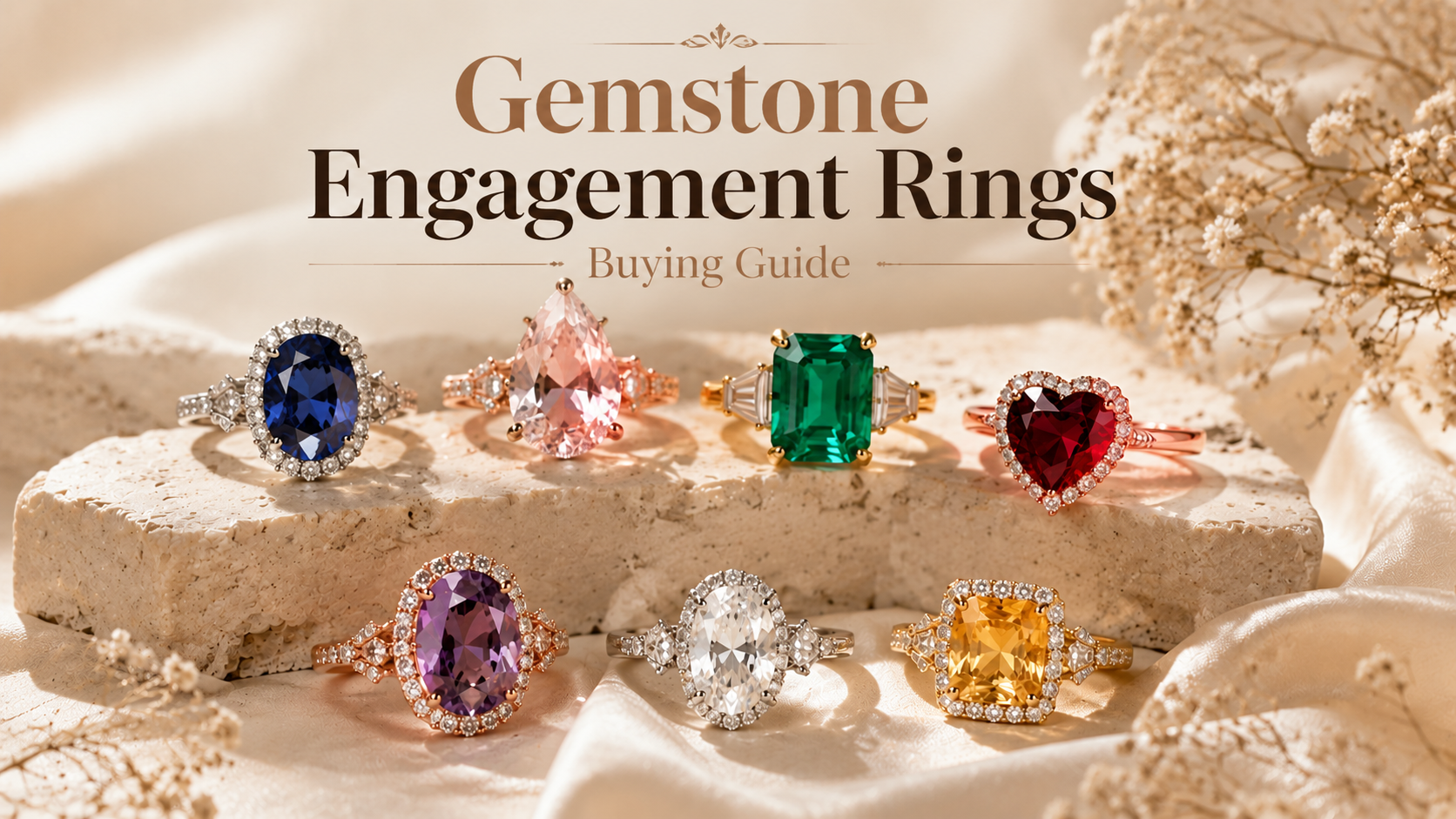
For decades, a diamond engagement ring represented the only acceptable choice for couples beginning their lives together. That expectation has changed significantly in recent years. More couples are now choosing colored gemstone engagement rings that better reflect their personalities, values, and shared story, rather than following a tradition that may not resonate with who they actually are.
Colored gemstones bring something to the table that traditional diamonds cannot easily replicate. They offer a spectrum of colors, each carrying centuries of symbolism and cultural meaning. A ruby's deep red evokes passion and intensity. A sapphire's rich blue speaks to loyalty and trust. An emerald's lush green suggests growth and renewal. Alexandrite, with its remarkable ability to shift color depending on the light source, represents transformation and individuality in a way no other gemstone can match. Together, these stones have given modern couples a genuine alternative to the conventional diamond solitaire.
LUO Jewelry believes an engagement ring should represent a unique love story, which is why colored gemstones have become a meaningful alternative for modern couples. If you're currently exploring gemstone engagement rings and wondering where to start, this guide will walk you through the practical steps needed to make a confident, informed purchase.
What Makes Colored Gemstone Engagement Rings Special?
Before diving into the buying process, it helps to understand exactly why colored gemstone rings have gained so much traction among couples today. The appeal goes beyond simple aesthetics and touches on deeper questions of identity, ethics, and personal meaning.
1. Unique Colors That Express Personal Style
Diamonds, for all their brilliance, are largely limited to shades of white and near-colorless tones, with fancy colored diamonds remaining both rare and prohibitively expensive for most buyers. Colored gemstones, by contrast, occur naturally across an enormous range of hues, giving couples far more freedom when it comes to expressing their individual style.
This variety matters for several reasons:
- First, having more color options simply means more couples can find a stone that genuinely resonates with their taste rather than settling for a standard choice.
- Second, colored gemstones make it easier to create a ring that feels personal rather than generic, since no two colors carry quite the same emotional weight.
- Third, this shift aligns with broader trends in modern engagement ring design, where couples increasingly favor unique, statement-making pieces over conventional options.
- Finally, many buyers today are also drawn to colored gemstones for ethical reasons, since sourcing practices for certain colored stones can offer more transparency and traceability compared to some diamond supply chains, particularly when buyers work with brands committed to responsible sourcing.
Each major gemstone also carries its own symbolic association, which adds emotional depth to the ring itself:
- Blue sapphire has long been connected to loyalty and commitment, making it a natural fit for couples who see their relationship as a lasting partnership built on trust.
- Emerald carries associations with growth and harmony, appealing to those who view their relationship as something that continues to evolve and deepen over time.
- Ruby is tied to passion and love, chosen by couples who want their ring to reflect strong, vibrant emotional connection.
- Alexandrite represents uniqueness and transformation, a fitting symbol for couples who pride themselves on standing apart from convention.
These associations are not just poetic language. For many buyers, the symbolic meaning behind a gemstone plays a real role in the decision-making process, turning the ring into something more than just a beautiful accessory.
2. More Personal Meaning Than Traditional Rings
Beyond general symbolism, colored gemstones allow for a level of personalization that's difficult to achieve with a traditional diamond ring. Several factors drive this trend.
Many couples are drawn to the idea of a birthstone connection, selecting a gemstone tied to one partner's birth month as a way of making the ring feel deeply personal. This approach has helped fuel broader interest in birthstone jewelry, where the ring becomes more than a symbol of engagement and instead reflects something unique about the wearer's identity.
Personal symbolism also plays a significant role. Some couples choose a gemstone because it reminds them of a specific memory, a meaningful place, or a quality they admire in one another. This kind of personalized gemstone rings approach gives the ring a story that a mass-produced diamond simply cannot offer.
Anniversary meaning is another factor worth considering, since certain gemstones are traditionally associated with specific wedding anniversaries. Choosing a stone with this kind of significance can add another layer of meaning to the ring over time.
Finally, individual style remains one of the simplest yet most powerful reasons couples choose colored gemstones. Not everyone is drawn to a clear, colorless stone, and there's nothing wrong with wanting a ring that reflects bold, personal taste rather than a traditional standard.
How to Buy Colored Gemstone Engagement Rings?
Purchasing a colored gemstone engagement ring involves more than simply picking a favorite color. Because this ring is meant to be worn daily for years, sometimes decades, there are several important factors that deserve careful consideration before you commit to a purchase.
1. Choose the Right Gemstone Based on Lifestyle
Not all gemstones are created equal when it comes to durability, and this matters significantly for a ring that will see daily wear. Hardness, measured on the Mohs scale, indicates how resistant a gemstone is to scratching and general wear over time.
| Gemstone | Hardness | Best For |
| Sapphire | 9 Mohs | Everyday engagement rings |
| Ruby | 9 Mohs | Durable romantic rings |
| Emerald | 7.5-8 Mohs | Elegant occasional wear |
| Alexandrite | 8.5 Mohs |
Unique engagement rings |
| Aquamarine | 7.5-8 Mohs | Soft colored styles |
| Amethyst | 7 Mohs | Elegant occasional wear |
| Citrine | 7 Mohs | Elegant occasional wear |
| Black Spinel | 8 Mohs | Unique & bold engagement rings |
| Garnet | 7 Mohs | Unique engagement rings |
👉 Explore More on Our Gemstones List A-Z
Sapphire and ruby both rank at 9 on the Mohs scale, placing them just below diamond in terms of hardness. This makes them excellent choices for anyone who wants a ring capable of withstanding the bumps and scrapes of daily life, whether that means washing dishes, typing at a keyboard, or simply going about a busy day. Alexandrite, at 8.5, also holds up reasonably well to regular wear while offering a truly distinctive appearance.
Emerald, while stunning, comes in at a lower 7.5 to 8 on the hardness scale and tends to contain more natural inclusions than sapphire or ruby. This makes it somewhat more prone to chipping, particularly if the ring is worn during physically demanding activities. This doesn't mean emerald should be avoided entirely, but buyers should understand that this stone may require more careful handling over time.
Since an engagement ring is typically worn every single day, durability should factor heavily into your decision. A gemstone that looks stunning in a jewelry store display case needs to hold up equally well through years of real-life wear.
2. Understand Gemstone Quality Factors
Just as diamonds are evaluated using the 4Cs, colored gemstones have their own set of quality factors that determine both beauty and value.
2.1 Color
Color stands as the single most important factor when evaluating a colored gemstone. Three specific elements make up overall color quality:
- Hue, which refers to the actual color itself;
- Tone, which describes how light or dark that color appears;
- Saturation, which measures how vivid or intense the color is.
A sapphire with high saturation and a pure, vivid blue hue will command a significantly higher price than a similarly sized stone with a grayish or washed-out appearance. This is why two sapphires of identical size and clarity can have dramatically different price points based purely on color quality. When shopping, take time to view gemstones in natural daylight, since lighting conditions can dramatically affect how color appears.
2.2 Clarity
Clarity works quite differently for colored gemstones compared to diamonds. While diamond buyers typically seek the highest possible clarity grade, colored gemstones operate under different expectations. Some inclusions are not only acceptable but expected, particularly in stones like emerald, which almost always contain some visible inclusions due to their natural formation process.
In fact, natural characteristics like small inclusions can actually help verify a gemstone's authenticity. A completely flawless colored gemstone, especially at a larger size, often raises questions about whether it might be lab-grown or synthetic rather than natural. Understanding this distinction can help you avoid unnecessary worry over minor inclusions that don't significantly affect a stone's beauty or durability.
2.3 Cut
The quality of a gemstone's cut directly affects how it performs visually. A well-executed cut maximizes brilliance, allowing light to interact with the stone in a way that enhances its natural color and creates depth. Cut quality also affects how vividly a gemstone displays its color, since a poorly cut stone can appear dull or lifeless even if the raw material itself is high quality.
Overall beauty comes down to the skill of the cutter, who must balance maximizing carat weight against achieving optimal light performance. This is a specialized skill, and you should look for gemstones cut by experienced professionals who understand how to bring out each stone's best qualities.
2.4 Carat Weight
Carat weight matters for colored gemstones, though not always in the same straightforward way it does for diamonds. Large, high-quality natural gemstones are genuinely rare, which means that price per carat often increases substantially as size goes up. A two-carat sapphire of excellent quality, for instance, might cost significantly more than double the price of a one-carat stone of similar quality, simply because larger high-quality stones are harder to find in nature.
3. Choose Natural vs Lab-Grown Gemstones
One of the more significant decisions you face involves choosing between natural and lab-grown gemstones. Both options have distinct advantages depending on your priorities.
| Factor | Natural Gemstone | Lab-Grown Gemstone |
| Origin | Earth-mined | Created in labs |
| Rarity | Higher | Lower |
| Price | Higher | More affordable |
| Value | Collectible | Beauty-focused |
Natural gemstones form over millions of years through geological processes, giving them a rarity and history that lab-grown stones simply cannot replicate. This natural origin contributes to their higher price point and their appeal as collectible items that may hold or increase in value over time.
Lab-grown gemstones, meanwhile, share the same chemical composition and optical properties as their natural counterparts but are produced in controlled laboratory environments. This process allows for more consistent quality and significantly lower prices, making lab-grown stones an appealing option for buyers who prioritize visual beauty and budget-friendliness over rarity and collectibility.
Neither option is inherently better than the other. The right choice depends on your personal priorities and what matters most to you in an engagement ring. What matters most is understanding exactly what you're purchasing before you commit. Always ask sellers directly whether a gemstone is natural or lab-grown, and don't hesitate to request documentation confirming this information.
4. Consider Gemstone Treatments and Certifications
The vast majority of colored gemstones sold today have undergone some form of treatment designed to enhance their color, clarity, or overall appearance. Understanding these treatments helps buyers make informed decisions and avoid unpleasant surprises.
- Heat treatment remains the most common and widely accepted practice in the gemstone industry, used to improve color saturation and clarity in stones like sapphire and ruby. This treatment is considered standard practice and typically doesn't significantly affect a gemstone's value when properly disclosed.
- Filling involves treating gemstones, particularly emeralds, with oils or resins to fill surface-reaching fractures and improve overall appearance. While common, this treatment does require some special care, since certain cleaning methods can affect the filling material over time.
- Dyeing involves artificially altering a gemstone's color, often used on lower-quality stones to achieve a more desirable appearance. This treatment tends to have a more significant impact on value compared to heat treatment.
Before completing any purchase, confirm several important details with your seller. First, ask for clear treatment disclosure, meaning the seller should openly tell you exactly what treatments, if any, the gemstone has undergone. Second, request a gemstone certificate from a reputable gemological laboratory, which provides independent verification of the stone's authenticity and treatment history. Third, pay attention to overall seller transparency throughout the buying process. A trustworthy jeweler will answer your questions directly and provide documentation without hesitation.
5. Select the Right Ring Setting
The setting you choose plays a major role in both the visual impact and the practical durability of your ring. Different settings serve different purposes, so it helps to understand your options.
5.1 Solitaire Setting
A solitaire setting features a single gemstone as the sole focal point of the ring, without any accent stones competing for attention. This classic style works particularly well for showcasing a gemstone's natural color, since nothing distracts from the stone itself.
5.2 Halo Setting
A halo setting surrounds the center gemstone with a circle of smaller accent stones, typically diamonds. This design adds extra sparkle to the overall ring while also making the center gemstone appear larger than its actual size, which can be an appealing option for buyers working within a specific budget.
5.3 Toi et Moi Setting
The Toi et Moi setting, which translates from French to "you and me," features two gemstones placed side by side rather than a single center stone. This romantic design symbolizes two individuals coming together as partners, making it a particularly meaningful choice for an engagement ring. Couples drawn to this symbolism often explore options like LUO Jewelry Toi et Moi Rings and Two Stone Rings, which offer thoughtfully designed interpretations of this timeless style.
5.4 East-West Setting
An east-west setting positions the gemstone horizontally rather than in the traditional vertical orientation. This modern approach creates a distinctive, contemporary look that appeals to couples seeking something different from conventional ring designs.
5.5 Bezel Setting
A bezel setting wraps a thin rim of metal completely around the edge of the gemstone, offering excellent protection against chips and impacts. This setting style works particularly well for softer gemstones like emerald, since the metal rim helps shield vulnerable edges from everyday bumps.
5.6 Three Stone Setting
A three-stone setting features a center gemstone flanked by two smaller stones on either side, traditionally representing the past, present, and future of a relationship. This meaningful design has remained popular for generations and continues to appeal to couples who appreciate its symbolic significance.
6. Match the Gemstone With Metal Color
Choosing the right metal tone can significantly enhance how your gemstone looks, making this an important consideration rather than an afterthought.
6.1 Yellow Gold
Yellow gold gemstone rings pair beautifully with warm-toned gemstones like ruby, emerald, and citrine. The warmth of the gold complements these rich, saturated colors, creating a cohesive and visually striking overall appearance.
6.2 White Gold
White gold gemstone rings work particularly well with cooler-toned gemstones such as sapphire, aquamarine, and alexandrite. The neutral, cool backdrop allows these colors to stand out clearly without competing with a warm metal tone.
6.3 Rose Gold
Rose gold gemstone rings flatter soft pink gemstones like morganite and pink sapphire exceptionally well. The warm, romantic tone of rose gold enhances these delicate colors, creating a cohesive and feminine aesthetic that many buyers find appealing.
6.4 Sterling Silver
Sterling silver gemstone rings offer an affordable and versatile option that pairs reasonably well with most gemstone colors. However, buyers should be aware that silver requires more frequent maintenance than gold or platinum, since it tends to tarnish over time with regular exposure to air and moisture.
6.5 Platinum
Platinum gemstone rings provide exceptional durability and a naturally white, cool-toned finish that suits nearly any gemstone color. While platinum typically costs more than gold, its hypoallergenic properties and long-term durability make it a worthwhile investment for many buyers, particularly those planning to wear their ring daily for decades.
7. Set a Realistic Budget
Colored gemstone prices vary considerably based on several interconnected factors, including rarity, gemstone size, geographic origin, treatment history, and overall craftsmanship quality. A relatively small gemstone of exceptional quality and rare origin can sometimes cost more than a significantly larger stone of average quality.
This is precisely why you shouldn't focus solely on carat size when setting a budget. Instead, consider the overall combination of factors that contribute to a gemstone's value. A well-cut, vividly colored one-carat sapphire often looks more impressive and holds its value better than a larger stone with mediocre color or poor cut quality. Setting a realistic budget means understanding these nuances rather than simply comparing gemstones based on size alone.
8. Choose a Trusted Jewelry Brand
The reputation and practices of the jewelry brand you choose matter just as much as the quality of the gemstone itself. Before finalizing any purchase, take time to research several key aspects of the seller.
Look into the brand's gemstone sourcing practices to understand where their stones originate and whether the brand prioritizes ethical, traceable sourcing. Examine their craftsmanship quality by reviewing photos of finished pieces and reading detailed product descriptions. Review the brand's return policy carefully, since this protects you if the ring doesn't fit properly or doesn't meet your expectations upon arrival. Check whether the brand offers a warranty that covers potential issues with the setting or gemstone over time. Finally, read customer reviews from previous buyers to get an honest sense of their overall experience.
LUO Jewelry specializes in modern gemstone jewelry designed around individuality, symbolism, and everyday elegance, offering you a dependable option for finding a gemstone engagement ring that authentically represents your unique relationship.
What Are the Best Gemstones for Engagement Rings?
While personal preference ultimately guides gemstone selection, certain stones have consistently proven popular among couples shopping for engagement rings.
1. Sapphire Engagement Rings
Sapphire remains one of the most sought-after gemstones for engagement rings, and for good reason. Its exceptional durability, ranking at 9 on the Mohs scale, makes it well-suited for daily wear without significant concern about scratching or chipping. Beyond practicality, sapphire's timeless blue color has an enduring appeal that doesn't feel tied to passing trends.
Sapphire's popularity received a significant boost following Princess Diana's iconic engagement ring, later worn by Kate Middleton after Prince William proposed with the same piece. This high-profile association helped introduce colored gemstone engagement rings to a much wider audience, cementing sapphire's status as a beautiful and meaningful alternative to diamond.
2. Emerald Engagement Rings
Emerald engagement rings offer a luxurious green color that immediately conveys elegance and sophistication. Its rich, saturated hue has made it a favorite among those drawn to vintage-inspired aesthetics, since emerald has featured prominently in jewelry design throughout history. While emerald requires slightly more careful handling due to its lower hardness rating, its striking beauty continues to make it a popular choice for couples willing to embrace its unique characteristics.
3. Ruby Engagement Rings
Ruby engagement rings carry deep passionate symbolism that resonates with couples who want their ring to reflect strong emotional connection. Its vibrant red color demands attention and pairs beautifully with both yellow gold and white gold settings. Combined with its impressive hardness rating, matching sapphire at 9 on the Mohs scale, ruby offers both symbolic meaning and practical durability for everyday wear.
4. Alexandrite Engagement Rings
Alexandrite engagement rings deserve particular attention for their truly remarkable color-changing effect, appearing green or bluish-green in daylight and shifting to a purplish-red or raspberry color under incandescent lighting. This natural phenomenon occurs due to the way the stone's crystal structure interacts with different light sources, making each alexandrite feel like a small marvel of nature.
For couples seeking a genuinely unique engagement ring that stands apart from more common choices, alexandrite offers an unmatched option. Its rarity, combined with its symbolic connection to transformation and individuality, makes it particularly appealing to modern couples who want their ring to reflect their distinctive relationship. This distinctive quality makes alexandrite a stone worth exploring within LUO Jewelry's gemstone collections, where its rarity and beauty receive the attention they deserve.
5. Other Popular Colored Gemstones
Beyond the four gemstones highlighted above, several other stones have found their place in modern engagement ring design.
- Garnet offers deep, rich red tones at a more accessible price point compared to ruby, making it an appealing option for budget-conscious buyers.
- Aquamarine provides a soft, calming blue reminiscent of ocean water, appealing to those drawn to lighter, more understated colors.
- Morganite has gained significant popularity in recent years for its delicate pink hue, which pairs beautifully with rose gold settings.
- Amethyst brings rich purple tones to engagement ring design, offering a regal appearance at a reasonable price point.
- Peridot adds a fresh, vibrant green option that differs noticeably from emerald's deeper, more saturated tone.
👉 Explore More on What is the Best Gemstone for Engagement Rings?
Colored Gemstone Engagement Ring Buying Mistakes to Avoid
Even buyers with good intentions can make mistakes when purchasing a colored gemstone engagement ring. Being aware of these common pitfalls beforehand can help you navigate the buying process with greater confidence.
1. Choosing Appearance Over Durability
It's easy to fall in love with a gemstone based purely on how it looks in photographs or under store lighting. However, beautiful doesn't always mean practical for daily wear. Before committing to a particular stone, consider its hardness rating and how well it will hold up against the realities of everyday life, including accidental bumps, exposure to household chemicals, and general wear over time. A ring that chips or scratches within the first year will lose much of its appeal, regardless of how stunning it looked at the time of purchase.
2. Ignoring Gemstone Treatment Information
Some buyers skip asking about treatments, either because they assume all gemstones are treated similarly or because they simply don't think to inquire. This oversight can lead to unpleasant surprises later, particularly if a stone requires special care due to its specific treatment history. Always request clear, detailed information about any treatments a gemstone has undergone before finalizing your purchase. Transparency from the seller should be a baseline expectation, not an optional bonus.
3. Buying Without Understanding Return Policies
Given the significant financial investment involved in purchasing an engagement ring, it's surprising how often couples rush through the process without carefully reviewing return policies. Understanding your options in advance, whether the ring doesn't fit properly, you change your mind about the design, or an issue arises with the gemstone itself, can save considerable stress and frustration down the road. Always clarify return and exchange terms with your seller before completing your purchase, and keep documentation of these policies for reference.
Conclusion
Colored gemstone engagement rings offer a level of personalization and meaning that traditional diamond rings often cannot match. Whether you're drawn to the loyalty represented by sapphire, the passion embodied by ruby, or the rare transformation captured in alexandrite, there's a gemstone available that authentically reflects your unique relationship.
When shopping for the perfect ring, remember to carefully consider several key factors: the gemstone type that best fits your lifestyle, the quality factors that determine both beauty and value, the durability needed for years of everyday wear, and the trustworthiness of the brand you ultimately choose. The best engagement ring isn't necessarily the most expensive option available. It's the ring that most authentically represents who you are as a couple and the story you're building together.
Explore LUO Jewelry's collection of gemstone engagement rings and discover a meaningful piece designed to celebrate your unique love story.